
Table of Contents
As an Amazon Associate, we earn from qualifying purchases. This means we may receive a small commission at no extra cost to you when you buy through links on this page.
What are Inflatable Tents & Why Choose One?
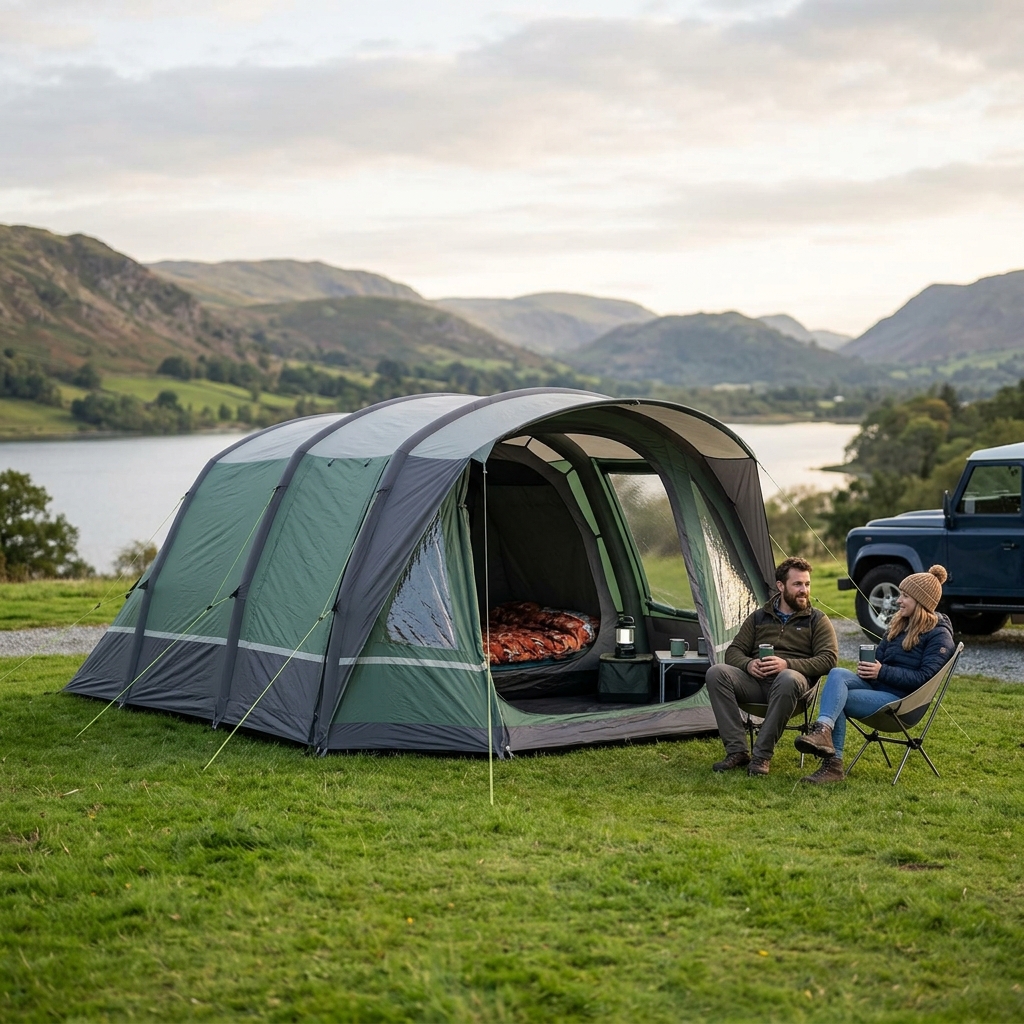
Inflatable tents, also known as air tents, have revolutionised camping in the UK. Instead of relying on traditional metal poles, they use inflatable air beams to provide structure and stability. This offers a significant advantage over pole tents in several key areas. The most noticeable benefit is the ease of setup. Gone are the days of wrestling with complicated pole systems – inflating an air tent is typically much quicker and less physically demanding. They also tend to be remarkably stable, even in windy conditions, and offer excellent headroom and spacious interiors. Comfort levels are generally higher, and the robust construction provides a secure and weatherproof shelter. However, it’s important to acknowledge the downsides. Inflatable tents generally come with a higher price tag than traditional tents, and while durable, they can be susceptible to punctures requiring repair.
Types of Inflatable Tents: Finding the Right Style for You
The world of inflatable tents offers a variety of styles to suit different camping needs:
Tunnel Tents
Tunnel tents are incredibly popular due to their quick and easy setup. They feature curved air beams that create a tunnel-like shape. They’re excellent for families and groups who prioritise speed and convenience. However, they often require thorough pegging to maintain stability in strong winds.
Dome Tents
Dome tents, utilising inflatable beams to create a classic dome shape, offer good stability and are often more compact than tunnel tents. They are well-suited for couples or smaller families. They are generally quite robust and handle wind well.
Cabin Tents
Cabin tents provide a spacious and comfortable camping experience, often with near-vertical walls for maximised headroom. They’re ideal for longer stays and those who want a home-away-from-home feel. These often feature multiple rooms and generous living areas. They are larger and heavier than tunnel or dome tents.
Larger Family/Glamping Tents
For large families or those seeking a luxurious camping experience, expansive inflatable tents are available. These often include multiple bedrooms, large living areas, and even features like built-in kitchens or verandas. They represent the pinnacle of inflatable tent technology but come with a corresponding premium price.
Key Features to Consider in 2026
When choosing an inflatable tent in 2026, consider these key features:
Hydrostatic Head (Waterproofing)
Measured in mm, hydrostatic head indicates the tent’s waterproof rating. A rating of 3000mm is considered good for general camping in the UK, while 5000mm or higher offers superior protection against heavy rainfall. Look for tents with taped seams for added waterproofing.
Fabric Quality (Polyester vs. Canvas)
Polyester is the most common fabric, offering a good balance of weight, durability, and cost. Canvas tents, while heavier and more expensive, provide excellent insulation and breathability. In 2026, expect to see more advanced polyester fabrics with improved UV resistance and waterproofing.
Number of Air Beams
More air beams generally equate to greater stability and redundancy. If one beam is punctured, the tent is less likely to collapse. However, more beams also mean more potential points of failure.
Included Accessories
Check what’s included. A good groundsheet is essential for protecting the tent floor, and a pump (electric or manual) is, of course, necessary. Some tents also come with storm straps, pegging kits, and repair kits.
Ventilation
Effective ventilation is crucial for preventing condensation. Look for tents with adjustable vents and mesh panels to allow airflow.
Black-Out Bedrooms
Black-out bedrooms are increasingly popular, blocking out early morning sunlight for a more restful sleep. Expect advancements in 2026 with even more effective blackout materials.
Smart Ventilation Systems (2026 Trend)
New for 2026, some high-end tents are incorporating ‘smart’ ventilation systems. These utilise sensors and small fans to automatically regulate airflow and humidity levels within the tent, significantly reducing condensation.
Inflatable Tent Sizes: How Many People Does It Sleep?
Tent sizes are typically denoted by ‘berth’ – the number of people the tent is designed to sleep. However, it’s crucial to be realistic:
- 2-Person: Suitable for couples. Packed weight typically 10-15kg.
- 4-Person: Comfortable for a small family or two adults with some gear. Packed weight typically 18-25kg.
- 6-Person: Ideal for a family of four with plenty of space for gear and a living area. Packed weight typically 25-35kg.
- 8-Person+: Designed for larger families or groups. Expect a significant packed weight (35kg+) and large dimensions.
Remember to factor in space for sleeping bags, luggage, and a living area when choosing a size. Always err on the side of caution – a slightly larger tent is far more comfortable than a cramped one.
Setting Up Your Inflatable Tent: A Step-by-Step Guide
- Choose a Suitable Pitch: Select a flat, level surface free from rocks and debris.
- Lay Down the Groundsheet: Protect the tent floor with a dedicated groundsheet or tarp.
- Inflate the Air Beams: Use a suitable pump (electric or manual) to inflate the air beams to the recommended pressure.
- Peg Down Securely: Peg down the tent around the base, paying particular attention to the corners and guy lines.
- Attach Storm Straps (If Included): Add storm straps for extra stability in windy conditions.
Pump Options: Electric pumps (like the Lifton Air Pump – 12V Electric (GBP 79.99)) are fast and convenient, while manual pumps are lightweight and portable.
Maintaining & Repairing Your Air Tent
Proper maintenance will prolong the life of your inflatable tent:
- Cleaning: Clean the tent with mild soap and water after each use.
- Drying: Ensure the tent is completely dry before storing it to prevent mildew.
- Storage: Store the tent in a cool, dry place.
Repairs: Minor punctures can be repaired with a Tent Repair Kit – Heavy Duty (GBP 24.99). For more significant damage, consider professional repair services.
Top Inflatable Tent Brands in the UK (2026)
- Vango: Known for their high-quality materials, innovative designs, and excellent customer support. (Price Range: GBP 400 – GBP 1500+)
- Coleman: A reliable brand offering a wide range of inflatable tents at competitive prices. (Price Range: GBP 300 – GBP 800)
- Outwell: Focuses on family-friendly designs with spacious interiors and practical features. (Price Range: GBP 500 – GBP 1200)
- Kampa: Offers a good balance of value and performance, with a strong focus on ease of use. (Price Range: GBP 400 – GBP 900)
- Sunncamp: A classic British brand providing affordable and reliable inflatable tents. (Price Range: GBP 300 – GBP 600)
Inflatable Tent Prices: What to Expect in 2026
Here’s a price guide (approximate):
| Tent Type | Berth | Price Range (GBP) |
|---|---|---|
| Entry-Level | 4-Person | £350 – £500 |
| Mid-Range | 6-Person | £550 – £800 |
| Premium | 8-Person+ | £850 – £1500+ |
| Specific Model | Vango AirBeam Odyssey 600XL | £899.99 |
| Specific Model | Coleman Valdes 4 Deluxe Air | £449.99 |
| Specific Model | Outwell Montana 6 Air | £749.99 |
| Specific Model | Kampa Hayling 6 Air | £599.99 |
| Specific Model | Sunncamp Holiday 400 Air | £379.99 |
Frequently Asked Questions (FAQs)
How long do inflatable tents last?
With proper care and maintenance, a good quality inflatable tent can last for 5-10 years, or even longer. Regular cleaning, drying, and storage are crucial.
Are inflatable tents windproof?
While not entirely ‘windproof’, inflatable tents are remarkably stable in windy conditions, especially when properly pegged down and with storm straps used. The flexible air beams allow them to flex with the wind, reducing the risk of damage.
Can inflatable tents be repaired easily?
Minor punctures can be easily repaired with a repair kit. More significant damage to air beams may require professional repair or replacement.
What’s the best pump to use?
An electric pump, such as the Lifton Air Pump, is the most convenient option, especially for larger tents. A manual pump is a good backup and is useful for topping up air pressure.
Do I need a footprint or ground sheet?
Yes, a footprint (like the Vango Footprint – Odyssey 600XL (GBP 69.99)) is highly recommended. It protects the tent floor from abrasion and moisture, extending its lifespan.