
Table of Contents
As an Amazon Associate, we earn from qualifying purchases. This means we may receive a small commission at no extra cost to you when you buy through links on this page.
What are Inflatable Tents & Why Choose One?
Inflatable tents have revolutionised camping in the UK. Unlike traditional pole tents which rely on metal or fibreglass poles for structure, inflatable tents use air beams – robust, inflated tubes – to create a sturdy and spacious shelter. This offers a significant advantage in terms of ease of setup; no more wrestling with complicated pole systems! They’re also surprisingly stable, even in windy conditions, and often provide a more comfortable camping experience due to their spacious interiors and height.
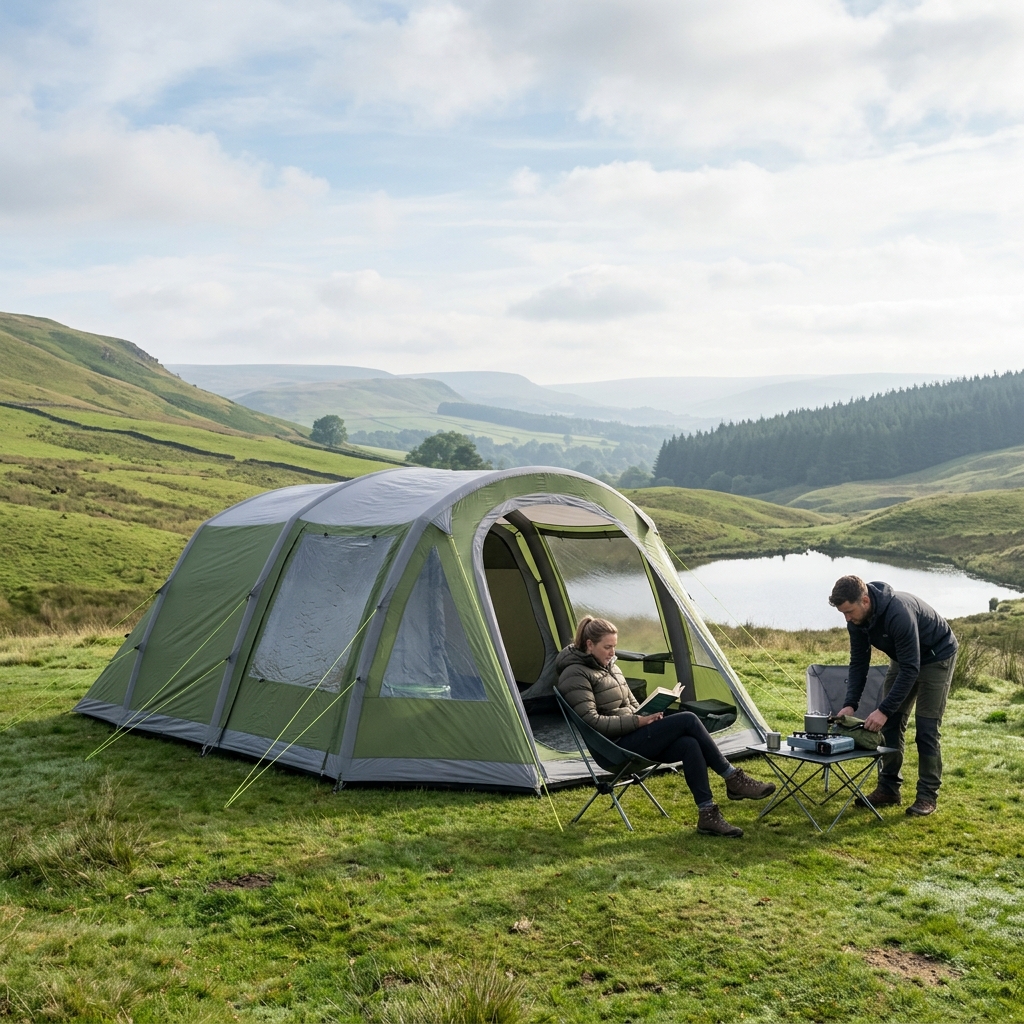
A common misconception is that inflatable tents are fragile. Modern air beams are incredibly durable, built to withstand the rigours of outdoor use. The convenience and resilience of inflatable tents make them a fantastic choice for families, couples, and anyone looking for a hassle-free camping experience.
Inflatable Tent Technology: Air Poles Explained
The core of any inflatable tent is its air pole technology. Here’s a breakdown of what you need to know:
- Single Chamber Air Poles: The simplest design, offering good rigidity at a lower cost. However, if punctured, the entire beam deflates.
- Multi-Chamber Air Poles: These contain several individual chambers within the same beam. If one chamber is punctured, the others remain inflated, providing continued support. This is now the standard.
- High-Pressure vs. Low-Pressure Air Poles: High-pressure beams (typically 7-10 PSI) offer superior rigidity and are more resistant to deformation. Low-pressure beams (around 3-5 PSI) are more forgiving and easier to inflate, but can be more susceptible to movement in strong winds.
Material Considerations: Air beams are commonly made from robust TPU (Thermoplastic Polyurethane) or PVC (Polyvinyl Chloride). TPU is generally considered more durable and flexible, particularly in colder temperatures, but is also more expensive. High-quality air beams are often encased in a protective sleeve to shield them from UV damage and abrasion.
Types of Inflatable Tents: Finding the Right Style for You
Inflatable tents come in various styles, each suited to different needs:
- Tunnel Tents: The most common type, offering excellent space-to-weight ratio. They typically feature a curved shape and require guylines for stability.
- Dome Tents: Self-supporting and easy to pitch, but generally offer less living space than tunnel tents.
- Family Tents: Larger tents designed for families, often with multiple bedrooms and a spacious living area.
- Pop-up Inflatable Tents: Combine the convenience of pop-up tents with the stability of inflatable technology. They’re quick to pitch but often less durable.
Sizing Guide: How to Choose the Right Inflatable Tent Capacity
Choosing the right size is crucial. Consider the number of people, your camping style, and potential weather conditions.
- 2-Person Tent: Suitable for couples or solo campers.
- 4-Person Tent: Comfortable for a small family or a group of friends.
- 6-Person Tent: Ideal for families with children or groups who want plenty of space.
- 8+ Person Tent: For larger families or groups who require a lot of living space.
UK Campsite Pitch Sizes: Be aware of campsite pitch size restrictions. A standard UK pitch is typically 8m x 12m. Always check the campsite’s guidelines before booking and ensure your chosen tent fits comfortably.
Key Features to Look For in an Inflatable Tent (2026)
Here are essential features to consider:
- Hydrostatic Head: A measure of waterproofness. A rating of 3000mm is generally sufficient for the UK, but 5000mm or higher is recommended for prolonged exposure to heavy rain.
- Groundsheet Material: Heavy-duty, waterproof polyethylene (PE) is common. Some tents feature a sewn-in groundsheet, while others have a bathtub groundsheet that provides better protection.
- Ventilation: Essential for preventing condensation. Look for adjustable vents and mesh panels.
- Windows & Doors: Consider the number and placement of windows and doors for natural light and airflow.
- Blackout Options: Increasingly popular for improved sleep quality.
- Cable Entry Points: Convenient for powering devices.
- Porch Size: Provides sheltered storage space.
- Storage Solutions: Pockets and hanging loops can help keep your tent organised.
2026 Trends: We’re seeing a rise in tents with integrated smart lighting systems, solar panel compatibility, and enhanced ventilation technologies.
Inflatable Tent Materials: Durability and Weather Resistance
The fabric of your tent is key to its performance. Polyester is the most common material, offering good water resistance and UV protection. Nylon is lighter and more durable, but also more expensive. Canvas alternatives, like polycotton, offer excellent breathability but are heavier and take longer to dry. Look for fabrics with a PU (Polyurethane) coating for waterproofing and a UV protection factor (UPF) of 50+.
Setting Up and Maintaining Your Inflatable Tent
Setting Up:
- Lay out the tent and groundsheet.
- Inflate the air beams using a hand pump or electric pump (recommended).
- Peg down the tent securely, starting with the corners.
- Attach guylines for added stability, especially in windy conditions.
Maintenance:
- Clean the tent after each use with mild soap and water.
- Regularly check the air beams for damage.
- Store the tent in a dry, well-ventilated place.
- Use a protective spray to maintain the waterproofing.
Inflatable Tent Security & Safety
Security: Use a good quality padlock to secure the tent door. Consider a tent alarm for added peace of mind. Be mindful of your surroundings and avoid leaving valuables unattended.
Safety: Ensure adequate ventilation to prevent carbon monoxide poisoning if using a gas stove inside the tent (not recommended). Be careful not to overinflate the air beams. Use appropriate guylines and pegs to secure the tent against strong winds.
Top Inflatable Tents Available in the UK (2026)
Here’s a selection of top-rated inflatable tents for 2026:
| Tent Model | Capacity | Price (GBP) | Pros | Cons |
|---|---|---|---|---|
| Vango AirBeam Odyssey Air 600 Tent | 6-Person | £999.99 | Spacious, excellent build quality, robust air beams. | Relatively heavy, expensive. |
| Coleman Valhalla Air 6 Tent | 6-Person | £749.99 | Good value for money, easy to set up, durable. | Can be less spacious than some competitors. |
| Outwell Nevada MP Air 5SA Tent | 5-Person | £899.99 | High-quality materials, excellent ventilation, spacious porch. | Complex setup for beginners. |
| Kampa Hayling 6 Air Tent | 6-Person | £699.99 | Quick to pitch, good headroom, versatile. | Air beams can be less rigid than some others. |
| SunnCamp Swift 420 Air Tent | 4-Person | £499.99 | Affordable, lightweight, easy to transport. | Less durable than higher-end models. |
| Quechua NH100 XL Inflatable Camping Tent | 4-Person | £349.99 | Very affordable, easy to pitch, compact when packed. | Basic features, limited weather protection. |
| Airspeed Challenger 400 Air Tent | 4-Person | £599.99 | Fast inflation, good stability, durable construction. | Can be bulky when packed. |
| Olpro Leedale 6 Air Tent | 6-Person | £799.99 | Spacious, well-ventilated, good value for money. | Can be heavy to carry. |
| Bestway Fast Air 300 Tent | 3-Person | £199.99 | Extremely affordable, very quick to pitch. | Limited durability, small capacity. |
| High Peak Bury 4 Air Tent | 4-Person | £449.99 | Good balance of price and performance, easy to set up. | Air beams may require more frequent inflation. |
Inflatable Tent FAQs
Q: How do I repair a punctured air beam?
Most inflatable tents come with a repair kit. Clean the area around the puncture, apply the adhesive patch, and allow it to dry completely. For larger punctures, consider professional repair.
Q: How do I store my inflatable tent during the off-season?
Ensure the tent is completely dry before storing. Deflate the air beams, clean the fabric, and store in a dry, well-ventilated place away from direct sunlight and pests.
Q: Are inflatable tents suitable for windy conditions?
Yes, modern inflatable tents are surprisingly stable in wind, especially when properly guied down. However, extremely strong winds can still pose a risk, so always check the weather forecast and pitch your tent in a sheltered location.
Q: What pump do I need for an inflatable tent?
A hand pump is sufficient for smaller tents, but an electric pump is highly recommended for larger models. Look for a pump with a pressure gauge to avoid overinflation.
Q: Can I leave my inflatable tent pitched for extended periods?
While you can, it’s not ideal. Prolonged exposure to the elements can damage the fabric and air beams. If you must leave it pitched, ensure it’s securely guied down and protected from the sun and rain.