Table of Contents
As an Amazon Associate, we earn from qualifying purchases. This means we may receive a small commission at no extra cost to you when you buy through links on this page.
Introduction: The UK Camper’s Drying Dilemma
Let’s face it: camping in the UK often means contending with dampness. Whether it’s a sudden shower, morning dew, or simply the humidity, getting your gear soaked is a common occurrence. Quickly and effectively drying your camping equipment isn’t just about comfort; it’s crucial for preventing mould, maintaining the performance of technical fabrics, and extending the lifespan of your investment. This guide will explore various methods to dry your camping gear quickly, specifically tailored for the UK climate and camper. We’ll cover everything from maximising natural ventilation to utilising portable dryers and campsite facilities.
Understanding Materials & Drying Times
Different materials require different approaches to drying. Understanding these characteristics is key to avoiding damage and ensuring thoroughness. Here’s a breakdown of common camping gear materials and their approximate drying times (these are estimates and depend heavily on weather conditions – temperature, humidity, and airflow):
- Nylon: Relatively quick drying. Expect 2-6 hours in good conditions.
- Polyester: Dries even faster than nylon. 1-4 hours is typical.
- Cotton: Slowest drying material. Can take 12-24+ hours, and prone to mildew. Best avoided for camping clothing where possible.
- Down: Requires careful drying (see section on Sleeping Bags). Can take 24-48 hours, even with assistance.
- Synthetic Fills (e.g., PrimaLoft): Faster drying than down, generally 6-12 hours.
Method 1: Air Drying – Maximising Natural Ventilation
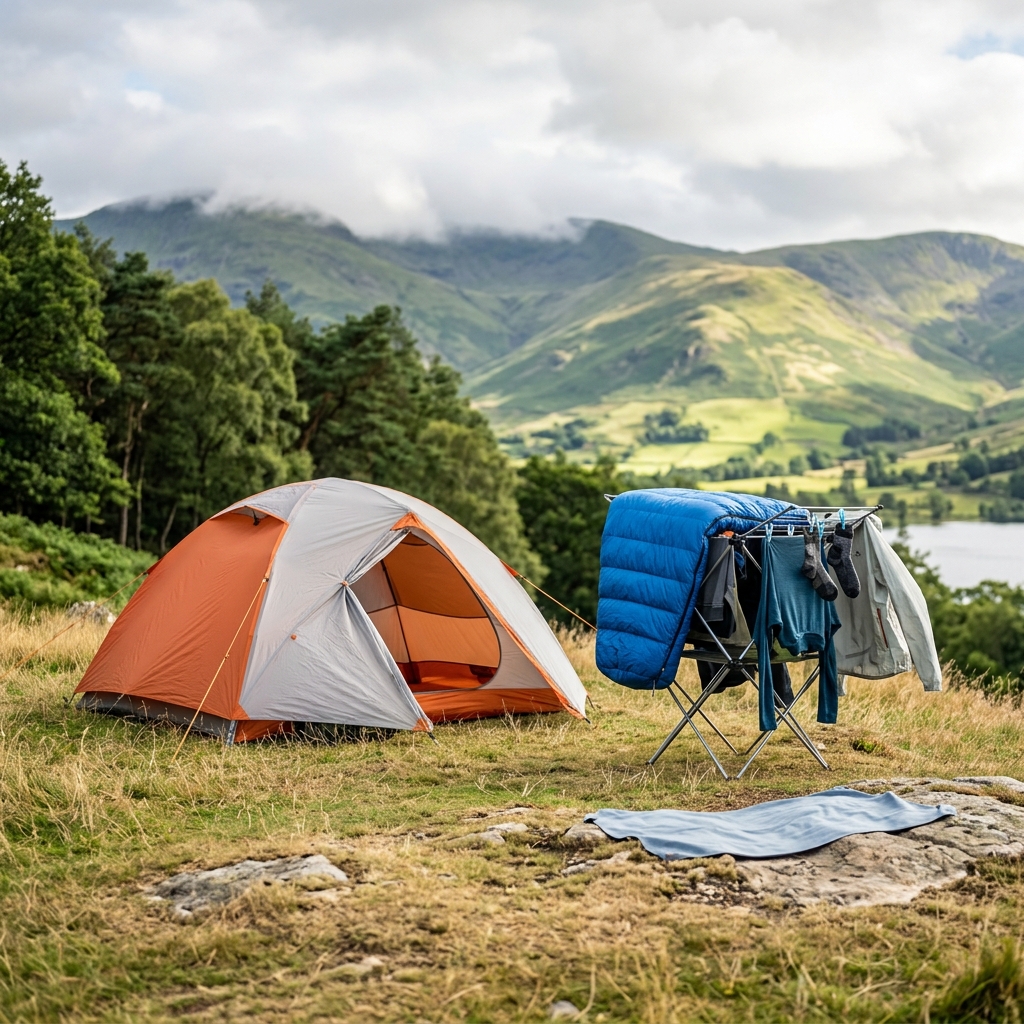
The simplest and most cost-effective method is air drying. However, simply draping your gear over a bush won’t cut it in the UK! The key is maximising ventilation.
- Location: Ideally, find a spot with a gentle breeze and partial shade. Direct sunlight can damage certain fabrics (especially nylon and coated materials) over prolonged exposure, causing fading and weakening.
- Hanging Methods:
- Trees: Use sturdy branches, but avoid damaging the bark.
- Clotheslines: A portable clothesline specifically designed for camping is a great investment.
- Guy Ropes: Utilise unused guy ropes on your tent.
- Airflow: Space out items to allow air to circulate. Turn items inside out to ensure thorough drying.
Method 2: Using a Portable Camping Dryer
For faster, more controlled drying, a portable camping dryer is a worthwhile investment, especially for longer trips. These come in various designs and price points.
Pros & Cons
| Pros | Cons |
|---|---|
| Faster drying times | Requires a power source |
| Controlled temperature – protects materials | Can be relatively expensive |
| Convenient for damp weather | Adds weight and bulk to your kit |
Product Recommendations (2026)
Here’s a quick comparison of some popular options:
| Product Name | Price (GBP) | Power Source | Features |
|---|---|---|---|
| Gale Pacific Portable Camping Clothes Dryer | £79.99 | Mains (adapter required) | Collapsible, compact, heated drying rack. |
| Evapo-Dry Portable Clothes Dryer (Electric) | £99.99 | Mains | High airflow, adjustable temperature, suitable for delicate items. |
| Pro Breeze Electric Clothes Airer – 210W | £65.0 | Mains | Foldable, lightweight, heated bars, timer function. |
Power Source Options: Mains power is readily available at many UK campsites, but if you’re wild camping or at a remote site, consider a portable power station or solar panels to power your dryer.
Method 3: Car Ventilation & Dehumidifying
Your car can be a useful drying space, especially for smaller items. On a sunny day, open windows and use the car’s ventilation system to circulate air. For more stubborn dampness, a portable dehumidifier can be incredibly effective.
Pros & Cons of Using a Dehumidifier in Your Car
| Pros | Cons |
|---|---|
| Rapidly removes moisture | Requires a power source (car’s 12V socket) |
| Effective for small spaces | Can be noisy |
Safety Considerations: Never leave a running car unattended, and ensure adequate ventilation when using a dehumidifier to prevent condensation build-up on the windows.
Product Recommendation: EcoAqua Dehumidifier – Small, Portable (£45.0)
Method 4: Campsite Facilities (If Available)
Some campsites offer drying rooms or covered drying areas. These are a convenient option, but availability is often limited, especially during peak season. Always check with the campsite beforehand and have a backup plan in place.
Drying Specific Gear: A Material-Specific Guide
- Tents: Pitch the tent (if possible) to allow airflow. Dry the flysheet and inner tent separately. Never pack a damp tent away, as this will almost certainly lead to mould.
- Sleeping Bags:
- Down: Hang in a well-ventilated area, turning frequently. Consider using a tumble dryer on a very low heat setting with dryer balls (check manufacturer’s instructions first!).
- Synthetic: Can be dried more aggressively than down.
- Clothing: Technical fabrics dry quickly. Cotton takes much longer. Use a quick-drying towel (like the Sea to Summit Tek Towel – £25.0) to remove excess moisture before air drying.
- Footwear: Remove insoles and laces. Stuff with newspaper to absorb moisture.
- Sleeping Mats: Air mats can be hung to dry. Foam mats need good ventilation.
Preventing Moisture Build-Up: Proactive Steps
The best way to deal with damp gear is to prevent it from getting wet in the first place! Here are some tips:
- Proper Tent Pitching: Ensure your tent is pitched correctly with taut lines and adequate ventilation.
- Groundsheet: Use a groundsheet to protect your tent floor from ground moisture.
- Waterproof Clothing: Invest in high-quality waterproof clothing.
- Dry Bags: Pack essential items in waterproof dry bags.
- Ventilate Your Tent: Even on drizzly days, opening vents helps reduce condensation.
Troubleshooting: Dealing with Stubborn Dampness & Mould
If your gear remains damp or develops mould, act quickly. For mild mildew, try washing the item with a mild detergent and water. For more stubborn mould, use a specialist mould remover (follow product instructions carefully). If the mould is extensive or the item is heavily damaged, consider professional cleaning or replacement.
Conclusion: Staying Dry on Your Next UK Adventure
Damp gear is a common challenge for UK campers, but with the right knowledge and techniques, you can overcome it. Whether you opt for simple air drying, invest in a portable dryer, or utilise your car’s ventilation, choosing the method best suited to your circumstances will ensure you stay comfortable and your gear remains in top condition. Preparation and proactive steps to prevent moisture build-up are also vital. Now get out there and enjoy your next UK camping adventure – dry and comfortable!
FAQ
- Q: What’s the best way to dry a down sleeping bag?
A: Hang it in a well-ventilated area, turning it frequently. A tumble dryer on a very low heat setting with dryer balls *can* be used, but always check the manufacturer’s instructions first. - Q: Can I use a hairdryer to dry my tent?
A: Generally, no. The heat can damage the coating and fabric. If you *must*, use a cool setting and keep the hairdryer moving. - Q: How often should I clean my tent to prevent mould?
A: Clean your tent after each trip, even if it doesn’t appear dirty. Remove any debris and allow it to dry thoroughly before storing. - Q: What’s the best way to store camping gear over the winter?
A: Ensure everything is completely dry before storing it in a cool, dry, and well-ventilated space. Avoid storing in damp basements or attics. - Q: Is it okay to pack slightly damp gear if I’m short on time?
A: Absolutely not! Even slightly damp gear can quickly develop mould. It’s always best to wait until everything is completely dry, even if it means delaying your journey home.