
Table of Contents
As an Amazon Associate, we earn from qualifying purchases. This means we may receive a small commission at no extra cost to you when you buy through links on this page.
Introduction: Why Cleaning Your Tent Matters
Camping is a brilliant way to enjoy the UK’s stunning countryside, but it can be a bit messy! After a weekend under the stars, your tent will likely be covered in mud, grass, and possibly more. But cleaning isn’t just about aesthetics. Regular cleaning is vital for prolonging the life of your tent, maintaining hygiene, and, crucially, preventing the growth of mould and mildew – a common problem in the damp British climate. Different tent materials require slightly different care. Modern tents are often made from nylon or polyester, while older or more robust tents may be canvas or coated polyester. Understanding your tent’s material is key to choosing the right cleaning methods.
What You’ll Need: Essential Cleaning Supplies
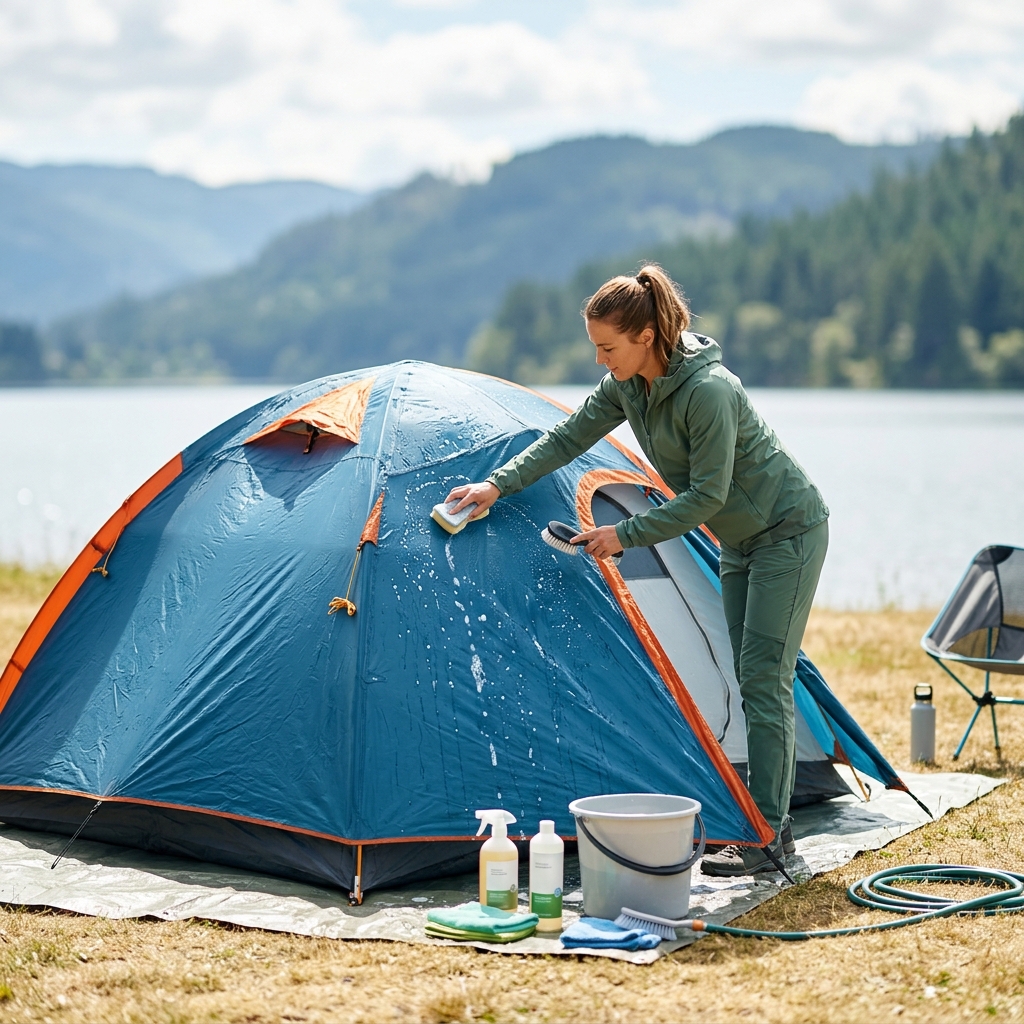
Before you start, gather these essential supplies:
- Soft Brush: For removing loose debris. The Outdoor Revolution Soft Brush for Tent Cleaning (£8.99) is ideal.
- Sponge: A soft sponge for gentle washing.
- Mild Soap: Specifically formulated for tents. Avoid harsh detergents, as they can damage the waterproof coating.
- Bucket: For mixing your cleaning solution.
- Hose: For rinsing (a gentle spray nozzle is best).
- Waterproof Spray: For re-proofing your tent after cleaning. Consider Nikwax Tent & Gear SolarProof Waterproofing (£18.99).
- Tent Cleaner Solution: For more stubborn dirt. Options include Grangers Tent Wash (£12.5) or Gear Aid Revivex Tent Cleaner (£15.0).
Step-by-Step: Cleaning Your Tent After Each Trip
This quick clean prevents build-up and makes deeper cleans much easier.
- Remove Debris: Turn the tent inside out and shake it vigorously to dislodge loose dirt, leaves, and insects. Use the soft brush to sweep away any remaining debris.
- Wipe Down Surfaces: Use a damp sponge with a very mild soap solution to wipe down the interior and exterior of the tent. Pay attention to areas that have come into contact with boots or damp gear.
- Spot Clean: Address any immediate stains (mud, splashes) with a small amount of tent cleaner and a damp cloth.
- Air Dry: Leave the tent fully open and air dry in a well-ventilated area.
Deep Cleaning Your Tent: A Thorough Guide
Aim for a deep clean 1-2 times a year, or more frequently if you camp often.
- Set Up the Tent: Pitch your tent in a spacious, preferably shady, area. This makes cleaning much easier.
- Wash the Flysheet and Groundsheet: Fill a bucket with lukewarm water and add tent-specific cleaner according to the product instructions. Gently wash the flysheet and groundsheet with a sponge or soft brush. Avoid scrubbing vigorously.
- Rinse Thoroughly: Use a hose with a gentle spray nozzle to rinse away all traces of soap. Ensure no soap residue remains, as this can attract dirt and compromise waterproofing.
- Clean the Poles: Wipe down tent poles with a damp cloth. Avoid using soap on the poles, as it can damage the shock cord.
- Check Zippers: Clean zippers with a soft brush to remove dirt and debris. A small amount of zipper lubricant can help keep them running smoothly.
Dealing with Stubborn Stains: Common Camping Messes
Here’s how to tackle common camping stains:
- Mud: Let the mud dry completely, then gently brush it off. If a stain remains, use a tent cleaner.
- Sap: Use a dedicated sap remover or try rubbing alcohol (test in an inconspicuous area first!).
- Bird Droppings: Remove as much as possible with a damp cloth. Then, use a tent cleaner and rinse thoroughly.
- Mildew: A mixture of water and a small amount of white vinegar can help remove mildew. Apply, let it sit for a few minutes, then scrub gently and rinse.
- Sunscreen: Sunscreen can be tricky! Try a dedicated stain remover designed for fabrics, or a paste of baking soda and water.
Drying Your Tent Properly: Preventing Mould & Mildew
This is arguably the *most* important step. A damp tent is a breeding ground for mould and mildew.
- Air Drying: The best method. Pitch the tent, open all vents and doors, and let it air dry completely.
- Fan Assistance: A fan can speed up the drying process, especially in humid conditions.
- Avoid Direct Sunlight for Extended Periods: While some UV exposure can help kill bacteria, prolonged exposure can damage the tent fabric and waterproofing.
- NEVER Pack a Damp Tent: This is a surefire way to develop mould and mildew.
Re-Waterproofing Your Tent: Maintaining its Protection
Over time, the waterproof coating on your tent will wear off. Re-waterproofing is essential to maintain its protection.
- When to Re-Waterproof: If water starts to bead less effectively on the flysheet, or if you notice leaks during rain, it’s time to re-waterproof.
- Cleaning First: Crucially, clean your tent *thoroughly* before applying a waterproofing spray. Dirt and grime prevent the spray from bonding properly.
- Application: Follow the instructions on your chosen waterproofing spray (like Nikwax Tent & Gear SolarProof Waterproofing (£18.99)). Apply evenly, ensuring full coverage.
- Drying: Allow the spray to dry completely before packing your tent.
Tent Storage: Protecting Your Investment
Proper storage is key to a long-lasting tent.
- Clean and Dry: Ensure your tent is completely clean and dry before storing.
- Storage Environment: Store in a cool, dry, and well-ventilated area. Avoid damp basements or hot attics.
- Avoid Compression: Do not store your tent tightly compressed for extended periods. This can damage the fabric and waterproofing.
- Pest Protection: Store your tent in a pest-proof container or bag to protect it from insects and rodents.
- Consider a Footprint: A Vango Tent Footprint – Universal (£35.0) protects the tent base from abrasion and punctures.
Cleaning Different Tent Materials: A Quick Reference
| Material | Cleaning Considerations |
|---|---|
| Nylon | Generally easy to clean. Use mild soap and avoid harsh chemicals. |
| Polyester | More durable than nylon, but still requires gentle cleaning. |
| Canvas | Requires more careful cleaning. Avoid harsh detergents and excessive scrubbing. Allow to dry *completely* to prevent mildew. |
| Coated Polyester | Similar to polyester, but pay attention to the coating – avoid abrasive cleaners. |
Conclusion: Keeping Your Tent Happy for Years to Come
Cleaning your camping tent doesn’t have to be a chore. With regular maintenance – a quick clean after each trip, a thorough deep clean a couple of times a year, and proper storage – you can keep your tent in excellent condition for many adventures to come. Prioritising tent care is an investment in your future camping experiences, ensuring you’re always prepared for whatever the British weather throws your way!
FAQ
- Q: Can I use washing machine to clean my tent?
A: Generally, no. While some tent manufacturers may state that a gentle machine wash is okay, it’s risky and can damage the waterproof coating and seams. Hand washing is always the safest option. - Q: How often should I re-waterproof my tent?
A: This depends on how often you camp and the conditions you camp in. As a general rule, re-waterproof every 1-2 years, or whenever you notice the water repellency decreasing. - Q: What’s the best way to dry a tent if I don’t have much space?
A: If you’re short on space, set up the tent indoors (if possible) and use a fan to circulate air. Ensure the tent is fully open and all vents are uncovered. - Q: What does ‘DWR’ mean in relation to tents?
A: DWR stands for Durable Water Repellent. It’s a coating applied to tent fabrics to make water bead up and roll off, rather than soaking in. This is what you are restoring when you re-waterproof. - Q: Can I use bleach to clean mildew off my tent?
A: Absolutely not! Bleach is far too harsh and will damage the tent fabric and waterproof coating. Stick to a mild soap solution with a small amount of white vinegar.