
Table of Contents
As an Amazon Associate, we earn from qualifying purchases. This means we may receive a small commission at no extra cost to you when you buy through links on this page.
Introduction: Why a Good Camping Mattress Matters
A successful camping trip isn’t just about the scenery; it’s about restorative sleep. Forgetting a good camping mattress is a common mistake, often leading to a restless night and a diminished enjoyment of your outdoor adventure. Gone are the days of simply throwing a thin foam pad down and hoping for the best. Technological advancements in 2026 mean there’s a camping mattress to suit every budget and sleeping style, offering improved comfort, insulation, and portability. Investing in the right mattress is crucial for waking up refreshed and ready to explore.
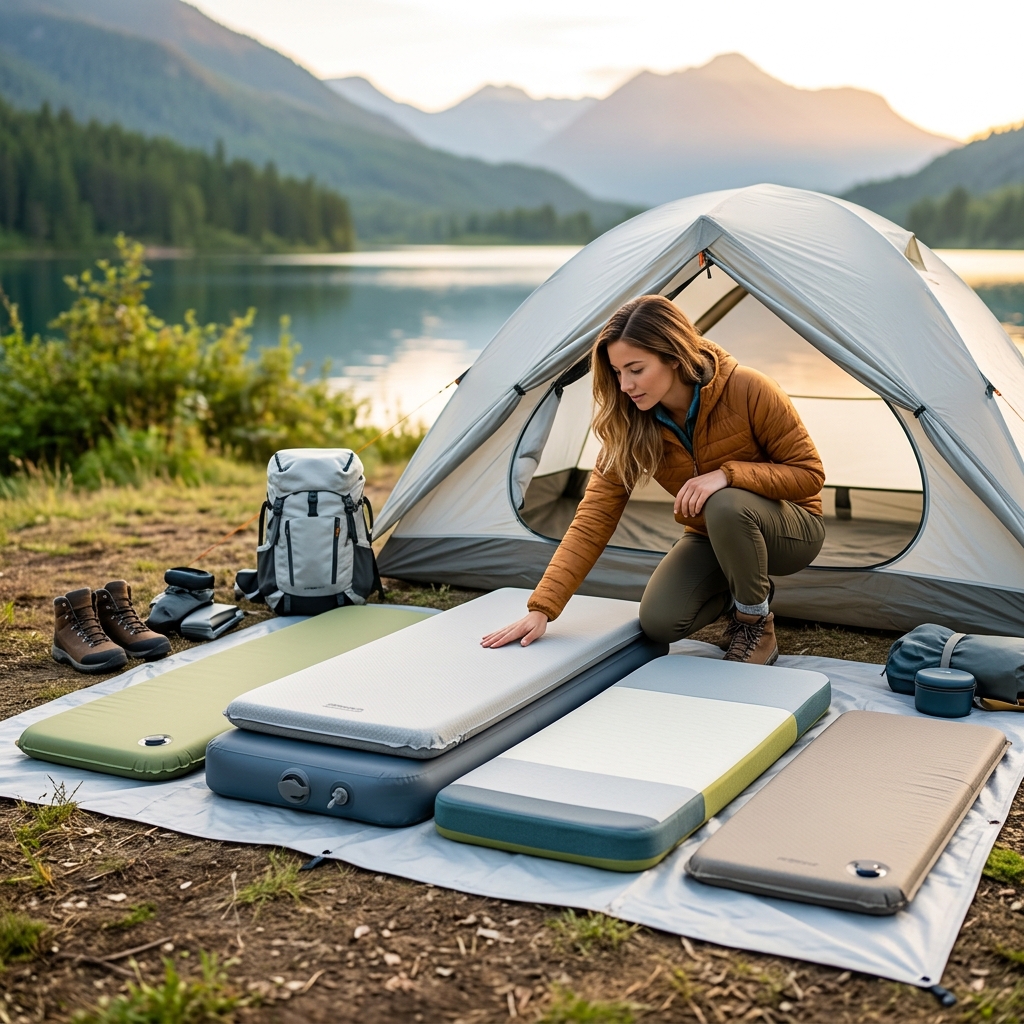
Types of Camping Mattresses Explained
Let’s break down the main types of camping mattresses available in the UK market:
Self-Inflating Mattresses
These combine foam padding with an air chamber. You open a valve, and the foam expands, drawing in air. They offer good comfort and insulation with minimal effort.
- Pros: Comfortable, relatively easy to use, good insulation, generally more durable than air mattresses.
- Cons: Can be heavier and bulkier than other options, may require topping up with air, can be punctured.
- Example: Vango Latitude 200 Self-Inflating Mat (£89.99), Coleman Sundome Self-Inflating Mat (£54.99), Robens PillowDream Self-Inflating Mat (£119.99)
Air Mattresses
These rely entirely on air for cushioning. They’re typically lightweight and pack down small, but require inflation (often with a pump).
- Pros: Lightweight, highly packable, adjustable firmness.
- Cons: Less insulation, prone to punctures, can be noisy, often require a separate pump.
- Example: Therm-a-Rest NeoAir XLite Sleeping Mat (£179.99), Klymit Static V Sleeping Pad (£99.99)
Foam Mattresses
Available in both closed-cell and open-cell foam. Closed-cell foam doesn’t absorb water and is very durable, while open-cell is more comfortable but less water-resistant.
- Pros: Durable, affordable (closed-cell), comfortable (open-cell), no inflation needed.
- Cons: Bulky, heavier than air mattresses, less comfortable than self-inflating or air mattresses (especially closed-cell).
- Example: Snugpak Softie Expansion 7.5 (£139.99) (Closed-cell)
Hybrid Mattresses
Combine features of different mattress types, often incorporating foam layers with an air chamber for optimal comfort and insulation.
- Pros: Excellent comfort, good insulation, relatively lightweight.
- Cons: Can be expensive, potential for more complex repair issues.
- Example: Exped SynMat Hyperlite Duo (£299.99)
Understanding R-Value: Insulation for Camping
R-value measures a material’s resistance to heat flow. A higher R-value means better insulation. In the UK, even summer nights can get chilly, and spring and autumn camping demand robust insulation. Here’s a guideline:
| R-Value | Season | Typical UK Temperatures (°C) |
|---|---|---|
| 1-2 | Summer | 15-20°C |
| 2-3 | Late Summer/Early Autumn | 10-15°C |
| 3-4 | Spring/Autumn | 5-10°C |
| 4-5+ | Winter/High Altitude | 0-5°C and below |
Consider the time of year and the typical temperatures you’ll encounter when choosing an R-value. For year-round UK camping, an R-value of 3 or higher is recommended.
Camping Mattress Sizes & Dimensions
Camping mattresses come in standard sizes, similar to beds:
- Single: 76cm x 190cm – Suitable for solo campers.
- Double: 137cm x 190cm – Ideal for couples or those who prefer extra space.
- Queen: 152cm x 203cm – Less common for camping, but suitable for larger tents and those wanting maximum comfort.
Always measure your tent’s floor space before purchasing a mattress to ensure a proper fit. Also, consider your height. Some mattresses are available in longer lengths for taller individuals.
Key Features to Consider in 2026
2026 sees exciting advancements in camping mattress technology:
- Integrated Pumps: Many self-inflating and air mattresses now feature built-in pumps, eliminating the need for a separate device.
- Smart Materials: Phase-change materials are becoming more common, regulating temperature by absorbing or releasing heat.
- Noise Reduction: New TPU formulations significantly reduce the crinkling noise often associated with air mattresses.
- Enhanced Durability: Strengthened TPU and PVC fabrics resist punctures and abrasion better than older materials.
- Smart Connectivity: Some premium models offer Bluetooth connectivity to monitor firmness and temperature via a smartphone app.
Materials: What are Camping Mattresses Made Of?
The materials used affect weight, comfort, durability, and price:
- TPU (Thermoplastic Polyurethane): Lightweight, flexible, and durable. Commonly used in air mattresses.
- PVC (Polyvinyl Chloride): More affordable than TPU but less durable and environmentally friendly.
- Polyester: Often used for the outer fabric, offering water resistance and abrasion resistance.
- Memory Foam: Provides excellent comfort and conforms to the body’s shape, but can be heavier.
Weight and Pack Size: Important for Backpacking
For backpacking, prioritize lightweight and compact options. Air mattresses and some self-inflating models excel in this area. For car camping, weight is less of a concern, and you can focus on comfort and durability. Consider these approximate weights:
- Ultralight Air Mattress: 300-500g
- Self-Inflating Mattress: 800g – 2kg
- Foam Mattress: 1kg – 3kg
Budget Breakdown: How Much Should You Spend?
Camping mattress prices vary widely:
- £50-£100: Basic self-inflating or foam mattresses, suitable for occasional campers. (e.g., Coleman Sundome)
- £100-£200: Mid-range self-inflating or air mattresses with better comfort and insulation. (e.g., Vango Latitude 200, Klymit Static V)
- £200+: High-end air and hybrid mattresses with advanced features and superior comfort. (e.g., Therm-a-Rest NeoAir XLite, Sea to Summit Comfort Light Insulated, Exped SynMat Hyperlite Duo)
Features like integrated pumps, higher R-values, and smart materials justify a higher price point. Consider how frequently you camp and your priorities when setting a budget.
Our Top Pick
For the best balance of comfort, weight, and price for the average UK camper, we recommend the Sea to Summit Comfort Light Insulated Mat (£149.99). It offers excellent insulation, packs down relatively small, and provides a comfortable night’s sleep.
Caring for Your Camping Mattress: Maintenance & Storage
Proper care extends the life of your mattress:
- Cleaning: Wipe down with a damp cloth and mild soap. Avoid harsh chemicals.
- Repair: Carry a repair kit for punctures. Self-inflating mattresses often come with repair patches.
- Storage: Store in a dry, cool place, away from direct sunlight. Avoid folding air mattresses tightly for extended periods. Self-inflating mattresses should be partially inflated during storage.
Conclusion: Finding Your Perfect Camping Companion
Choosing the right camping mattress is an investment in your comfort and enjoyment of the outdoors. Consider your camping style, budget, and the conditions you’ll be facing. Prioritize insulation for colder months and portability for backpacking trips. With the advancements in 2026, there’s a camping mattress out there to help you get a truly restful night’s sleep under the stars.
FAQ
Q: How often should I inflate/deflate my air mattress?
Only when needed for camping or storage. Frequent inflation and deflation can stress the seams and potentially lead to leaks.
Q: Can I use a sleeping bag on top of my camping mattress?
Absolutely! A sleeping bag adds an additional layer of insulation and comfort. Ensure your sleeping bag is compatible with your chosen mattress type.
Q: What’s the difference between closed-cell and open-cell foam?
Closed-cell foam is denser, waterproof, and more durable, but less comfortable. Open-cell foam is softer and more comfortable but absorbs water and is less durable.
Q: How can I prevent punctures in my air mattress?
Always use a groundsheet under your mattress to protect it from sharp objects. Be careful when placing items on the mattress and avoid jumping or roughhousing.