Table of Contents
Introduction: Staying Warm Under the Stars
A good night’s sleep is crucial for any outdoor adventure. Your sleeping bag is arguably the most important piece of kit for achieving this, protecting you from the elements and ensuring a comfortable and safe camping experience. Sleeping bag technology has advanced significantly in recent years – from improved fill materials and fabric technologies to more refined temperature testing. In 2026, with a wider range of options than ever before, making an informed choice can feel overwhelming. This guide will walk you through everything you need to know to find the perfect sleeping bag for your needs.
Understanding Sleeping Bag Temperature Ratings
Sleeping bag temperature ratings are designed to give you an idea of the conditions the bag is suitable for. However, they can be notoriously confusing. There are three key ratings to understand:
- Comfort Rating: The lowest temperature at which an average female sleeper can sleep comfortably in a relaxed position.
- Limit Rating: The lowest temperature at which an average male sleeper can sleep comfortably for eight hours in a curled position.
- Extreme Rating: A survival-only rating. This is the temperature at which a typical person would risk hypothermia. Do not rely on this rating for comfortable sleep!
EN/ISO Testing Standards: The European Norm (EN) and International Organization for Standardization (ISO) standards (specifically ISO 23537:2016) are now widely used to provide a more consistent and reliable testing method. Look for bags that have been tested to these standards, as they offer a more comparable basis for assessment.
Misconceptions & Personal Warmth: Temperature ratings are just a guideline. Your personal warmth, metabolism, clothing, and the conditions you’re camping in all play a significant role. If you’re a cold sleeper, it’s always best to opt for a bag rated for lower temperatures than you anticipate needing. Also, remember that temperature ratings assume you’re using a suitable sleeping mat – a significant factor in preventing heat loss to the ground.
Sleeping Bag Fill Types: Down vs. Synthetic
The fill of your sleeping bag is a major determinant of its warmth, weight, and price. Here’s a detailed comparison of down and synthetic fills:
| Feature | Down | Synthetic |
|---|---|---|
| Warmth-to-Weight Ratio | Excellent – Provides more warmth for its weight. | Good, but generally heavier than down for the same warmth. |
| Cost | Generally more expensive. | Generally more affordable. |
| Performance When Wet | Loses insulating properties when wet. Requires careful protection. | Retains some insulating properties even when wet. |
| Compression | Compresses to a smaller size. | Typically doesn’t compress as well as down. |
| Ethical Considerations | Sourcing can raise ethical concerns (animal welfare). Look for Responsible Down Standard (RDS) certification. | No animal welfare concerns. Many options now use recycled synthetic materials. |
| Durability | Can last for decades with proper care. | Generally doesn’t last as long as down. |
Down Treatments: Hydrophobic down treatments are now common, coating the down clusters with a water-repellent finish. This significantly improves its performance in damp conditions.
Synthetic Fill Innovations: Synthetic fill technology is constantly improving. Expect to see more bags utilizing recycled synthetic fills, and innovative fiber structures that mimic the loft of down.
Sleeping Bag Shapes: Mummy, Semi-Rectangular, and Rectangular
The shape of your sleeping bag impacts its warmth and comfort.
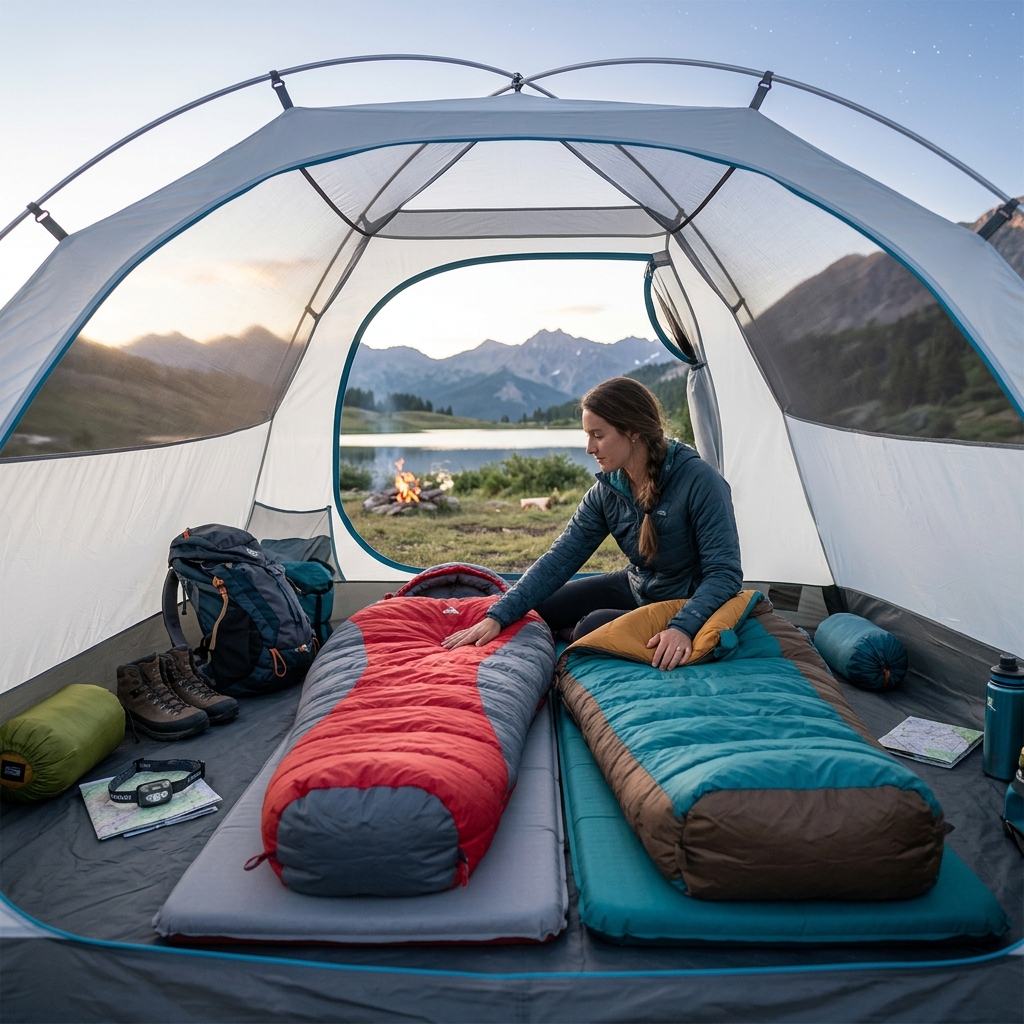
- Mummy Bags: Tapered shape designed to minimize dead air space, maximizing warmth and minimizing weight. Ideal for backpacking and colder conditions.
- Semi-Rectangular Bags: Offer a balance between warmth and space. More room to move than a mummy bag, but still relatively efficient at retaining heat.
- Rectangular Bags: Provide the most space and comfort, but are less efficient at retaining heat. Best suited for car camping or warmer conditions.
Sleeping Positions: If you’re a side sleeper, a semi-rectangular or wider mummy bag will provide more room to move comfortably. Those who prefer to sleep on their back may find a mummy bag more comfortable.
Sleeping Bag Size and Fit: Getting the Right Length & Width
Length: Measure your height and choose a sleeping bag that’s approximately 6-12 inches longer. Too much extra space will mean you have to work harder to warm it up, while too little space will be constricting.
Fit: A snug fit is important for warmth, but you don’t want to feel claustrophobic. Consider your build and sleeping style. Wider sleeping bags are available for those who prefer more room, particularly side sleepers. Look for bags with adjustable hoods and draft collars to further customize the fit.
Sleeping Bag Features: Zippers, Draft Collars, and Hoods
Several features contribute to a sleeping bag’s performance:
- Zippers: Full-length zippers allow for ventilation and easy entry/exit. Anti-snag designs prevent the zipper from catching on the fabric. Two-way zippers allow you to vent from the foot end.
- Draft Collars: A padded collar around the neck prevents warm air from escaping.
- Hoods: Adjustable hoods provide additional warmth and protection for your head.
- Internal Pockets: Useful for storing small items like a phone or headlamp.
Choosing a Sleeping Bag for Different Seasons & Activities
Your choice of sleeping bag should align with the seasons and activities you plan to undertake.
- Summer Camping: A lightweight synthetic or down bag with a Comfort rating of 10°C – 15°C (50°F – 59°F) is usually sufficient.
- Spring/Autumn Camping: A 3-season bag with a Comfort rating of 0°C – 5°C (32°F – 41°F) is a good choice.
- Winter Camping: A 4-season bag with a Comfort rating of -5°C (23°F) or lower is essential.
- Backpacking: Prioritize lightweight and compact bags, typically mummy-shaped with down fill.
- Wild Camping: Similar requirements to backpacking – lightweight and compact are key.
- Festival Camping: Comfort and affordability are often the priorities. A semi-rectangular synthetic bag is a good option.
Sleeping Bag Materials: Shell and Lining Fabrics
The shell and lining fabrics affect the bag’s durability, water resistance, and breathability.
- Nylon: Durable and abrasion-resistant, commonly used for shells.
- Polyester: More affordable than nylon, often used for linings.
- Breathability: Look for fabrics with good breathability to prevent condensation build-up inside the bag.
- Water Resistance: DWR (Durable Water Repellent) treatments can improve water resistance.
- Sustainable Fabrics: Increasingly, manufacturers are using recycled nylon and polyester, and more eco-friendly materials.
Caring for Your Sleeping Bag: Cleaning and Storage
Proper care will extend the life of your sleeping bag.
- Cleaning: Clean your sleeping bag only when necessary, using a specialized sleeping bag detergent (avoid harsh chemicals). Follow the manufacturer’s instructions.
- Drying: Thoroughly dry your sleeping bag before storing it. Tumble drying on low heat is often recommended for synthetic bags, while down bags may require air drying.
- Storage: Store your sleeping bag loosely in a large storage sack. Avoid compressing it for extended periods, as this can damage the fill.
Sleeping Bag Accessories: Liners and Compression Sacks
Sleeping Bag Liners: Add extra warmth (5-15°C / 9-27°F), keep your sleeping bag clean, and can be used alone in warm weather.
Compression Sacks: Reduce the packed size of your sleeping bag, making it easier to transport. Choose a compression sack that’s appropriately sized for your bag.
Conclusion: Finding Your Perfect Sleep System
Choosing the right sleeping bag is a personal decision. Consider your typical camping conditions, activity level, and personal preferences. Prioritize warmth, comfort, and durability. Don’t forget the importance of a good sleeping mat! By carefully considering these factors, you can create a sleep system that ensures a comfortable and restful night under the stars.
Our Top Pick
For an all-rounder that balances performance, price, and features, the Rab Ascent 600 Down Sleeping Bag (£249.95) is our top pick for 2026. Its RDS-certified down fill provides excellent warmth-to-weight, and the durable nylon shell can withstand years of use.
FAQ
- Q: What temperature rating should I choose?
A: It’s always better to err on the side of caution and choose a bag rated for lower temperatures than you expect. Consider your personal warmth and the potential for unexpected weather changes. - Q: Is down or synthetic better?
A: Down offers superior warmth-to-weight, but synthetic is more affordable and performs better when wet. Choose based on your budget, camping conditions, and personal priorities. - Q: How often should I clean my sleeping bag?
A: Only clean your sleeping bag when necessary, as frequent cleaning can damage the fill. - Q: What is the Responsible Down Standard (RDS)?
A: RDS certification ensures that down feathers are sourced from ducks and geese that have been treated humanely. - Q: Can I use my sleeping bag as a duvet at home?
A: While tempting, it’s generally not recommended. Sleeping bags are designed for compression and may not loft effectively as a duvet. It can also accelerate wear and tear.