Table of Contents
As an Amazon Associate, we earn from qualifying purchases. This means we may receive a small commission at no extra cost to you when you buy through links on this page.
Introduction: The Importance of a Good Camping Stove
Camping in the UK has seen a huge surge in popularity in recent years. Whether you’re planning a weekend in the Lake District, a coastal adventure in Cornwall, or a family getaway in the New Forest, a reliable camping stove is absolutely essential for an enjoyable trip. Gone are the days of relying solely on campfire cooking (which is often restricted or impractical). A good stove provides quick, convenient, and controllable heat for preparing meals and boiling water, enhancing your overall camping experience. With a plethora of options available, making the right choice can be daunting. This guide will help you navigate the market and choose the perfect camping stove for your needs in 2026.
Understanding Camping Stove Types
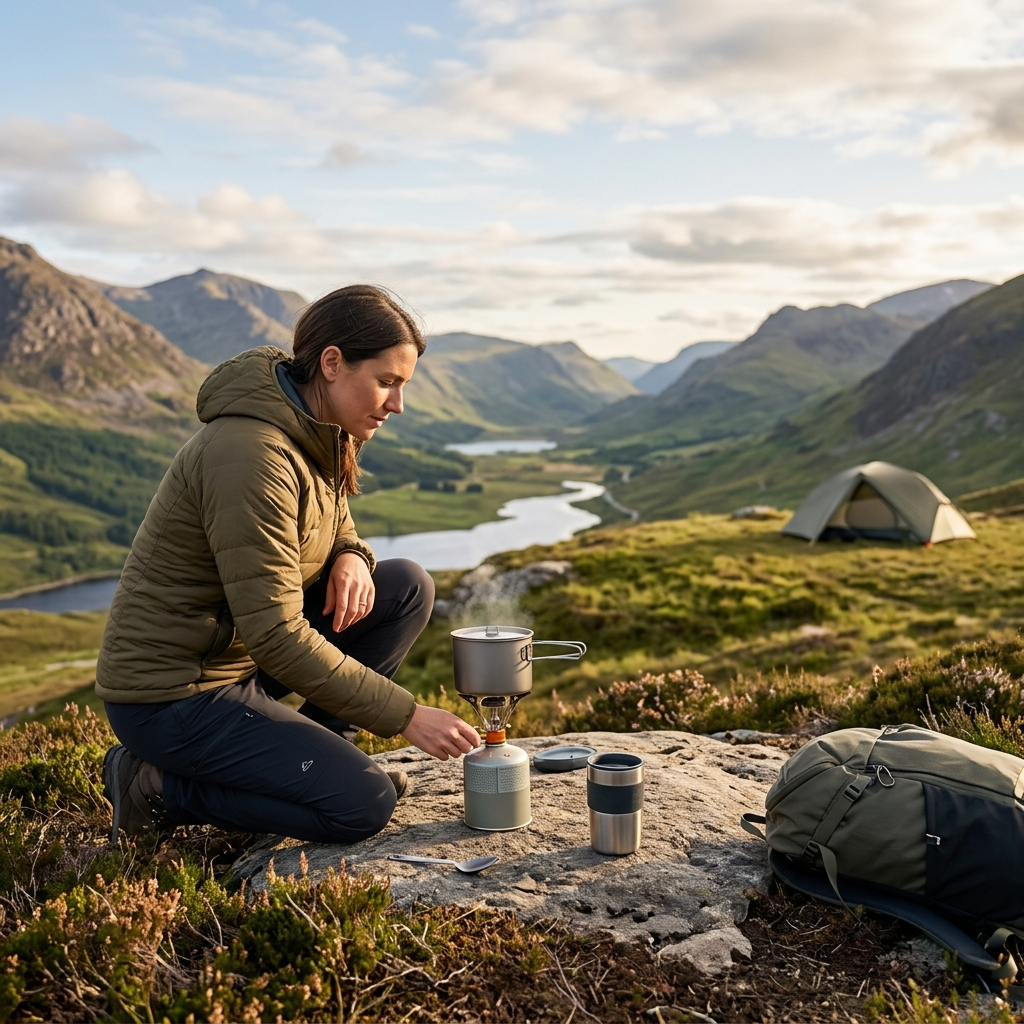
The first step is understanding the different types of camping stoves available. Each has its own strengths and weaknesses.
Canister Stoves
These stoves screw directly onto a gas canister (typically propane, butane, or a blend). They are incredibly popular for their simplicity and ease of use.
| Pros | Cons |
|---|---|
| Lightweight and compact | Canisters can be expensive |
| Easy to use – quick setup | Performance can suffer in cold weather (especially butane) |
| Good temperature control | Canisters run out quickly with heavy use |
| Relatively clean burning | Canister disposal can be an issue |
Example: MSR PocketRocket 2 Stove – £49.99
Liquid Fuel Stoves
These stoves use liquid fuel, typically white gas (petrol) or kerosene. They require priming (preheating) and are generally more complex to operate than canister stoves.
| Pros | Cons |
|---|---|
| Excellent performance in cold weather | More complex to operate |
| Fuel is generally cheaper and more readily available internationally. | Requires priming |
| More fuel-efficient than canister stoves for longer trips | Heavier and bulkier than canister stoves |
| Reliable in windy conditions | Requires regular maintenance |
Example: Primus OmniFuel T Stove – £199.99
Multi-Fuel Stoves
A hybrid of liquid fuel stoves, multi-fuel stoves can operate on a variety of fuels, including white gas, kerosene, unleaded petrol, and even diesel. This versatility makes them ideal for expeditions and areas where fuel availability is uncertain.
Wood-Burning Stoves
These stoves burn twigs, branches, and other biomass, eliminating the need to carry fuel. They’re eco-friendly but require more effort to operate.
| Pros | Cons |
|---|---|
| No fuel to carry | Can be smoky |
| Eco-friendly | Requires time and effort to gather fuel |
| Can be used in remote areas | Not suitable for all locations (fire restrictions) |
Example: BioLite CampStove 2+ – £249.99 (also charges devices)
Alcohol Stoves
Small, lightweight, and simple, alcohol stoves burn denatured alcohol. They are best suited for solo backpacking and simmering, but they are not particularly powerful or efficient.
Fuel Options: Which is Right for You?
Choosing the right fuel is just as important as choosing the stove.
Propane
Offers good performance down to freezing temperatures. Commonly used in larger, family-sized stoves. Canisters are readily available in the UK.
Butane
Efficient and inexpensive, but performance drops significantly in cold weather. Best suited for summer camping. A common component in canister blends.
Isobutane
A popular choice for canister stoves, offering better cold-weather performance than butane. Often blended with propane for optimal performance.
White Gas (Petrol)
Excellent performance in all conditions. Requires careful handling and storage. Relatively cheap, but availability can vary in remote areas.
Kerosene
A more readily available fuel internationally, but produces more soot than white gas.
Wood
Renewable and free, but requires effort to collect and can be subject to local restrictions.
Alcohol
Lightweight and simple, but not very powerful or efficient.
Canister Mixes: Most canister stoves use a blend of butane and propane. Higher propane ratios offer better performance in colder climates. Look for canisters labelled ‘winter blend’ for optimal cold-weather performance.
Key Features to Consider in 2026
As of 2026, several key features significantly impact your camping stove experience:
- Burner Power (BTU/kW): Higher BTU/kW means faster boiling times. Consider your cooking needs.
- Simmer Control: Essential for delicate sauces and stews. Look for stoves with precise simmer control.
- Wind Protection: Wind can significantly reduce stove efficiency. Integrated wind shields or the use of a windscreen are crucial.
- Ignition System: Piezo ignition is convenient, but a reliable lighter is always a good backup.
- Pot Support Design: Stable pot support is vital for safety and efficiency.
- Pack Size/Weight: Crucial for backpacking.
- Smart Stove Technology (New in 2026): Some stoves now feature Bluetooth connectivity and smartphone app control, allowing for precise temperature regulation and remote monitoring.
Camping Stove Safety: Essential Tips
Safety is paramount when using a camping stove.
- Ventilation: Always use a stove in a well-ventilated area to prevent carbon monoxide buildup. Never use a stove inside a tent or enclosed space.
- Fuel Storage: Store fuel away from heat sources and direct sunlight.
- Carbon Monoxide Awareness: Invest in a carbon monoxide detector if using a fuel-burning stove.
- Fire Prevention: Keep flammable materials away from the stove.
- Stable Surface: Always place the stove on a level, stable surface.
Resources:
Top Camping Stoves for UK Campers (2026)
| Stove Model | Type | Price (GBP) | Best For |
|---|---|---|---|
| Jetboil Flash Cooking System | Canister | £159.99 | Fast boiling, solo backpacking, quick meals |
| MSR PocketRocket 2 Stove | Canister | £49.99 | Ultralight backpacking, budget-friendly |
| Primus OmniFuel T Stove | Multi-Fuel | £199.99 | Expeditions, cold weather, fuel versatility |
| Vango Cobra 600 Double Burner Stove | Propane | £129.99 | Family camping, cooking for large groups |
| BioLite CampStove 2+ | Wood-Burning | £249.99 | Eco-conscious campers, off-grid cooking, charging devices |
| Coleman Classic Propane Stove | Propane | £79.99 | Simple family camping, easy to use |
| Soto MSR Microburner | Canister | £89.99 | Lightweight, stable, excellent flame control |
Maintaining Your Camping Stove
Proper maintenance extends the life of your stove.
- Cleaning: Regularly clean the burner and pot supports to remove debris.
- Storage: Store the stove in a dry, clean place.
- Fuel System: For liquid fuel stoves, periodically flush the fuel line to prevent clogging.
- Troubleshooting: If your stove isn’t lighting, check the fuel supply, burner, and ignition system. Consult the manufacturer’s instructions.
Conclusion: Finding the Perfect Stove for Your Needs
Choosing the right camping stove depends on your individual needs and camping style. Consider the weight, fuel availability, weather conditions, and your cooking requirements. Whether you’re a solo backpacker seeking lightweight efficiency or a family camper prioritising convenience, there’s a stove out there for you. Prioritise safety and invest in a quality stove that will provide years of reliable service on your UK adventures.