
Table of Contents
As an Amazon Associate, we earn from qualifying purchases. This means we may receive a small commission at no extra cost to you when you buy through links on this page.
Introduction: Why a Good Camping Mattress Matters
A comfortable night’s sleep is crucial for enjoying any camping trip. Gone are the days of accepting a rough night on hard ground. A good camping mattress isn’t just about comfort; it’s about insulation from the cold ground, supporting your back, and ultimately, ensuring you wake up refreshed and ready to explore. Mattress technology has come a long way in recent years, with advancements in materials and designs offering improved comfort, portability, and durability. Investing in the right camping mattress can dramatically improve your outdoor experience.
Types of Camping Mattresses: A Comprehensive Overview
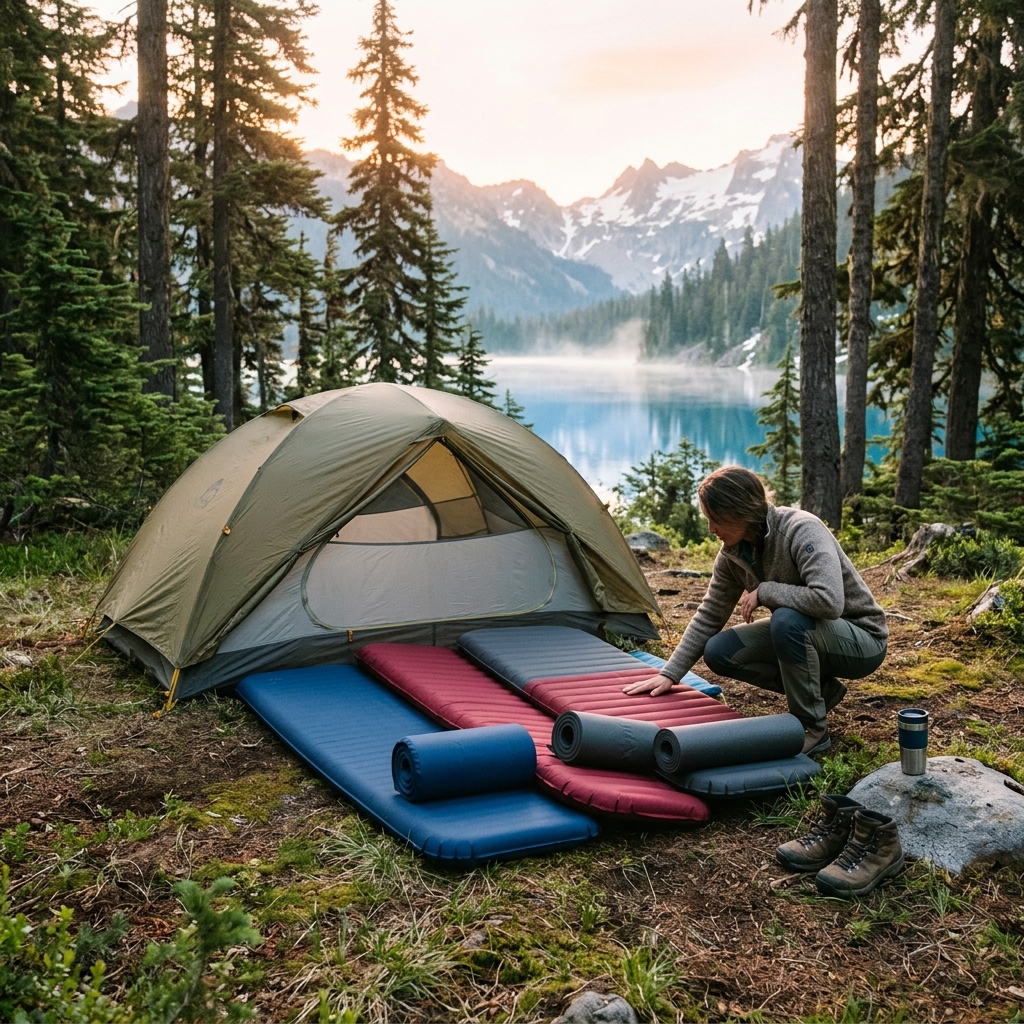
Choosing the right type of camping mattress depends on your camping style, budget, and priorities. Here’s a breakdown of the main options:
Self-Inflating Mattresses
These mattresses combine foam padding with an air chamber. They automatically inflate when the valve is opened, drawing in air to fill the chamber. You can then top them up with a few breaths for desired firmness.
- Pros: Comfortable, relatively easy to use, good insulation, good balance of comfort and portability.
- Cons: Can be heavier than air mattresses, can be punctured (though generally more durable than air mattresses), some manual inflation may be required.
Example: Vango Latitude 10 Self-Inflating Mat (£85.0)
Air Mattresses
Air mattresses typically require a pump to inflate (manual or electric). They’re known for their adjustability – you can control the firmness to your liking.
- Pros: Lightweight, compact when deflated, adjustable firmness, often the most affordable option.
- Cons: Can be cold (lack of insulation), prone to punctures, require a pump, can be noisy (rustling).
Example: Coleman Sundome Airbed (£60.0)
Foam Mattresses
Foam mattresses come in two main types: closed-cell and open-cell.
- Closed-Cell Foam: Dense, non-absorbent foam. Extremely durable and provides good insulation.
- Open-Cell Foam: Softer and more compressible than closed-cell, but can absorb water. Often used as a layer in hybrid mattresses.
- Pros (Closed-Cell): Durable, excellent insulation, affordable.
- Cons (Closed-Cell): Bulky, less comfortable than air or self-inflating options.
- Pros (Open-Cell): Comfortable, lightweight.
- Cons (Open-Cell): Absorbs water, less insulating.
Hybrid Mattresses
Hybrid mattresses combine different technologies, such as a foam layer for comfort with an air chamber for adjustability. These aim to provide the best of both worlds.
- Pros: Excellent comfort, good insulation, adjustable firmness.
- Cons: Can be expensive, potentially heavier than other options.
Example: Sea to Summit Comfort Light Insulated Mat (£180.0)
Understanding R-Value: Insulation and Warmth
R-Value measures a material’s resistance to heat flow. A higher R-Value indicates better insulation. In the UK, even summer nights can get chilly, so R-Value is important. Here’s a guide:
- R-Value 1-2: Summer camping (above 10°C)
- R-Value 2-3: Spring/Autumn camping (5-10°C)
- R-Value 3-4.5: Shoulder season camping (0-5°C) – most UK campsites.
- R-Value 4.5+: Winter camping (below 0°C) – Scottish Highlands or other cold regions.
Camping Mattress Sizes: Finding the Right Fit
Choosing the right size is essential for comfort. Here are standard sizes:
| Size | Dimensions (cm) | Dimensions (inches) | Suitable For |
|---|---|---|---|
| Single | 183 x 76 | 72 x 30 | Solo campers |
| Double | 198 x 137 | 78 x 54 | Couples |
| Queen | 203 x 152 | 80 x 60 | Larger couples or those wanting extra space |
Consider your tent size. The mattress should fit comfortably within the tent floor, leaving enough space for other gear.
Key Features to Consider (2026 Trends)
- Mattress Thickness: Thicker mattresses (10cm+) generally offer more comfort.
- Weight: Important for backpackers. Look for lightweight materials.
- Pack Size: How small does it compress? Crucial for backpackers and cyclists.
- Materials: TPU (Thermoplastic Polyurethane) is durable and flexible. PVC is cheaper but less durable. Memory foam adds comfort.
- Valve Types: One-way valves prevent air loss during inflation/deflation.
- Smart Mattresses (2026 Trend): Some mattresses now feature integrated sensors to monitor sleep quality and adjust firmness automatically. These are still emerging and pricier.
Budget Breakdown: How Much Should You Spend?
- £50 – £100: Basic air mattresses and entry-level self-inflating mattresses. Focus is on affordability, not ultimate comfort or durability.
- £100 – £200: Good quality self-inflating mattresses and some lightweight air mattresses. Expect better comfort, durability, and insulation.
- £200+: High-end self-inflating and hybrid mattresses. Premium materials, superior comfort, and advanced features (e.g., high R-Values, smart technology).
Top Camping Mattresses of 2026 (UK Market)
Our Top Pick: Therm-a-Rest NeoAir XLite (£210.0) – Excellent balance of weight, comfort, and pack size, ideal for backpacking.
- Vango Latitude 10 Self-Inflating Mat (£85.0): A great all-rounder for general camping, offering good comfort and insulation at an affordable price.
- Therm-a-Rest NeoAir XLite (£210.0): The gold standard for lightweight backpacking. Exceptionally comfortable and packs down incredibly small.
- Coleman Sundome Airbed (£60.0): A budget-friendly option suitable for casual camping or as a guest bed.
- Outwell Dreamweaver Double Self-Inflating Mat (£150.0): Comfortable and spacious, ideal for couples.
- Sea to Summit Comfort Light Insulated Mat (£180.0): A high-performance self-inflating mat offering excellent comfort and insulation for three-season camping.
- Snugpak Self-Inflating Mat (£90.0): Reliable and durable, known for its robust construction.
Caring for Your Camping Mattress: Maintenance and Storage
- Cleaning: Wipe down with a damp cloth and mild soap after each use.
- Repairing: Carry a puncture repair kit. Small punctures can be patched easily.
- Storage: Deflate completely and store in a cool, dry place. Avoid storing in direct sunlight.
- Preventing Mould/Mildew: Ensure the mattress is completely dry before storing.
Troubleshooting Common Issues
- Leaks: Use soapy water to find the leak. Patch with a repair kit.
- Deflation: Check the valve for damage. Re-inflate and monitor.
- Discomfort: Adjust firmness (if possible). Consider adding a sleeping bag pad for extra cushioning.
Conclusion: Choosing the Best Camping Mattress for Your Needs
The best camping mattress for you depends on your individual needs and preferences.
- Solo Backpackers: Prioritise lightweight and compact options like the Therm-a-Rest NeoAir XLite.
- Family Campers: Focus on comfort and durability. A double self-inflating mattress like the Outwell Dreamweaver is a good choice.
- Luxury Campers: Invest in a high-end hybrid mattress for ultimate comfort and features.
By considering these factors, you can choose a camping mattress that ensures a restful and enjoyable camping experience in the beautiful UK countryside.
FAQ
Q: What’s the difference between R-value and insulation?
R-value *measures* insulation. A higher R-value means better insulation against heat loss to the ground, keeping you warmer.
Q: How often should I replace my camping mattress?
Depending on usage and care, a good quality camping mattress should last 5-10 years. Look for signs of wear and tear, like persistent leaks or loss of firmness.
Q: Can I use a camping mattress indoors?
Yes, many camping mattresses can be used indoors for guests. However, they may not be as comfortable as a regular bed mattress.
Q: What’s the best way to store a self-inflating mattress?
Partially deflate it, roll it loosely (don’t fold it tightly), and store it in the provided storage bag in a cool, dry place.
Q: Are air mattresses suitable for colder weather?
Generally, no. Air mattresses offer little insulation. You’ll need to combine them with a sleeping bag and a sleeping pad (foam or insulated air mattress) for warmth in colder conditions.