Table of Contents
As an Amazon Associate, we earn from qualifying purchases. This means we may receive a small commission at no extra cost to you when you buy through links on this page.
Introduction: Why Your Hiking Boots Matter
The UK offers a stunning tapestry of landscapes, from the rolling hills of the Lake District to the rugged peaks of the Scottish Highlands and the coastal paths of Cornwall. But conquering these diverse terrains requires more than just enthusiasm; it demands the right footwear. Your hiking boots are arguably the most important piece of kit you’ll invest in. Good boots provide comfort, preventing blisters and fatigue on long treks. More crucially, they offer essential support and protection, reducing the risk of ankle injuries, particularly on uneven ground. In 2026, with advancements in materials and design, the options are greater than ever, but choosing the right pair requires careful consideration. This guide will help you navigate the market and find the perfect boots for your adventures.
Understanding Hiking Boot Types
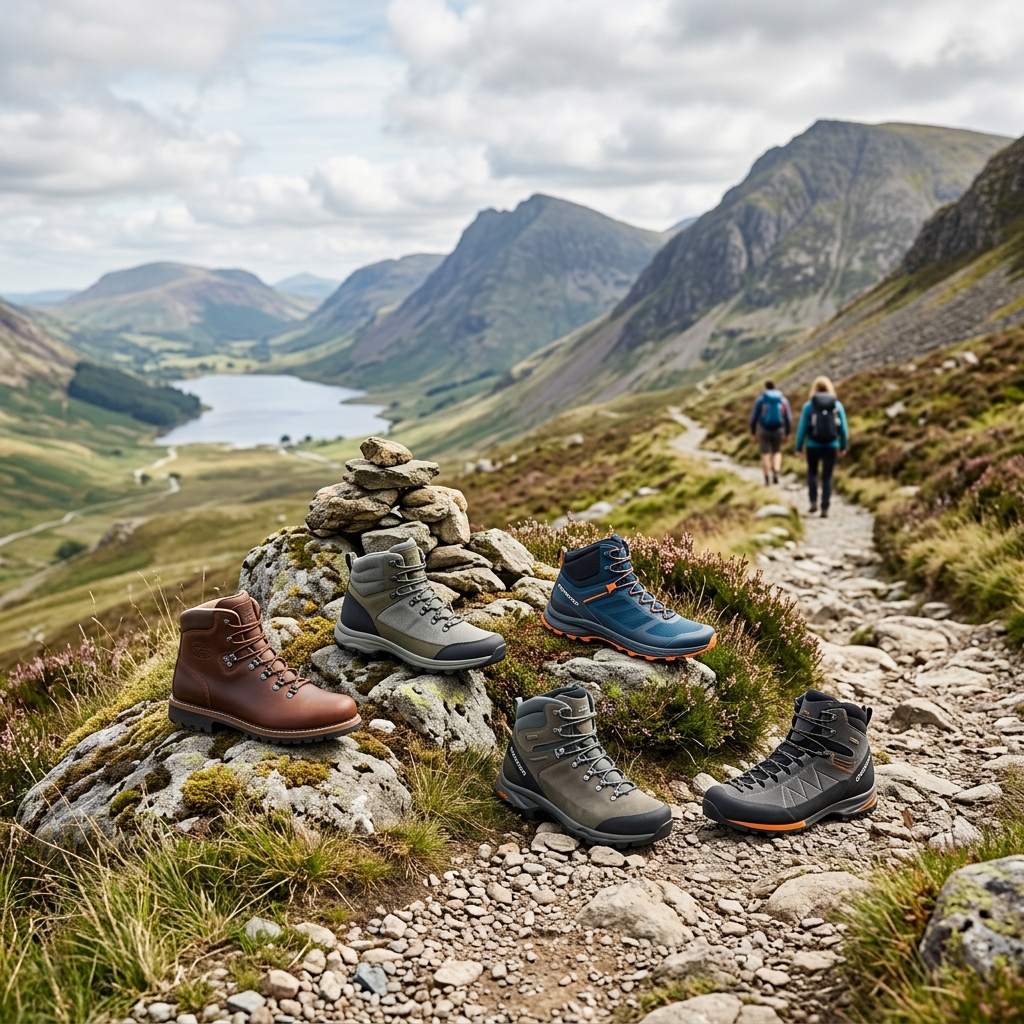
Hiking boots aren’t a one-size-fits-all solution. Different types are engineered for specific activities and terrains. Here’s a breakdown:
Day Hiking Boots
These are the lightest and most flexible type, ideal for well-maintained trails and shorter hikes with minimal pack weight. They offer less ankle support but prioritise comfort and agility. Suitable for trails like the South Downs Way and easier routes in the Peak District.
Backpacking Boots
Designed for multi-day treks with heavier loads, backpacking boots offer increased ankle support, a stiffer sole for stability, and greater durability. They’re more substantial than day hiking boots but provide the necessary support for carrying a backpack. Perfect for tackling the West Highland Way or longer sections of the Pennine Way.
Mountaineering Boots
The most robust and supportive type, mountaineering boots are built for challenging terrain, including snow, ice, and rocky scrambles. They are often crampon-compatible and feature a very stiff sole. While less common for general hiking in the UK, they are essential for winter climbs in Scotland or the Lake District.
Key Features to Consider in 2026
Several features will influence your boot choice. Here’s what to look for in 2026:
Waterproofing
Gore-Tex remains the gold standard for waterproofing, offering excellent breathability alongside protection from the elements. However, alternative waterproof membranes from brands like Sympatex are becoming increasingly popular, offering comparable performance at a potentially lower price point. Expect to see more sustainable waterproof membrane options emerging in 2026.
Mid/High Cut
Higher cuts provide more ankle support, crucial for backpacking and uneven terrain. Mid-cut boots offer more freedom of movement and are suitable for day hikes.
Ankle Support
Rigidity levels vary. Consider your ankle strength and the type of terrain you’ll encounter.
Sole
Vibram soles are renowned for their grip and durability. Look for aggressive lug patterns for better traction on muddy or rocky surfaces. Expect to see increased use of recycled rubber compounds in Vibram soles by 2026.
Materials
Leather boots are durable and mould to your feet over time but require more maintenance. Synthetic boots are lighter, quicker drying, and often more affordable. Hybrid boots combine leather and synthetic materials.
Weight
Lighter boots reduce fatigue, but often sacrifice some durability and support.
Lacing System
Traditional laces offer a secure fit, while quick-lace systems are convenient but may not be as adjustable.
Top Hiking Boot Comparisons (UK Market)
Here’s a comparison of some of the best hiking boots available in the UK in 2026:
| Boot Model | Type | Waterproofing | Weight (per boot – approx.) | Price (approx.) | Pros | Cons | Target User |
|---|---|---|---|---|---|---|---|
| Salomon X Ultra 4 GTX | Day Hiking/Backpacking | Gore-Tex | 340g | £160.00 | Lightweight, comfortable, excellent grip | Less durable than leather options | Hikers wanting a versatile boot for day hikes and lighter backpacking |
| Merrell Moab 3 GTX | Day Hiking | Gore-Tex | 380g | £140.00 | Comfortable, affordable, good value | Can feel a little bulky, average durability | Beginner hikers and those on a budget |
| Scarpa Terra GTX | Backpacking | Gore-Tex | 650g | £200.00 | Durable, excellent support, precise fit | Heavier than some options, requires break-in period | Hikers tackling challenging terrain with heavier loads |
| Hanwag Tatra II GTX | Backpacking | Gore-Tex | 720g | £240.00 | Extremely durable, high-quality construction, comfortable | Expensive, heavy | Serious backpackers and those needing a long-lasting boot |
| Keen Targhee III GTX | Day Hiking/Backpacking | Gore-Tex | 400g | £150.00 | Wide toe box, comfortable, good value | Can feel less precise than other models | Hikers with wider feet and those wanting a comfortable, roomy boot |
Boot 1: Salomon X Ultra 4 GTX
The Salomon X Ultra 4 GTX is a popular choice for its lightweight design and impressive grip. Its Gore-Tex lining provides reliable waterproofing, and the Advanced Chassis™ technology offers stability on uneven terrain. Sizing tends to run slightly small, so consider trying a half size up. On UK trails, it performs well on rocky paths and muddy slopes, but its relatively soft sole may not be ideal for extremely heavy loads. Durability is good, but not exceptional.
Boot 2: Merrell Moab 3 GTX
The Merrell Moab 3 GTX is known for its out-of-the-box comfort and affordability. The Gore-Tex membrane keeps feet dry, and the Vibram sole offers decent traction. It’s a great all-rounder for day hikes and easier backpacking trips. Sizing is generally true to size. However, the Moab 3 can feel a little bulky, and the materials aren’t as durable as some higher-end options. It excels on well-maintained trails but may struggle with very technical terrain.
Boot 3: Scarpa Terra GTX
The Scarpa Terra GTX is a more robust option, designed for backpacking and challenging terrain. The Gore-Tex lining and durable leather upper provide excellent protection, and the Vibram sole offers superior grip. It has a more precise fit, requiring a break-in period. It’s heavier than the Salomon or Merrell, but the added support and durability are worthwhile for serious hikers. Expect excellent performance in the Scottish Highlands and on demanding Lake District routes.
Boot 4: Hanwag Tatra II GTX
The Hanwag Tatra II GTX is a premium boot built to last. Its high-quality leather construction, Gore-Tex lining, and robust sole provide exceptional durability and support. It’s a significant investment, but it’s likely to be the last pair of boots you’ll need for many years. It’s heavier than other options and requires a substantial break-in period. Best suited for experienced backpackers tackling long-distance trails.
Boot 5: Keen Targhee III GTX
The Keen Targhee III GTX is a comfortable and versatile boot, particularly well-suited for hikers with wider feet. The wide toe box allows for natural foot movement, and the Gore-Tex lining keeps feet dry. Its Vibram sole provides good traction, and the durable leather upper offers adequate protection. It may not feel as precise as some other models, but its comfort and value make it a popular choice.
Hiking Boot Maintenance & Care
Proper maintenance will significantly extend the life of your hiking boots:
- Cleaning: Remove dirt and mud after each hike with a boot brush (£8.00).
- Waterproofing: Re-apply a waterproofing spray like Nikwax Waterproofing Spray (400ml) – £12.99 regularly, especially after cleaning.
- Conditioning (Leather Boots): Use a leather boot conditioner (£18.00) to keep the leather supple and prevent cracking.
- Storage: Store boots in a cool, dry place away from direct sunlight.
- Insoles: Replace insoles (Footbed Insoles – Superfeet – £45.00) every 6-12 months for added comfort and support.
Finding the Right Fit: A Guide to Hiking Boot Sizing
Getting the right fit is crucial. Here’s how:
- Measure your feet: Do this at the end of the day when your feet are at their largest.
- Try on boots with hiking socks: SockShop Hiking Socks (Pair) – £15.00.
- Allow for toe space: You should have about a thumb’s width of space between your longest toe and the end of the boot.
- Walk around the store: Test the boots on an incline to check for heel slippage.
- Consider volume: Some boots are designed for wider or narrower feet.
Conclusion: Choosing the Best Hiking Boots for You
The best hiking boots for you depend on your hiking style, terrain, and budget. For day hikes on well-maintained trails, the Salomon X Ultra 4 GTX or Merrell Moab 3 GTX are excellent choices. If you’re planning multi-day treks with heavier loads, the Scarpa Terra GTX or Hanwag Tatra II GTX offer the support and durability you need. And for those with wider feet, the Keen Targhee III GTX provides a comfortable and roomy fit. Remember to prioritize fit, comfort, and waterproofing, and invest in proper maintenance to ensure your boots will serve you well for years to come. Don’t underestimate the value of waterproof hiking socks (Sealskinz – £25.00) for extra protection during particularly wet conditions.
FAQ
Q: How often should I waterproof my hiking boots?
A: It’s recommended to waterproof your boots every 3-6 months, or more frequently if you hike in wet conditions often. After each cleaning, re-apply a waterproofing spray.
Q: Can I wear hiking boots straight out of the box?
A: Some boots, like the Merrell Moab, are comfortable from the start. However, many boots, especially leather ones, require a break-in period to mould to your feet.
Q: What is the difference between a full-grain and split-grain leather boot?
A: Full-grain leather is the most durable and water-resistant type, while split-grain leather is less expensive but also less durable.
Q: How do I know if my hiking boots are worn out?
A: Signs of wear include a worn-down sole, cracks in the leather, and a loss of support. If you notice any of these issues, it’s time to replace your boots.
Q: Should I buy waterproof or non-waterproof hiking boots?
A: In the UK, waterproof boots are generally recommended due to the unpredictable weather. However, non-waterproof boots can be more breathable in dry conditions.