Table of Contents
As an Amazon Associate, we earn from qualifying purchases. This means we may receive a small commission at no extra cost to you when you buy through links on this page.
What is a Camping Tarp & Why Use One?
A camping tarp is, at its simplest, a large sheet of durable, waterproof material. But don’t let that simplicity fool you. It’s arguably one of the most versatile pieces of kit a UK camper can own. Made from materials like polyethylene, silnylon, or even traditional canvas, a tarp offers a wealth of possibilities beyond just keeping the rain off. Choosing the right tarp is about balancing weight, durability, and cost. Polyethylene tarps are the most affordable, starting around £20 for a basic 3x3m option, but they’re the heaviest. Silnylon (silicone-impregnated nylon) is lighter and more durable but comes with a higher price tag – expect to pay from £60 upwards. Canvas offers excellent durability and a classic aesthetic, but is significantly heavier and requires more care. For UK camping, where unpredictable weather is the norm, a good quality tarp is an essential investment.
Core Uses: Shelter from the Elements
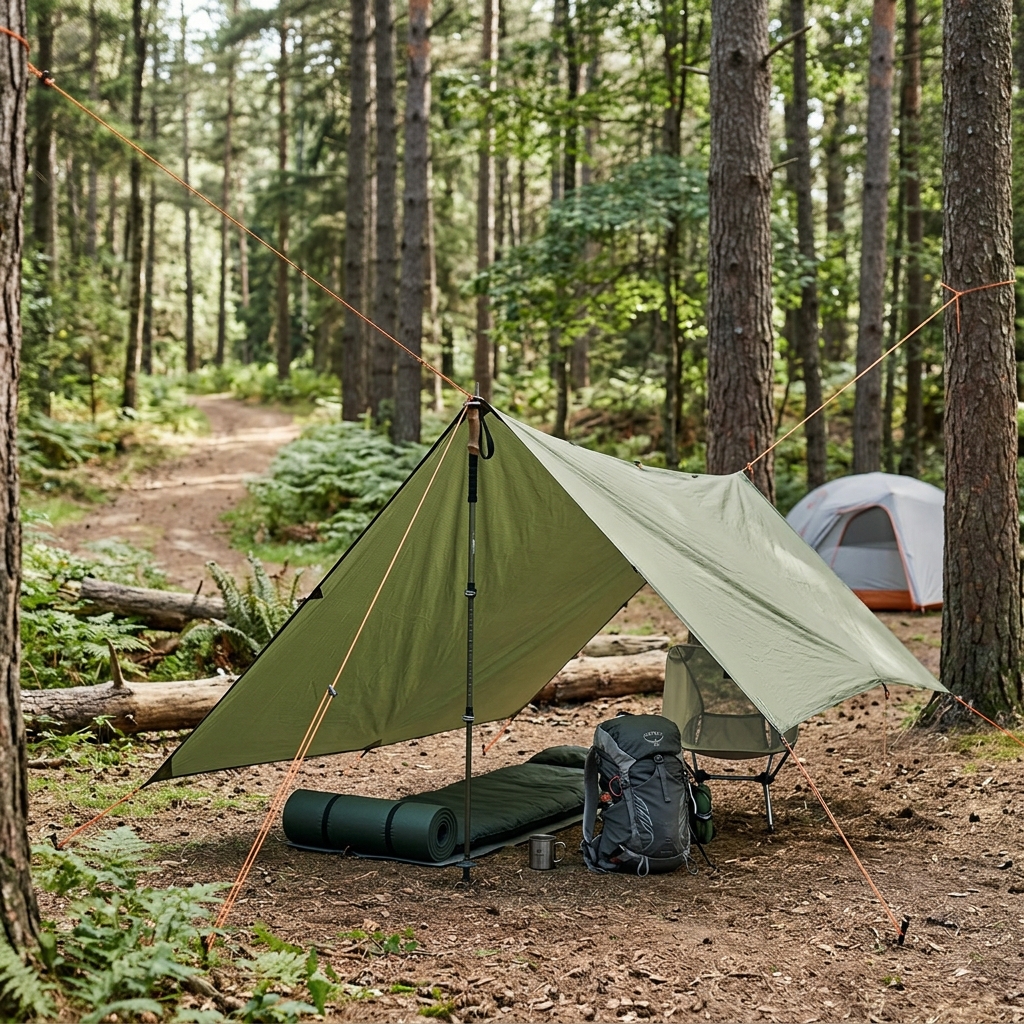
The most obvious use for a camping tarp is creating shelter. Here are a few common configurations:
A-Frame Shelter
This is the simplest setup, requiring two points of attachment (trees or poles) and guylines. Ideal for quick shelter from rain, but offers limited space. Ensure guylines are taut to prevent flapping in the wind – a common issue in exposed UK locations.
Lean-To Shelter
A lean-to requires one high attachment point and two lower ones. It offers good wind protection from one direction and is relatively easy to set up. Best suited for calmer weather, as strong winds can lift the edges.
Closed-End Shelter
This provides more complete protection, essentially creating a small tent-like space. It requires more guylines and a bit more skill to set up, but is worthwhile for extended periods in wet weather. Consider using trekking poles or dedicated tarp poles for support.
Fly Shelter
Using a tarp as an extended ‘fly’ over an existing tent adds an extra layer of waterproof protection and creates a covered porch area. Excellent for keeping gear dry and providing space to cook under cover.
Tarp as a Groundsheet & Gear Protection
Placing a tarp *under* your tent is crucial for protecting the groundsheet from abrasion and preventing moisture ingress. A groundsheet tarp should be slightly smaller than the tent’s footprint to avoid rain collecting underneath. For a two-person tent (approximately 3m x 2m), a 2.7m x 1.7m tarp is ideal. Using a tarp to cover piles of gear – firewood, backpacks, wellies – will keep them dry and protected from the elements. When storing gear, ensure the tarp is securely fastened to prevent items from blowing away, especially on exposed campsites near the coast.
Creating a Camp Kitchen & Dining Area
A tarp can quickly transform a muddy patch of ground into a comfortable cooking and dining area. Extend the tarp to cover the cooking area and a seating space. *Crucially*, if using a gas stove, ensure adequate ventilation and keep flammable materials well clear of the burner. UK campsites often have designated cooking areas, so be mindful of regulations. Maximise space by using guylines to create higher ceilings and a more open feel.
Tarp as a Rain Cover & Gear Protector
Beyond protecting gear during storage, a tarp is invaluable for covering firewood, keeping it dry and ready for use. For backpacks, a tarp can provide instant waterproof protection during a sudden downpour. On coastal or exposed campsites, secure the tarp with extra guylines and sturdy pegs – wind gusts can easily lift a poorly secured tarp and send your belongings flying.
Creative Tarp Uses: Beyond the Basics
Don’t limit your thinking! A camping tarp is incredibly adaptable:
- Emergency Stretcher: In a pinch, a sturdy tarp can be used to transport an injured person.
- Signal Panel: A brightly coloured tarp (orange or yellow) can be used as a signal panel for attracting attention in an emergency.
- Makeshift Repairs: Tarp material can be patched onto damaged tents or gear for temporary repairs.
- Windbreak: Erect a tarp to create a windbreak, shielding your tent or cooking area from strong gusts.
- Privacy Screen: Use a tarp as a simple privacy screen, blocking views from neighbouring campsites.
Choosing the Right Camping Tarp: Size, Material & Features
Selecting the right tarp depends on your needs and budget. Here’s a breakdown:
Size
Consider the number of people in your group and the intended use. A 3x3m tarp is a versatile starting point for solo campers or couples. Families may benefit from a larger 4x4m or even 5x5m tarp.
Material
As mentioned earlier, polyethylene, silnylon, and canvas each have their pros and cons. Silnylon offers the best balance of weight, durability, and waterproofing for most UK campers.
Features
Look for features like reinforced corners, multiple grommet points (for flexible setup options), and a durable waterproof coating. The quality of the waterproofing is critical – check the hydrostatic head rating (measured in mm). A rating of 3000mm or higher is recommended for UK weather.
Comparison Table (2026 Pricing)
| Product Name | Price (GBP) | Material | Size (Approx.) | Weight (Approx.) | Pros | Cons |
|---|---|---|---|---|---|---|
| DD Hammock 3×3 Tarp | £45.99 | Polyethylene | 3m x 3m | 800g | Affordable, Durable | Heavy, Less Waterproof |
| Snugpak Response Tarp | £79.99 | Polyurethane Coated Nylon | 3m x 3m | 650g | Lightweight, Good Waterproofing | More Expensive |
| Vango Pixel Pro Tarp | £54.99 | Polyester | 3.2m x 3.2m | 750g | Good Value, Versatile | Not as Durable as Silnylon |
| Outdoor Revolution Camping Tarp – Large | £69.99 | Polyester | 4m x 4m | 900g | Large Coverage, Affordable | Can be Bulky |
| Aqua Quest Defender Tarp | £99.99 | Silnylon | 3m x 3m | 500g | Extremely Lightweight, Highly Waterproof | Most Expensive |
Tarp Setup Tips & Essential Accessories
Guylines: Use strong, adjustable guylines to create tension and secure the tarp. Invest in a good quality cord – 3mm or 4mm nylon rope is ideal.
Stakes: Carry a variety of stakes, including traditional metal pegs and more robust rock pegs for harder ground. Ensure pegs are driven in at a 45-degree angle for maximum holding power.
Tensioning Systems: Line-locs or similar tensioning devices make it easy to adjust guylines and maintain tautness.
Knot Tying: Learn a few essential knots, such as the taut-line hitch and the bowline, for securely attaching guylines and creating loops.
Essential Accessories:
- Rope (3mm-4mm nylon)
- Pegs (metal and rock pegs)
- Line-locs or tensioning devices
- Repair tape (for patching small tears)
FAQ
Q: What size tarp do I need for a 4-person tent?
A: Ideally, a tarp slightly smaller than the tent’s footprint is best. For a typical 4-person tent (around 4.5m x 2.5m), a 4m x 2m tarp would be a good choice for underneath. For overhead shelter, a 5x5m tarp would offer good coverage.
Q: How waterproof are camping tarps?
A: Waterproofing is measured in hydrostatic head (mm). A rating of 3000mm is generally considered waterproof for UK conditions. Higher ratings (5000mm+) offer even greater protection.
Q: Can I use a tarp on hard ground?
A: Yes, but you’ll need to use rock pegs or alternative anchoring methods. Driving metal pegs into hard ground can be difficult or even dangerous. Consider using rocks or tying guylines to trees or other sturdy objects.
Q: How do I clean and store a camping tarp?
A: After each use, clean the tarp with mild soap and water. Ensure it’s completely dry before storing it to prevent mildew. Store it loosely rolled or folded, away from direct sunlight and extreme temperatures.
Q: What’s the difference between silnylon and polyurethane coated nylon?
A: Both are waterproof nylon materials. Silnylon is generally lighter, stronger, and more durable. Polyurethane coated nylon is more affordable but can be heavier and less resistant to abrasion over time.