
Table of Contents
As an Amazon Associate, we earn from qualifying purchases. This means we may receive a small commission at no extra cost to you when you buy through links on this page.
What are Lumens & Why Do They Matter for Camping Head Torches?
When choosing a camping head torch, you’ll almost certainly encounter the term ‘lumens’. But what actually *are* lumens, and why are they so important? Simply put, a lumen is the standard unit for measuring the total amount of visible light emitted by a source. The higher the lumen rating, the brighter the light. For camping head torches, lumens directly correlate to how well you’ll be able to see in the dark, navigate trails, and perform tasks around the campsite.
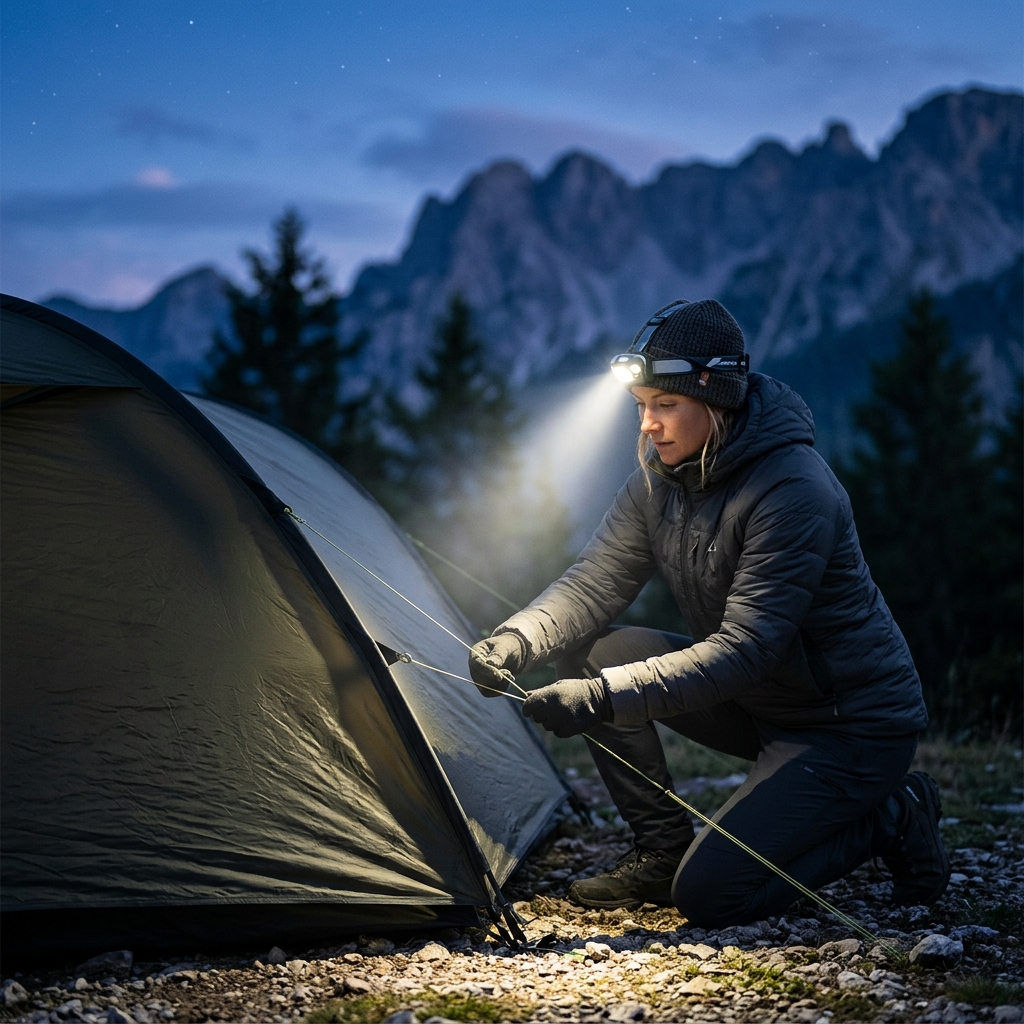
However, it’s easy to fall into the ‘more lumens is always better’ trap. This isn’t necessarily true. Runtime is heavily affected by brightness. A head torch blasting out 1000 lumens will drain its batteries far faster than one operating at 100 lumens. Manufacturers’ lumen claims can also sometimes be a little optimistic, so it’s important to consider reviews and real-world usage reports.
Lumens Breakdown: What Brightness Do You *Actually* Need?
Determining the right lumen level for your needs depends entirely on your intended use. Here’s a breakdown to help you decide:
- 50-100 Lumens: Ideal for general campsite tasks like finding things in your tent, reading, or very close-range walking. Excellent runtime.
- 100-200 Lumens: Suitable for short walks around the campsite, cooking, and basic navigation on well-lit paths. A good balance of brightness and battery life.
- 200-300+ Lumens: Best for hiking, trail running, navigating uneven terrain, and situations requiring more visibility. Expect shorter runtime on higher settings.
- 300+ Lumens (and beyond): Useful for emergency situations, cave exploration (with caution!), and long-distance visibility. Prioritise battery management.
Remember that the UK countryside often experiences damp conditions and varying levels of light pollution (even in remote areas). A mid-range lumen output (around 200-250) is often a sensible all-rounder for many UK campers.
Camping Scenarios & Recommended Lumen Levels
Let’s look at specific scenarios and the appropriate lumen level:
- General Campsite Use (setting up tent, cooking, relaxing): 80-150 Lumens
- Cooking: 100-200 Lumens (enough to see what you’re doing without blinding yourself or others)
- Hiking/Trail Running: 200-350 Lumens (depending on terrain and speed)
- Emergency Situations: 300+ Lumens (for signalling and seeing in unexpected darkness)
- Map Reading: 100-200 Lumens (a focused beam is crucial)
- Cave Exploration: 300+ Lumens (requires experience and multiple light sources – *never* rely on a single head torch for caving)
Beyond Lumens: Other Important Head Torch Features
While lumens are key, don’t overlook these crucial features:
- Beam Distance: Measured in metres, this indicates how far the light will reach. Useful for spotting obstacles on trails.
- Beam Type (Spot vs. Flood): Spot beams are focused and long-distance; flood beams are wide and provide broader illumination. Some torches offer adjustable beams.
- Runtime: How long the torch will operate on a given battery level. Crucial for longer trips.
- Battery Type: AAA, AA, or rechargeable. Rechargeable torches are convenient but require charging facilities.
- Water Resistance (IP Rating): Look for an IPX4 rating or higher for protection against splashes and rain.
- Weight & Comfort: A lightweight and comfortable head strap is essential for extended wear.
Popular Camping Head Torches (2026) – Lumens & Features Compared
| Model | Lumens (Max) | Runtime (Max) | Battery Type | Water Resistance | Price (£) | Key Features |
|---|---|---|---|---|---|---|
| Petzl Actik Core (2026) | 600 | 150 hours | Rechargeable (Core battery included) | IPX4 | 65.00 | Compact, lightweight, multiple lighting modes, reactive lighting. |
| Black Diamond Spot 400 (2026) | 400 | 300 hours | AAA (x3) | IPX4 | 50.00 | Bright, affordable, dimming, strobe mode. |
| Ledlenser MH5 (2026) | 200 | 35 hours | AAA (x3) | IPX4 | 40.00 | Compact, advanced focus system, multiple light functions. |
| Fenix HL15 (2026) | 145 | 48 hours | AAA (x2) | IPX4 | 30.00 | Lightweight, affordable, digital tailcap switch. |
| Princeton Tec Sync (2026) | 500 | 150 hours | Rechargeable (USB-C) | IPX7 | 70.00 | Fully waterproof, multiple colour LEDs, long battery life. |
| Coast HL75R Rechargeable Head Torch (2026) | 800 | 6 hours | Rechargeable (USB-C) | IPX4 | 85.00 | High lumen output, beam focus, long-range visibility. |
Maximising Head Torch Battery Life: Tips & Tricks
Don’t get caught short in the dark! Here’s how to extend your head torch’s battery life:
- Choose the Right Batteries: Use high-quality batteries, especially for critical situations. Lithium batteries generally offer longer life than alkaline.
- Use Lower Brightness Settings: Reduce the lumen output whenever possible.
- Turn Off When Not Needed: Seems obvious, but many people leave their torches on unnecessarily.
- Proper Storage: Remove batteries if storing the torch for extended periods to prevent corrosion.
- Carry Spare Batteries: Especially on longer trips, always have a backup set.
Understanding Head Torch Modes: Beyond High, Medium & Low
Modern head torches offer more than just simple brightness settings:
- Strobe Mode: A rapidly flashing light, useful for signalling in emergencies or deterring animals.
- SOS Mode: Transmits the international distress signal (…—…).
- Red Light Mode: Preserves night vision and is less disruptive to others in a campsite. Ideal for reading maps or moving around at night.
- Dimming: Allows for precise brightness adjustment, offering maximum control over runtime and visibility.
Familiarise yourself with all the modes on your head torch *before* heading out on your camping trip.
FAQ
What is a good lumen count for general camping?
For most general camping activities in the UK, a head torch with 100-200 lumens is a good starting point. It provides enough light for campsite tasks, cooking, and short walks without draining the battery too quickly.
Are rechargeable head torches worth the investment?
Yes, if you camp frequently and have access to charging facilities. They eliminate the need to constantly buy batteries and are often more environmentally friendly. However, ensure you have a backup power source or a way to recharge them during longer trips.
What does IPX4 water resistance mean?
IPX4 means the head torch is protected against splashing water from any direction. It’s suitable for light rain but shouldn’t be submerged in water.
How important is the beam type?
Very important! A spot beam is best for long-distance viewing, while a flood beam provides wider illumination. If you need versatility, look for a head torch with an adjustable beam.
Should I buy a more expensive head torch?
Not necessarily. The best head torch for *you* depends on your needs and budget. Consider the features you’ll actually use and prioritize runtime and reliability over sheer lumen output.