Table of Contents
As an Amazon Associate, we earn from qualifying purchases. This means we may receive a small commission at no extra cost to you when you buy through links on this page.
Why Choose a Camping Hammock with a Mosquito Net?
Camping is a fantastic way to reconnect with nature, and a hammock offers a uniquely comfortable and lightweight experience. Unlike traditional tents, hammocks suspend you off the ground, providing a gentler sleep and reducing impact on the delicate forest floor. They’re incredibly portable, often packing down smaller and lighter than equivalent tent setups – crucial for backpackers and those covering longer distances.
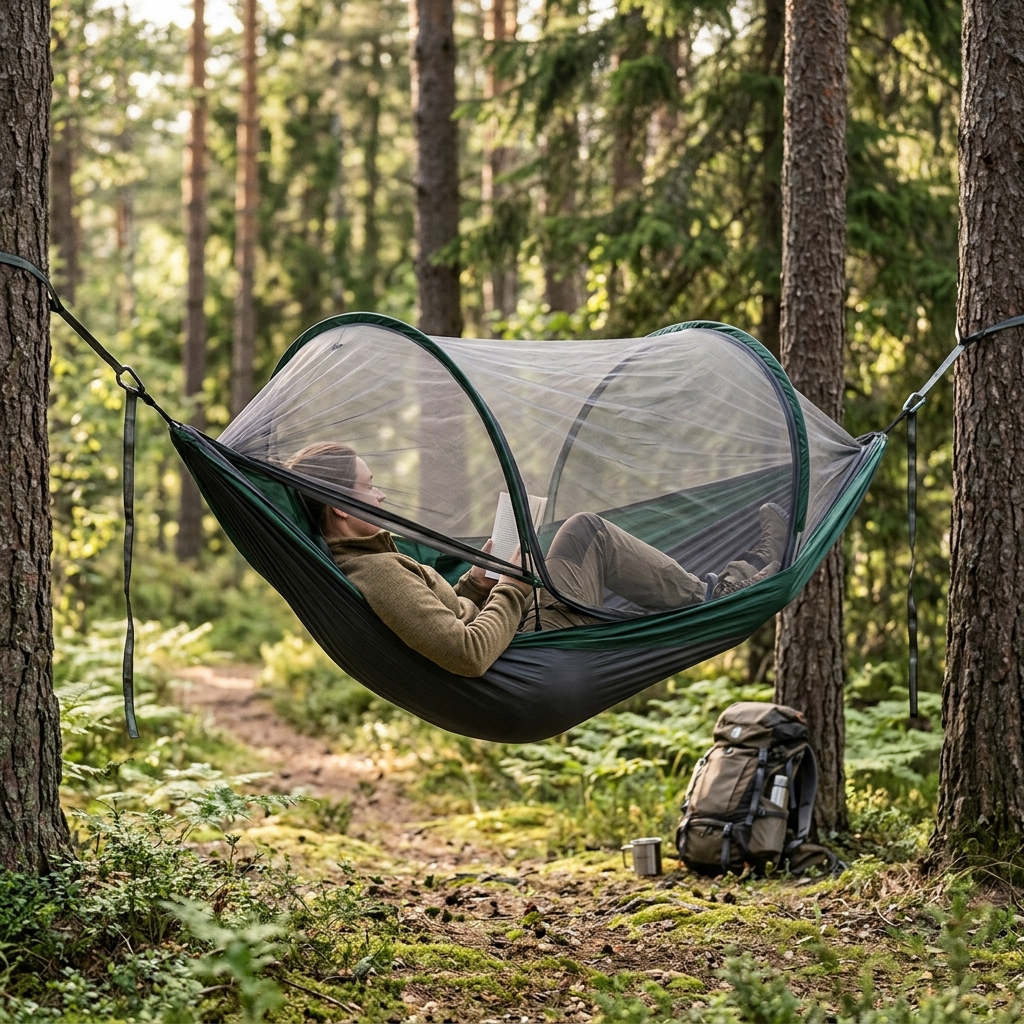
However, the UK countryside, while beautiful, isn’t without its biting inhabitants. Midges, mosquitoes, and other insects can quickly turn a peaceful night into an itchy nightmare. A hammock without a mosquito net is simply not practical for most of the year. Beyond the sheer annoyance, insect bites can transmit diseases – though thankfully less common in the UK, the risk is present, and avoiding bites is always best. A camping hammock with an integrated mosquito net provides a safe and comfortable haven from these pests, allowing you to genuinely enjoy the outdoors.
What to Look for in a Camping Hammock with Mosquito Net
Weight Capacity
Crucially, check the hammock’s weight capacity. Ensure it comfortably supports your weight plus any gear you plan to keep inside with you. Going over the limit compromises safety and can damage the hammock.
Hammock Size (Length & Width)
Length is important for comfortable sleeping. Generally, aim for a hammock that’s at least 2.7 metres long. Width affects how much room you have to move around; wider hammocks are more comfortable, especially for side sleepers. Look for a width of at least 1.5 metres.
Material
The most common materials are:
- Nylon: Lightweight, strong, and relatively quick-drying. Often the most affordable option.
- Polyester: More resistant to UV damage and stretching than nylon, but typically a little heavier.
- Cotton: Very comfortable, but heavy, slow to dry, and not ideal for wet conditions. Best suited for casual use in dry climates.
Net Fineness
The tighter the net weave, the better protection you’ll have against smaller insects like midges. Check the mesh count (holes per square inch) if available. A higher number indicates a finer, more effective net.
Suspension System (Straps vs. Ropes)
Hammock straps are generally preferred over ropes. They distribute weight more evenly across the tree, minimising damage to the bark. They’re also easier to adjust. Ropes can be used, but require careful knot tying and can potentially harm trees. Look for wide, flat straps.
Included Accessories
Good hammocks often include:
- Tree Straps: Essential for safe and tree-friendly hanging.
- Carabiners: Used to connect the hammock to the straps. Ensure they’re strong and locking.
- Stuff Sack: For easy packing and portability.
Pack Size
Consider how small the hammock packs down. For backpacking, a compact pack size is essential.
Top 5 Camping Hammocks with Mosquito Nets (2026 Reviews)
1. Trespass Doon Hammock with Mosquito Net
The Trespass Doon is a budget-friendly option, ideal for occasional campers. It’s light and compact, making it easy to carry. However, the material isn’t as durable as some of the more expensive options.
Pros: Affordable, lightweight, easy to set up.
Material not as durable, net mesh could be finer.
Ideal for: Beginners, casual camping, festivals.
Price: £45.99
2. Outdoor Revolution CampMaster Hammock with Mosquito Net
The CampMaster offers a good balance of comfort and durability. It features a robust nylon construction and a reasonably fine mosquito net. The included straps are a good length, and the overall setup is straightforward.
Pros: Good value for money, durable nylon, easy setup.
Pack size is a little larger than some competitors.
Ideal for: Weekend camping trips, family use.
Price: £69.99
3. DD Hammocks Core Hammock with Mosquito Net
DD Hammocks are a well-respected UK brand. The Core Hammock is a versatile option, suitable for a range of camping adventures. The net is particularly effective at keeping out midges, and the hammock is made from strong, water-resistant nylon.
Pros: Excellent midge protection, durable and water-resistant, reputable brand.
More expensive than entry-level options.
Ideal for: Backpacking, longer camping trips, Scottish Highlands.
Price: £89.99
4. Vango Nitestar Hammock with Mosquito Net
Vango is another trusted name in outdoor gear. The Nitestar offers a comfortable and secure sleeping experience. It features a high-quality nylon fabric and a well-designed mosquito net. It’s a little heavier than some other options, but the added durability is worth it for many.
Pros: Durable construction, comfortable, reliable brand.
Slightly heavier than some alternatives.
Ideal for: Campers who prioritise durability and comfort.
Price: £59.99
5. Hennessy Hammock Expedition Classic
The Hennessy Expedition Classic is a premium option, designed for serious adventurers. It boasts a unique asymmetrical shape that provides a flatter sleeping surface. It’s incredibly lightweight and packs down small. However, it’s a significant investment.
Pros: Extremely lightweight, comfortable asymmetrical shape, premium quality.
Very expensive, steeper learning curve for setup.
Ideal for: Ultralight backpacking, serious outdoor enthusiasts.
Price: £219.99
Hammock Comparison Table (2026)
| Hammock | Weight (kg) | Dimensions (L x W) (m) | Material | Net Type | Price (£) |
|---|---|---|---|---|---|
| Trespass Doon | 0.6 | 2.6 x 1.4 | Nylon | Polyester Mesh | 45.99 |
| Outdoor Revolution CampMaster | 0.9 | 2.7 x 1.5 | Nylon | Polyester Mesh | 69.99 |
| DD Hammocks Core | 1.1 | 2.7 x 1.4 | Nylon | Fine Polyester Mesh | 89.99 |
| Vango Nitestar | 1.0 | 2.7 x 1.5 | Nylon | Polyester Mesh | 59.99 |
| Hennessy Expedition Classic | 0.8 | 3.1 x 1.5 | Nylon | No-See-Um Mesh | 219.99 |
Setting Up Your Camping Hammock: A Step-by-Step Guide
1. Choose Your Trees: Select two healthy trees approximately 3-5 metres apart. Ensure they are strong enough to support your weight.
2. Attach the Straps: Wrap the hammock straps around the trees at a comfortable height (approximately 1.2-1.5 metres). Ensure the straps are secure and won’t slip.
3. Connect the Hammock: Use the carabiners to attach the hammock to the straps. Adjust the straps to achieve the desired hang angle (around 30 degrees is optimal).
4. Test the Setup: Gently test the hammock with your weight before fully committing. Ensure everything feels secure.
5. Zip Up the Net: Ensure the mosquito net is fully zipped before settling in for the night.
Hammock Care and Maintenance
Cleaning: Hand wash your hammock with mild soap and water. Avoid harsh detergents or bleach.
Storage: Store your hammock in a cool, dry place. Avoid prolonged exposure to sunlight.
Mildew Prevention: Ensure the hammock is completely dry before storing it to prevent mildew growth.
Fabric Damage: Regularly inspect your hammock for tears or damage. Repair any issues promptly to prevent them from worsening.
Where to Buy Camping Hammocks with Mosquito Nets in the UK
Here are some recommended retailers:
- Amazon UK: A wide selection and competitive prices.
- Go Outdoors: Brick-and-mortar stores across the UK, as well as an online shop.
- Decathlon: Offers affordable and reliable outdoor gear.
- DD Hammocks: Direct from the manufacturer.
- Ellis Brigham Mountain Sports: Specialist outdoor retailer with knowledgeable staff.
Frequently Asked Questions (FAQs)
Q: How do I choose the right height for hanging my hammock?
A: A good rule of thumb is to hang the hammock so that the lowest point is approximately 45-60cm (18-24 inches) off the ground. This allows for a comfortable sag without being too low.
Q: Are hammocks suitable for all weather conditions?
A: Hammocks are best suited for fair weather camping. In heavy rain or strong winds, a tent provides better protection. Consider a hammock rainfly for light showers.
Q: How can I protect trees when using a hammock?
A: Always use wide hammock straps instead of ropes. Distribute the weight evenly and avoid using the same trees repeatedly.
Q: What is the best way to clean a nylon hammock?
A: Hand wash with mild soap and cool water. Avoid bleach or harsh detergents. Air dry completely.
Q: Can I use a hammock for long-term sleeping?
A: Yes, but it takes some getting used to. Proper setup and a good quality hammock are essential. Some people find hammocks more comfortable for long-term sleeping than traditional beds.