Table of Contents
As an Amazon Associate, we earn from qualifying purchases. This means we may receive a small commission at no extra cost to you when you buy through links on this page.
Introduction: Why a Dedicated Camping First Aid Kit is Crucial
The UK countryside offers fantastic opportunities for camping, but venturing into the outdoors means being prepared for the unexpected. While a home first aid kit is useful, a dedicated camping first aid kit is essential. Remote locations mean delayed access to medical assistance, and the types of injuries and illnesses you might encounter differ significantly. Consider potential hazards specific to UK camping, like tick bites (and Lyme disease), changeable weather leading to hypothermia, and injuries from uneven terrain. Being equipped to handle minor issues yourself can prevent them from escalating into serious emergencies. This guide will walk you through everything you need to know about building or buying the right kit for your needs in 2026.
Understanding Common Camping Injuries & Illnesses
Camping presents a unique set of potential health challenges. Here are some common occurrences:
- Cuts and Scrapes: From clumsy cooking to navigating rough trails, these are almost inevitable.
- Blisters: New boots or long hikes are prime blister-inducing scenarios.
- Sprains and Strains: Uneven ground and physical exertion can easily lead to joint injuries.
- Burns: Campfires and cooking equipment pose burn risks.
- Insect Bites and Stings: Midges, wasps, and bees are common culprits.
- Tick Bites: A serious concern due to the risk of Lyme disease – checking regularly is vital.
- Minor Fractures: Falls can occur, particularly on challenging terrain.
- Dehydration: Easy to overlook, especially during warmer weather or strenuous activity.
- Heat Exhaustion: Can occur even in the UK during heatwaves.
- Hypothermia: A risk even in summer, particularly with unexpected weather changes.
- Allergic Reactions: To insect stings, plants (like nettles), or food.
The Core Components of a Camping First Aid Kit
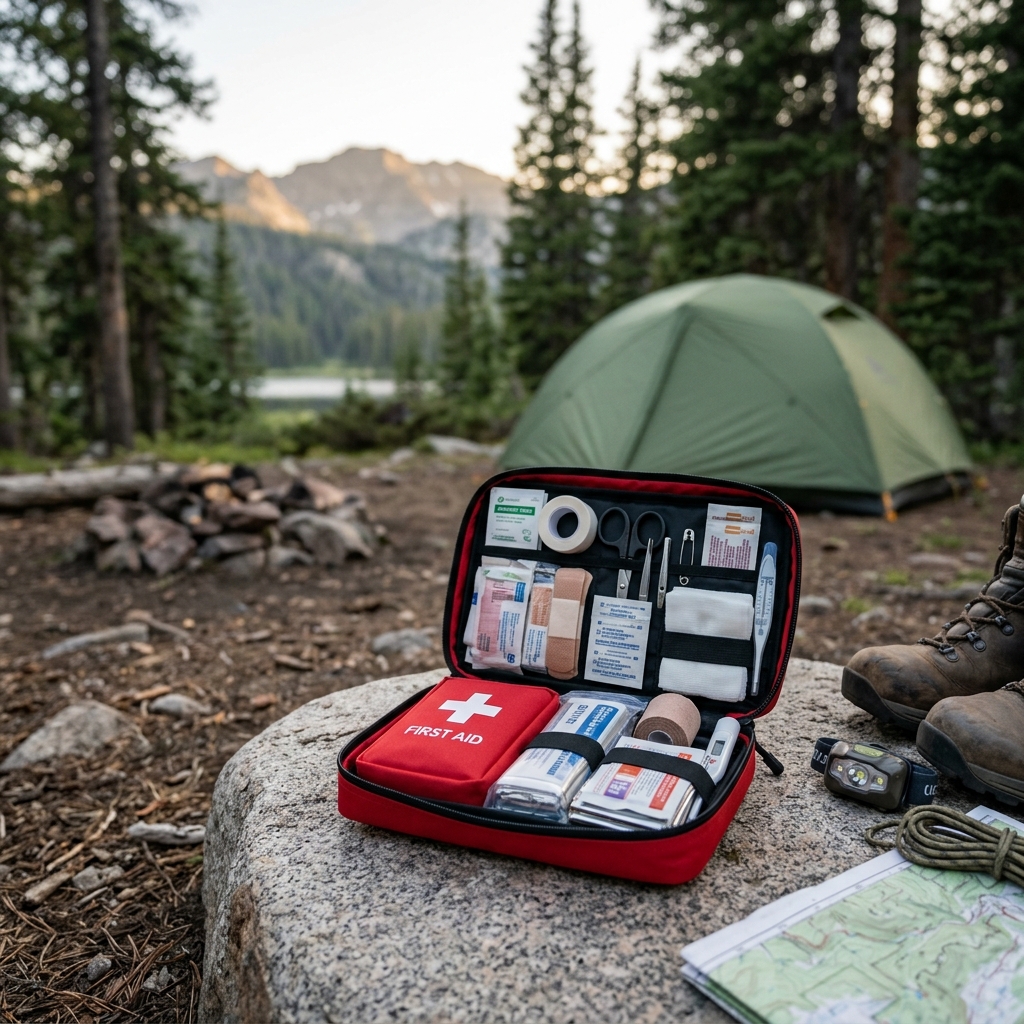
A comprehensive camping first aid kit should cover a wide range of potential issues. Here’s a breakdown of essential categories:
- Wound Care: Cleaning solutions (antiseptic wipes or wash), sterile dressings (various sizes), adhesive bandages (plasters), gauze pads, medical tape.
- Blister Treatment: Hydrocolloid blister plasters, blister prevention tape (like Compeed).
- Pain Relief: Paracetamol or ibuprofen (consider allergies and contraindications), topical pain relief cream.
- Injury Support: Elasticated bandage (crepe bandage) for sprains, triangular bandage for slings, SAM splint (for immobilising fractures – training required).
- Medications: Antihistamines for allergic reactions, anti-diarrheal medication, personal medications (clearly labelled).
- Tools: Small scissors, tweezers (for tick removal), safety pins, disposable gloves, CPR mask.
Detailed Breakdown: Must-Have Items & What to Look For (2026 Updates)
Let’s dive deeper into specific items. By 2026, some exciting advancements are appearing in first aid:
- Bandages: Don’t just grab a box of standard plasters. Include a variety of sizes and shapes. Consider waterproof bandages for wet conditions.
- Antiseptic: Individually wrapped antiseptic wipes are convenient, but a small bottle of antiseptic solution (chlorhexidine) offers better cleaning power.
- Pain Relief: Check expiry dates! Be mindful of allergies and pre-existing conditions. Consider liquid pain relief for children.
- Tweezers: Invest in a high-quality pair with fine, pointed tips – crucial for safely removing ticks. Look for versions with a magnifying glass in 2026 models.
- Blister Treatment: Hydrocolloid plasters (like BlisterPlasters, £6.99 for a pack of 4) are a lifesaver. Prevention is key – consider using blister prevention tape *before* a hike.
- ‘Smart’ Bandages (2026 Trend): Early adopters are seeing the benefit of bandages with integrated sensors that can monitor wound healing and alert you to potential infections – though these are still relatively expensive (£50+ per bandage).
Building Your Own vs. Buying a Pre-Assembled Kit
There are two main approaches to acquiring a camping first aid kit:
Building Your Own
- Pros: Highly customisable – you choose exactly what you need. Potentially cheaper if you already have some items.
- Cons: Time-consuming. Easy to forget essential items. Requires good knowledge of first aid needs.
Buying a Pre-Assembled Kit
- Pros: Convenient and quick. Typically contains a comprehensive range of supplies. Often well-organised.
- Cons: May contain unnecessary items. Can be more expensive. May need to supplement with personal medications.
Here’s a comparison of popular UK kits:
| Kit Name | Price (Approx. 2026) | Size/Weight | Key Features | Best For |
|---|---|---|---|---|
| Adventure Medical Kits Ultralight/Watertight .7 | £35.99 | Compact, 180g | Waterproof, comprehensive for solo trips. | Solo backpackers, lightweight adventures. |
| Lifesystems Trek First Aid Kit | £49.99 | Medium, 650g | Large capacity, includes trauma shears and blister treatment. | Small groups, longer trips. |
| Steroplast Healthcare Waterproof First Aid Kit | £24.50 | Small, 300g | Waterproof bag, basic essentials. | Day hikes, families with young children. |
| Care Plus First Aid Kit | £39.99 | Medium, 500g | Good all-rounder, includes tick remover. | General camping, hiking. |
First Aid Training for Campers: Knowing What to Do
Having a kit is only half the battle. Knowing how to use it is crucial. Consider taking a first aid course. In the UK, numerous options are available:
- St John Ambulance: Offers a range of courses, from basic first aid to full first aid at work qualifications. (https://www.sja.org.uk/)
- British Red Cross: Similar courses to St John Ambulance. (https://www.redcross.org.uk/)
- Online First Aid Courses: Convenient, but lack the hands-on practice of in-person training.
Specifically, learn CPR, how to control bleeding, treat burns, and recognise the signs of hypothermia and heatstroke. Knowing how to properly immobilise a suspected fracture is also invaluable.
Maintaining Your Camping First Aid Kit
A first aid kit isn’t a ‘set it and forget it’ item:
- Check Expiry Dates: Regularly (at least twice a year) check the expiry dates of all medications and sterile items.
- Replace Used Items: After each trip, replenish anything you’ve used.
- Store Properly: Keep the kit in a cool, dry place, protected from direct sunlight.
- Temperature Sensitivity: Some medications and creams can be affected by extreme temperatures. Consider this when camping in hot or cold climates.
- Accessibility: Ensure the kit is easily accessible – not buried in the bottom of your backpack.
Camping First Aid Kit Checklist (Printable)
Here’s a printable checklist to help ensure you have everything you need:
- Wound Care: Antiseptic wipes/wash, Sterile dressings (various sizes), Adhesive bandages (plasters), Gauze pads, Medical tape
- Blister Treatment: Hydrocolloid blister plasters, Blister prevention tape
- Pain Relief: Paracetamol/Ibuprofen, Topical pain relief cream
- Injury Support: Elasticated bandage (crepe bandage – £4.75), Triangular bandage, SAM splint (optional)
- Medications: Antihistamines, Anti-diarrheal medication, Personal medications
- Tools: Small scissors, Tweezers, Safety pins, Disposable gloves, CPR mask
- Other: Sunscreen (SolRX SPF 50+ Sunscreen Stick – £8.99), Insect repellent (Ben’s Insect Repellent – £12.50)
[Download Printable Checklist PDF]
Conclusion: Stay Safe & Enjoy the Outdoors
Preparation is key to a safe and enjoyable camping experience. A well-stocked and properly maintained first aid kit, combined with basic first aid knowledge, can make all the difference in handling minor injuries and illnesses, allowing you to fully appreciate the beauty and adventure of the UK countryside. Prioritise safety, be prepared, and enjoy your outdoor exploration!