
For serious outdoor enthusiasts in the UK, choosing the right camping cookware can make or break a trip. Titanium cookware has emerged as a premium option, offering an unparalleled combination of lightweight portability and exceptional durability. This guide delves into the world of titanium cookware, helping you find the best set for your needs in 2026. We’ll explore the benefits, key features, top picks, and essential maintenance tips, all geared towards the UK camper.
As an Amazon Associate, we earn from qualifying purchases. This means we may receive a small commission at no extra cost to you when you buy through links on this page.
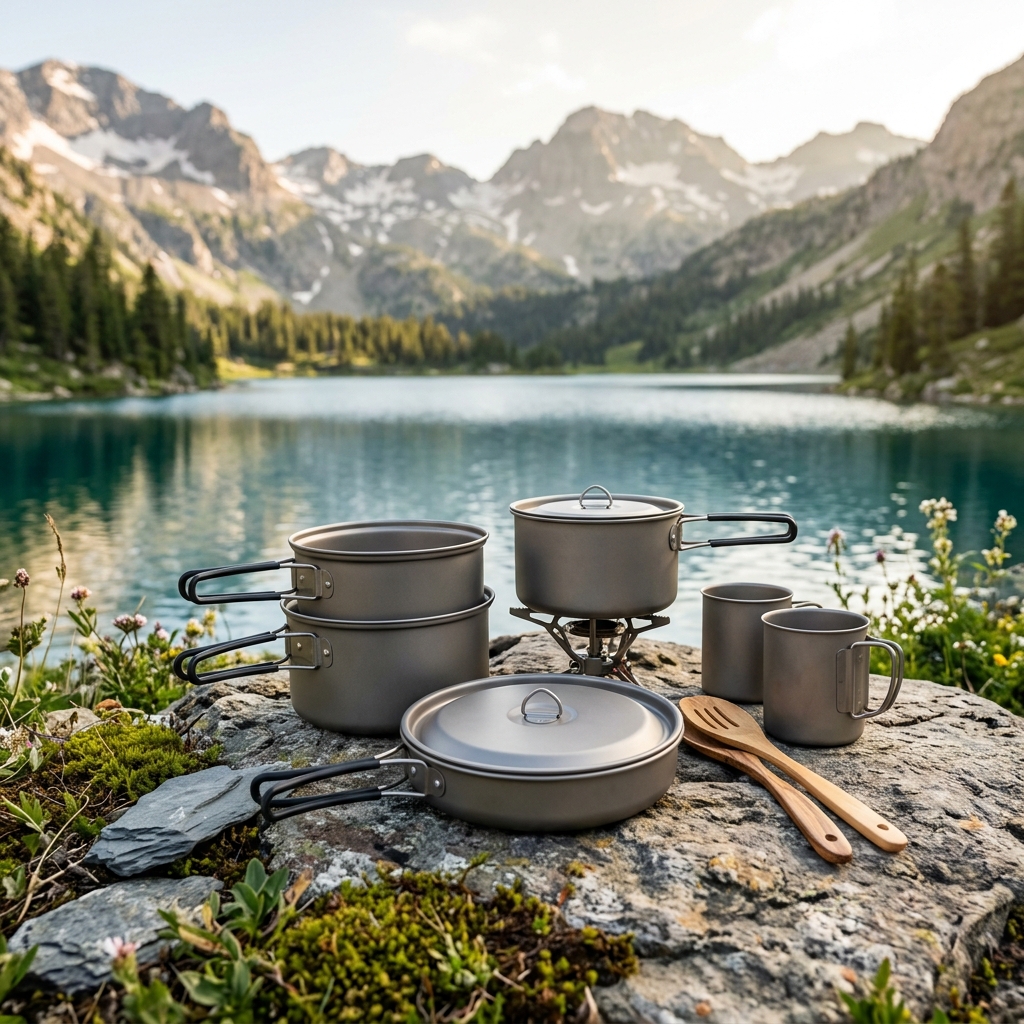
Table of Contents
Why Choose Titanium Camping Cookware?
Titanium cookware is a significant investment, but one that pays dividends in the long run, particularly for frequent campers or backpackers. Here’s why:
- Weight: Titanium is approximately 45% lighter than steel and 33% lighter than aluminium, making it ideal for reducing pack weight – crucial for backpacking in the UK hills and mountains.
- Durability: Titanium is incredibly strong and resistant to dents and punctures. Unlike aluminium, it won’t collapse under pressure.
- Corrosion Resistance: In the damp and often changeable UK climate, corrosion is a major concern. Titanium is virtually impervious to rust and corrosion, even with prolonged exposure to water and salt.
- Heat Transfer: While not as efficient as copper, titanium distributes heat relatively evenly, preventing hotspots and ensuring consistent cooking.
- Non-Reactive: Titanium doesn’t react with food, meaning your meals won’t have a metallic taste.
Titanium vs. Other Materials:
| Material | Weight | Durability | Corrosion Resistance | Cost |
|---|---|---|---|---|
| Titanium | Very Light | Excellent | Excellent | High |
| Stainless Steel | Heavy | Excellent | Excellent | Medium |
| Aluminium | Light | Moderate | Moderate (can corrode) | Low |
| Non-Stick | Light-Medium | Low-Moderate (coating can scratch) | Moderate (coating can degrade) | Medium |
For UK campers, the superior corrosion resistance of titanium is a major advantage. Aluminium, while cheaper, requires more care in a damp environment.
What to Look for in Titanium Cookware Sets
Choosing the right titanium cookware set requires careful consideration. Here’s a breakdown of key features:
- Set Contents: Consider what you typically cook. A basic set might include a pot, lid, and spork. More comprehensive sets add pans, larger pots, and even mugs.
- Capacity: For solo backpacking, a 700ml – 1000ml pot is often sufficient. Family camping demands larger capacity pots (1.5L – 2L or more).
- Nesting Design: Essential for saving space. Look for sets where pots and pans nest neatly together.
- Handle Types: Folding handles are common for portability. Wired handles can be useful but may get hot. Silicone grips improve comfort.
- Included Bags/Cases: A mesh or fabric bag protects cookware during transport and organisation.
- Stove Compatibility: Ensure the cookware is compatible with your chosen stove (gas, wood burning, or alcohol). Look for flat bases for efficient heat transfer.
- Heat Exchanger Bases: Some pots feature a heat exchanger base – fins or a textured surface – to maximise heat absorption and boiling speed. These are highly beneficial, especially in cooler conditions.
Top 5 Titanium Cookware Sets (2026)
Here’s a look at five leading titanium cookware sets available in the UK in 2026:
1. Fire-Maple Titan Spirit Burner & Pot Set – £85.00
Description: A compact and efficient set ideal for solo backpacking. Includes a titanium pot, lid, and a high-performance alcohol burner.
Pros: Extremely lightweight, fast boiling time, complete cooking system.
Cons: Limited capacity (800ml), burner fuel can be harder to acquire than gas.
Suitability: Solo adventurers, ultralight backpacking.
2. Snow Peak Titanium Multi-Cooker – £120.00
Description: A versatile and well-designed titanium pot with a locking handle, suitable for various cooking tasks.
Pros: Durable construction, comfortable handle, can be used directly on a stove or over a campfire.
Cons: Relatively expensive, no included lid or other cookware.
Suitability: Versatile cooking, those who prefer a single high-quality pot.
3. Vargo Titanium Trek 900 Cook Pot – £60.00
Description: A simple, lightweight titanium pot with a folding handle. Great for boiling water and basic cooking.
Pros: Very lightweight, affordable for titanium, durable.
Cons: Basic features, no lid included, heat transfer could be better.
Suitability: Budget-conscious backpackers, minimalists.
4. Jetboil Flux Ring Cooking Cup (Titanium) – £70.00
Description: Designed to integrate with Jetboil stoves, this titanium cup features a Flux Ring heat exchanger for rapid boiling.
Pros: Extremely fast boiling time, excellent heat efficiency, lightweight.
Cons: Primarily designed for Jetboil stoves, limited cooking versatility beyond boiling water.
Suitability: Jetboil users, fast hydration for backpacking.
5. Toaks Titanium 700ml Pot – £35.00
Description: A classic, reliable titanium pot with a simple design. A popular choice for solo hikers.
Pros: Affordable, lightweight, durable, simple to use.
Cons: No included lid, basic features.
Suitability: Budget-friendly option, solo backpacking.
Comparison Table:
| Product | Capacity (ml) | Weight (g) | Price (£) | Best For |
|---|---|---|---|---|
| Fire-Maple Titan Spirit | 800 | 350 | 85.00 | Solo Backpacking |
| Snow Peak Multi-Cooker | N/A | 250 | 120.00 | Versatile Cooking |
| Vargo Trek 900 | 900 | 180 | 60.00 | Budget Backpacking |
| Jetboil Flux Ring Cup | 750 | 100 | 70.00 | Jetboil Users |
| Toaks Titanium 700ml | 700 | 90 | 35.00 | Budget Solo Hiking |
Budget-Friendly Titanium Options
Titanium sets can be expensive. If you’re on a tighter budget, consider purchasing individual titanium pots or pans rather than a full set. The Toaks Titanium 700ml Pot (£35.00) is an excellent starting point. You can then add a separate titanium spork and a lightweight lid as needed. Focusing on essential items allows you to benefit from titanium’s advantages without breaking the bank. Consider looking for sales and promotions from retailers like Cotswold Outdoor or Go Outdoors.
Titanium Cookware Care & Maintenance
Titanium is durable, but proper care will extend its lifespan. Here’s how:
- Cleaning: Avoid abrasive cleaners. Warm soapy water and a soft sponge are usually sufficient. For stubborn food residue, boil water in the pot for a few minutes.
- Heat Staining: Titanium develops a colourful patina (heat staining) over time. This is harmless and doesn’t affect performance.
- Storage: Store cookware dry to prevent any potential staining.
- UK Water Hardness: Hard water can leave scaling. Vinegar can be used to remove scale – boil a solution of vinegar and water in the pot.
- Avoid Steel Utensils: While titanium is strong, avoid using steel utensils directly on the surface, as they could cause minor scratches.
Where to Buy Titanium Cookware in the UK
Here are some reputable UK retailers selling titanium cookware:
- Cotswold Outdoor: https://www.cotswoldoutdoor.com/
- Go Outdoors: https://www.gooutdoors.co.uk/
- Snow Peak UK: https://www.snowpeakuk.com/
- Amazon UK: https://www.amazon.co.uk/ (Check seller ratings carefully)
- Ellis Brigham Mountain Sports: https://www.ellis-brigham.com/
Most retailers offer warranties on their products. Check the specific warranty terms and return policies before purchasing.
FAQ
- Is titanium cookware worth the extra cost? For frequent campers and backpackers, especially those prioritizing weight and durability, the investment is often worthwhile. The longevity and corrosion resistance justify the price for many.
- Can I use titanium cookware over an open fire? Yes, but be cautious. Direct flame can cause heat staining. Use a heat diffuser if possible.
- Will titanium cookware scratch easily? While durable, titanium can scratch. Avoid using abrasive cleaners or steel utensils.
- Is titanium cookware safe for cooking food? Yes, titanium is non-reactive and doesn’t leach harmful chemicals into food.
- How do I prevent heat staining on my titanium cookware? Heat staining is inevitable, but you can minimize it by avoiding excessively high heat and cleaning the cookware promptly after use.