
Table of Contents
Why You Need a Good Headlamp for Camping
Camping in the UK offers incredible experiences, but venturing into the wilderness means embracing the darkness. A reliable headlamp isn’t just a convenience; it’s an essential piece of kit. Unlike a torch, a headlamp provides hands-free illumination, allowing you to cook, set up your tent, navigate trails, or attend to emergencies without fumbling for a handheld light. Imagine trying to tie a knot in the dark, or searching for a misplaced item around the campsite – a headlamp makes these tasks significantly easier and safer. Night hikes are dramatically improved, revealing the beauty of the UK countryside under the stars. And, crucially, a headlamp can be a lifesaver in unforeseen circumstances, such as a late return to camp or a need to signal for help.
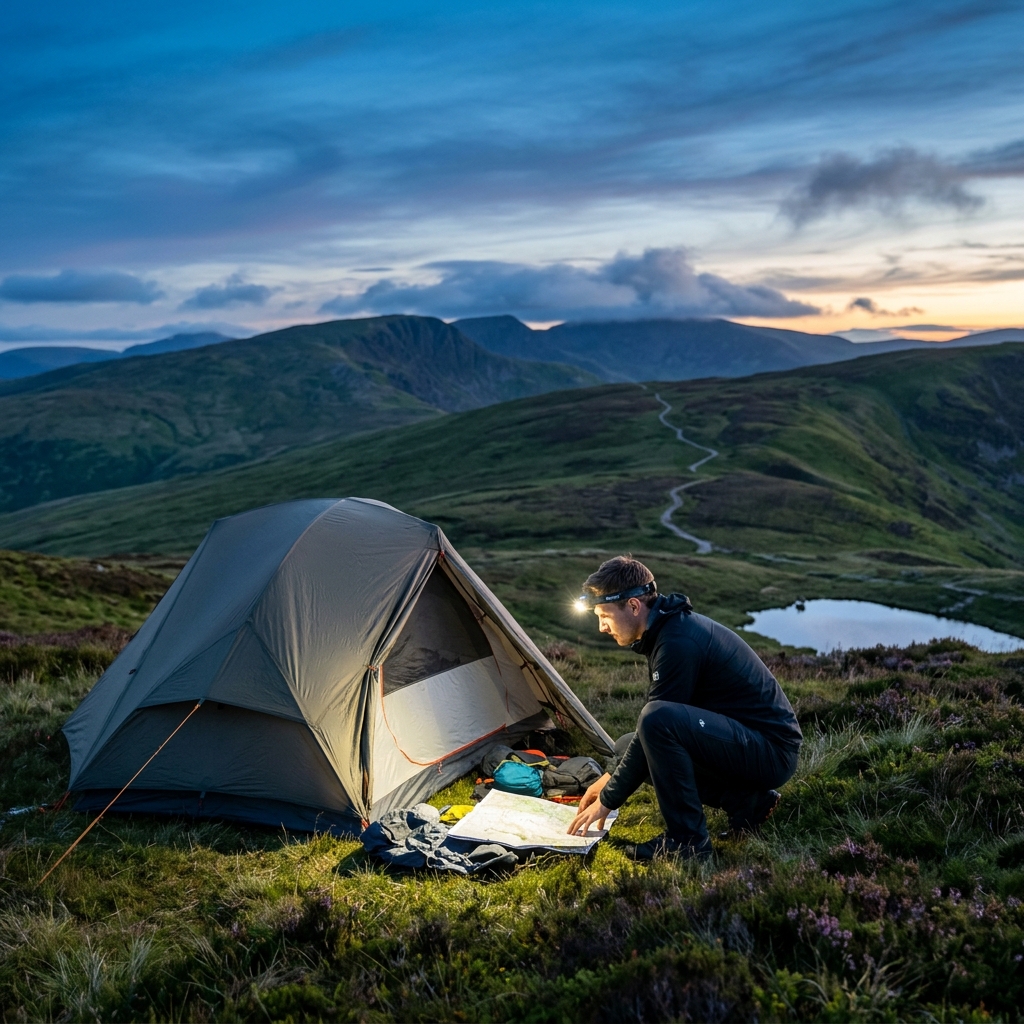
What to Look for in a Camping Headlamp (2026 Buying Guide)
Choosing the right headlamp requires considering several key features. Here’s a breakdown to help you make an informed decision:
Brightness (Lumens)
Lumens measure the total amount of visible light emitted. For general campsite use, 200-300 lumens is sufficient. Hiking or trail running will benefit from 300-500 lumens, while mountaineering or demanding activities may require 500+ lumens. Remember, higher lumens consume battery life faster.
Battery Life
Battery life is crucial, particularly on longer trips. Consider the modes (high, medium, low) and their corresponding runtimes. Rechargeable models are convenient, but ensure you have a power bank or charging options available. Battery-powered headlamps allow you to carry spares.
Beam Distance
Beam distance indicates how far the light reaches. For campsite tasks, a shorter beam distance (10-30 meters) is adequate. For hiking, a longer beam distance (50-100+ meters) is preferred.
Water Resistance (IP Rating)
The IP (Ingress Protection) rating indicates how well the headlamp is protected against dust and water. IPX4 is splash-proof, while IPX7 means it can withstand immersion in water for a limited time. For UK camping, IPX4 or higher is recommended.
Weight & Comfort
A lightweight headlamp is essential for comfort, especially during prolonged use. Consider the strap adjustability and padding. A well-balanced design prevents bouncing and reduces strain.
Modes
Useful modes include:
- High/Medium/Low: For varying brightness levels.
- Red Light: Preserves night vision and is less disruptive to others.
- Strobe: Can be used as an emergency signal.
- SOS: A dedicated SOS signal for emergencies.
Rechargeable Batteries & Sensors
Rechargeable headlamps are increasingly popular and environmentally friendly. Some 2026 models even feature sensors for automatic brightness adjustment based on ambient light levels.
Top 5 Budget Headlamps for Camping (Under £30)
These headlamps offer excellent value for money for casual campers.
| Model | Lumens | Battery Life (Max) | Water Resistance | Price (Approx.) | Pros | Cons |
|---|---|---|---|---|---|---|
| Vango Beta 200 Headtorch | 200 | 60 Hours | IPX4 | £30.00 | Excellent value, lightweight, reliable. | Limited brightness, basic features. |
| Browning Camping Apex 300 | 300 | 48 Hours | IPX4 | £25.00 | Good brightness for the price, comfortable strap. | Battery life could be better. |
| (Generic) LED Camping Headlamp | 240 | 50 Hours | IPX5 | £15.00 | Very affordable, multiple modes. | Build quality can be questionable. |
| (Generic) Adjustable Zoom Headtorch | 180 | 40 Hours | IPX4 | £18.00 | Adjustable beam, versatile. | Lower lumen output. |
| (Generic) 5 LED Headlamp | 150 | 30 Hours | IPX3 | £12.00 | Extremely cheap, simple to use. | Low brightness, limited features. |
Best Mid-Range Headlamps for Camping (£30 – £70)
These headlamps strike a balance between performance, features, and price. Ideal for regular campers.
| Model | Lumens | Battery Life (Max) | Water Resistance | Price (Approx.) | Pros | Cons |
|---|---|---|---|---|---|---|
| Coast HL8X | 800 | 3h 30min (High), 27h (Low) | IPX4 | £40.00 | Very bright, durable construction, long runtime on low. | Battery life can be short on high. |
| Fenix HL18R V2 | 500 | Up to 24h | IP68 | £50.00 | Rechargeable, excellent water resistance, good brightness. | Can be slightly bulky. |
| Black Diamond Spot 400 | 400 | 300 hours | IPX4 | £60.00 | Bright, lightweight, dimmable, multiple modes. | Requires AAA batteries (not included). |
Premium Headlamps for Serious Campers (£70 – £150+)
For those who demand the best, these headlamps offer advanced features and exceptional performance.
| Model | Lumens | Battery Life (Max) | Water Resistance | Price (Approx.) | Pros | Cons |
|---|---|---|---|---|---|---|
| Petzl Actik Core (Rechargeable) | 600 | 130 hours | IPX4 | £75.00 | Rechargeable, compact, versatile, excellent beam pattern. | Can be expensive. |
| Ledlenser H7R Core | 600 | Up to 90 hours | IP54 | £90.00 | Rechargeable, advanced light functions, comfortable fit. | Higher price point. |
| Princeton Tec Sync | 800 | 150 hours | IPX7 | £80.00 | Rechargeable, extremely durable, fully waterproof. | Slightly heavier than some models. |
Rechargeable vs. Battery-Powered Headlamps: Which is Best?
The choice between rechargeable and battery-powered depends on your needs and preferences:
| Feature | Rechargeable | Battery-Powered |
|---|---|---|
| Cost | Higher initial cost, lower long-term cost. | Lower initial cost, ongoing battery expenses. |
| Convenience | Convenient – no need to buy batteries. | Requires carrying spare batteries. |
| Environmental Impact | More environmentally friendly (reduced battery waste). | Contributes to battery waste. |
| Reliability | Requires access to power for recharging. | Reliable as long as you have batteries. |
Headlamp Maintenance and Care
To ensure your headlamp lasts, follow these tips:
- Cleaning: Wipe down with a damp cloth after each use. Avoid abrasive cleaners.
- Storage: Store in a dry, cool place.
- Battery Care: Remove batteries when not in use (for battery-powered models). Use quality batteries. For rechargeable models, avoid overcharging.
- Water Resistance: If submerged, dry thoroughly before use.
Frequently Asked Questions (FAQs)
Q: What lumen output do I really need for camping?
For general campsite use, 200-300 lumens is sufficient. If you plan on hiking at night, 300-500 lumens is recommended.
Q: What does the IPX rating tell me?
The IPX rating indicates water resistance. IPX4 means splash-proof, while IPX7 means it can withstand brief immersion in water.
Q: How important is the beam distance?
Beam distance is important for hiking and navigating trails. A longer beam distance (50-100+ meters) is ideal for spotting obstacles. For campsite tasks, a shorter beam distance is sufficient.
Q: Are rechargeable headlamps worth the extra cost?
Yes, if you camp frequently, a rechargeable headlamp will save you money on batteries in the long run and is more environmentally friendly.
Q: How long should a headlamp battery last?
Battery life varies depending on the brightness setting and model. Expect at least 30 hours on low mode, but considerably less on high.