Table of Contents
As an Amazon Associate, we earn from qualifying purchases. This means we may receive a small commission at no extra cost to you when you buy through links on this page.
Why Choose Non-Stick Camping Cookware?
Camping and cooking go hand-in-hand, but cleaning up after a hearty meal in the great outdoors can be a chore. Historically, camping cookware often meant battling stubbornly stuck-on food, requiring excessive scrubbing and water – resources that are often limited when you’re off-grid. Early enamelled cookware chipped easily, and bare metal pots were prone to rust. Non-stick cookware solves these problems. The benefits are significant: food slides right out, making cleanup a breeze; you can cook with less oil, promoting healthier meals and reducing residue; and the overall camping experience is simply more enjoyable. Modern non-stick coatings are significantly improved from the early iterations, offering greater durability and safety.
What to Consider When Buying Non-Stick Camping Cookware
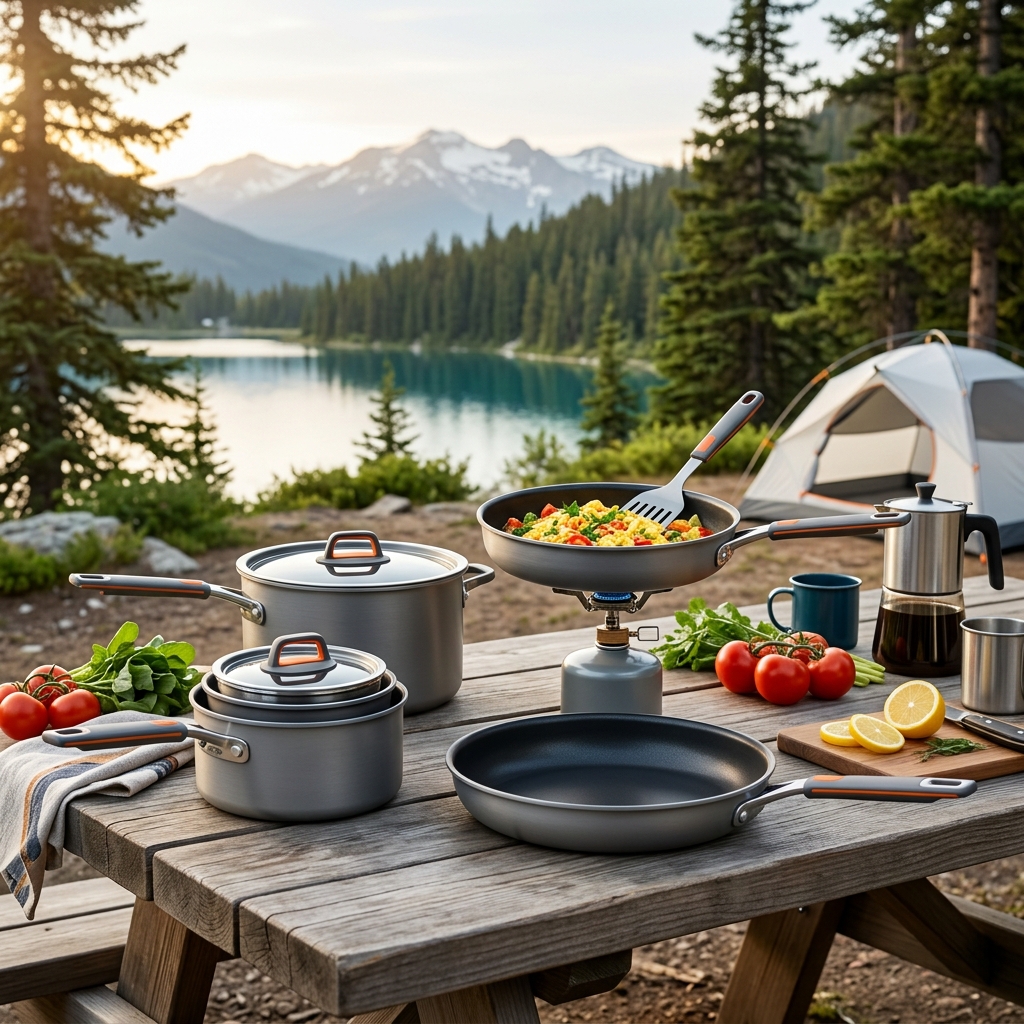
Choosing the right non-stick camping cookware requires careful consideration. Here’s a breakdown of key factors:
Material
Aluminium: Lightweight and excellent for even heat distribution, but often requires a stainless steel base for durability and compatibility with all stove types. Stainless Steel Base: Adds robustness and allows for use on induction hobs (important for glamping or indoor use).
Coating Type
PTFE (Polytetrafluoroethylene): The traditional non-stick coating, known for its excellent release properties. Ensure it’s PFOA-free for safety. Ceramic: A more eco-friendly alternative. While generally not as durable as PTFE, it’s free from PTFE chemicals. It’s performance can degrade over time.
Weight & Pack Size
Crucial for backpacking! Look for lightweight materials and nesting designs to minimize bulk. Every gram counts when you’re carrying your gear.
Number of Pieces
Consider your typical camping needs. A basic set might include a pot, pan, and kettle. Larger groups or more elaborate meals will require more pieces.
Handle Design
Look for heat-resistant handles that provide a secure grip, even with gloves. Folding or removable handles save space.
Stove Compatibility
Ensure the cookware is compatible with your stove. Most non-stick sets work well with gas and electric stoves. However, induction compatibility is essential if you plan to glamp or use the cookware indoors. Check the product specifications.
Budget
Non-stick camping cookware ranges from under £50 to over £200. Set a realistic budget based on your camping frequency and needs.
Top 5 Budget-Friendly Non-Stick Camping Cookware Sets (Under £75)
These sets offer excellent value for occasional campers. Expect some compromises in durability, but they’ll get the job done.
1. Coleman Classic Non-Stick Cookware Set (£59.99)
| Pros | Cons |
|---|---|
| Affordable | Non-premium materials |
| Lightweight | Non-stick coating may degrade faster |
| Compact | Handles can get hot |
The Coleman Classic is a reliable entry-level option. It’s lightweight and packs down small, making it ideal for weekend trips. The non-stick coating is decent for the price, but don’t expect it to last for years of heavy use.
2. Outwell Alpine Cookware Set (9 Piece) (£65.99)
| Pros | Cons |
|---|---|
| Good range of pieces | Aluminium construction |
| Nesting design | Handles not insulated |
| Durable for the price | Coating not as robust as higher-end sets |
Outwell’s Alpine set offers a comprehensive range of pots, pans, and utensils. The nesting design saves space, and the overall build quality is surprisingly good for the price.
Mid-Range Marvels: Best Non-Stick Sets (£75 – £150)
These sets strike a balance between price, performance, and durability, making them suitable for regular campers.
3. Petzl T2C Cookset (£89.99)
| Pros | Cons |
|---|---|
| Lightweight titanium construction | Smaller capacity than some sets |
| Excellent heat transfer | More expensive than aluminium sets |
| Durable | Non-stick coating may require careful maintenance |
The Petzl T2C Cookset is a great choice for those prioritizing weight and durability. The titanium construction is incredibly strong and lightweight, and it heats up quickly. It’s perfect for backpacking or cycle touring.
4. Vango Latitude Pro Cookware Set (£129.99)
| Pros | Cons |
|---|---|
| High-quality stainless steel and aluminium construction | Heavier than titanium options |
| Robust non-stick coating | More expensive than basic sets |
| Excellent heat distribution | Handles can still get warm |
The Vango Latitude Pro offers a robust and reliable cooking solution. The stainless steel construction provides excellent durability, and the non-stick coating is up to the task of regular use. It’s a good all-rounder for a variety of camping scenarios.
Premium Picks: High-End Non-Stick Camping Cookware (Over £150)
For serious outdoor enthusiasts who demand the best, these sets offer top-quality materials, long-lasting non-stick coatings, and advanced features.
5. Brunton Liberty Cook Set (£189.99)
| Pros | Cons |
|---|---|
| Durable titanium construction | High price point |
| Excellent heat control | May be overkill for casual campers |
| Compact and lightweight | Requires careful cleaning |
The Brunton Liberty Cook Set is a premium option built for serious adventurers. The titanium construction is incredibly durable and lightweight, and the set offers excellent heat control. It’s an investment that will last for years.
6. Sea to Summit Alpha Light Cookset (£159.99)
| Pros | Cons |
|---|---|
| Ultra-lightweight aluminium construction | Non-stick coating requires careful use |
| Compact and efficient design | May not be as durable as titanium |
| Durable anodized finish | Pricey for aluminium |
Sea to Summit’s Alpha Light Cookset is designed for weight-conscious backpackers. It’s incredibly lightweight and packs down small, making it ideal for long-distance trips. While it doesn’t have the ruggedness of titanium, it’s a great option for those who prioritize weight savings.
Non-Stick Cookware Care & Maintenance While Camping
To extend the lifespan of your non-stick cookware, follow these tips:
- Avoid abrasive cleaners: Use warm water and a soft sponge or cloth.
- Use appropriate utensils: Opt for silicone, nylon, or wooden utensils to avoid scratching the non-stick surface.
- Cool before cleaning: Avoid shocking the cookware with cold water while it’s still hot.
- Proper storage: Store cookware with a cloth or paper towel between pieces to prevent scratches.
Alternatives to Non-Stick: When to Consider Other Options
While non-stick cookware is convenient, it’s not always the best choice. Here’s a brief look at alternatives:
- Stainless Steel: Durable, versatile, and easy to clean (though food can stick).
- Cast Iron: Excellent heat retention and durability, but heavy and requires seasoning.
- Titanium: Lightweight, strong, and corrosion-resistant, but expensive and doesn’t distribute heat as evenly as aluminium.
Where to Buy Camping Cookware in the UK (2026)
You can find a wide selection of camping cookware at these UK retailers:
FAQ
Q: How long will a non-stick coating last on camping cookware?
The lifespan varies depending on usage and care. With proper maintenance, a good quality non-stick coating should last for several years of regular camping.
Q: Can I use metal utensils on non-stick cookware?
No! Metal utensils will scratch and damage the non-stick coating, reducing its effectiveness and lifespan.
Q: Is ceramic non-stick cookware a good alternative to PTFE?
Ceramic is a good option if you’re concerned about PTFE chemicals, but it’s generally less durable and the non-stick properties can degrade more quickly.
Q: What’s the best way to clean non-stick cookware while camping without abrasive cleaners?
Warm water, a soft sponge, and a mild dish soap are your best friends. Avoid steel wool or scouring pads at all costs.
Q: Does the price of camping cookware always reflect its quality?
Not necessarily. While more expensive sets often use higher-quality materials, it’s possible to find excellent value for money in the mid-range price bracket. Consider your specific needs and camping style when making a decision.