Table of Contents
As an Amazon Associate, we earn from qualifying purchases. This means we may receive a small commission at no extra cost to you when you buy through links on this page.
Introduction: Why Your Hiking Boots Matter
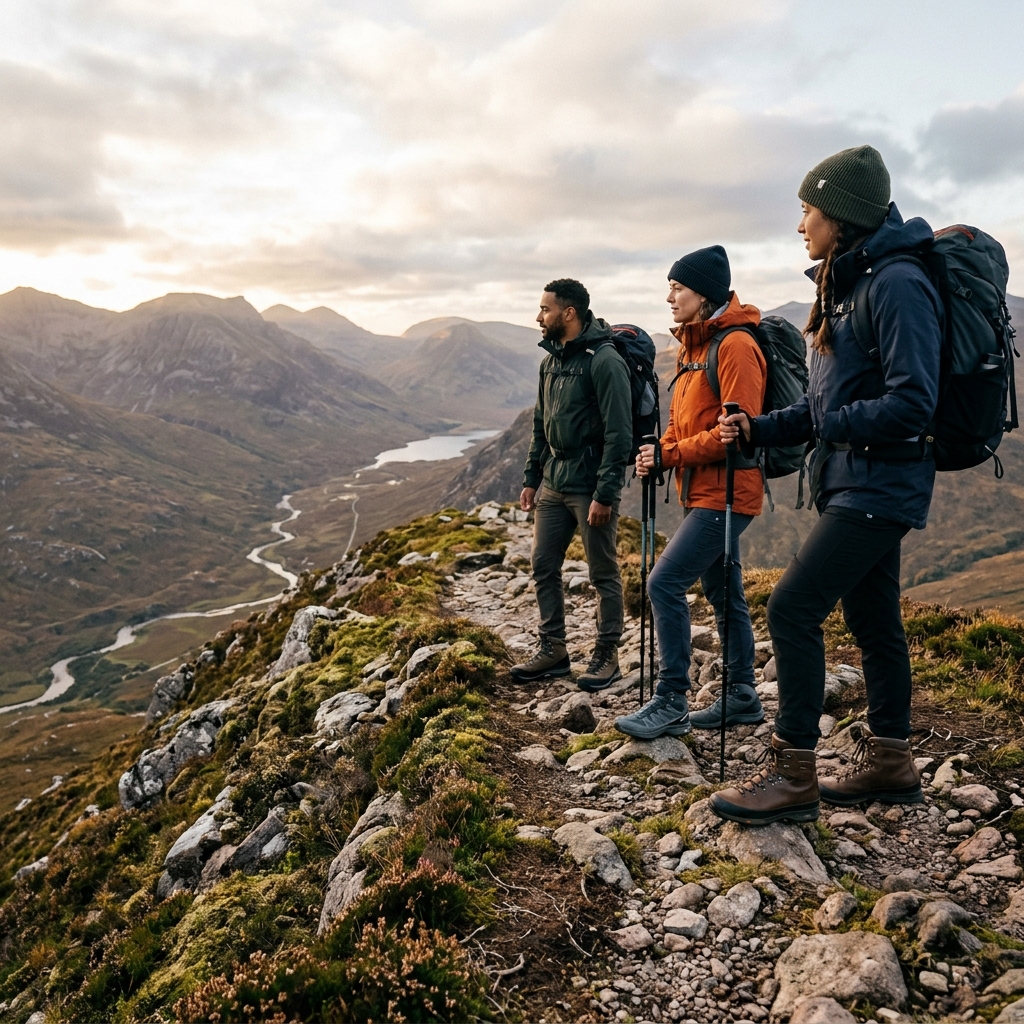
Choosing the right hiking boots is paramount for a safe, comfortable, and enjoyable experience on the trails. The UK boasts a diverse range of hiking terrains, from the rugged mountains of Scotland and Wales, to the undulating moorlands of Dartmoor and the Peak District, the stunning coastal paths of Cornwall and Dorset, and the tranquil forests of the New Forest. Each terrain demands a different level of support, protection, and grip. Ill-fitting or inappropriate boots can lead to blisters, ankle injuries, and overall discomfort, quickly ruining a carefully planned adventure. Investing in the correct boots is an investment in your wellbeing and enjoyment of the British countryside.
Understanding Hiking Boot Types
There’s no ‘one size fits all’ when it comes to hiking boots. Here’s a breakdown of the main types:
Lightweight Hiking Shoes
- Pros: Lightweight, breathable, comfortable for shorter hikes and well-maintained trails. Excellent for summer walking.
- Cons: Limited ankle support, less durable than heavier boots, not ideal for rough terrain or heavy loads.
- Best For: Day hikes on easy to moderate trails, trail running, warm weather conditions.
Day Hiking Boots
- Pros: Good balance of support, comfort, and weight. Suitable for day hikes with moderate loads.
- Cons: May not be robust enough for multi-day backpacking trips or very challenging terrain.
- Best For: Day hikes on varied terrain, short backpacking trips with light loads.
Backpacking Boots
- Pros: Excellent support and stability for carrying heavy loads over long distances. Durable and protective.
- Cons: Heavier and less flexible than other types. Requires a longer break-in period.
- Best For: Multi-day backpacking trips, challenging terrain, carrying heavy packs.
Mountaineering Boots
- Pros: Extremely durable and supportive, designed for ice and snow conditions. Often crampon-compatible.
- Cons: Very heavy and stiff, not suitable for general hiking.
- Best For: Mountaineering, ice climbing, winter expeditions.
Key Features to Consider in 2026
Several key features are vital when selecting hiking boots. By 2026, we’re seeing increased focus on sustainability and smart technology.
Waterproofing
Gore-Tex remains the gold standard for waterproofing, but increasingly, brands are using their own proprietary waterproof membranes. Look for boots with a waterproof/breathable membrane to keep your feet dry without overheating.
Ankle Support
Higher cut boots provide more ankle support, crucial for uneven terrain and heavy loads. Consider your hiking style and ankle strength.
Sole Type
Vibram soles are widely regarded for their excellent grip and durability. Different Vibram compounds are designed for specific terrains.
Midsole Cushioning
EVA and PU midsoles provide cushioning and shock absorption. PU is more durable, while EVA is lighter.
Weight
Lighter boots reduce fatigue, but often compromise on durability and support.
Materials
Leather boots are durable and mould to your feet, but require more maintenance. Synthetic boots are lighter, more affordable, and quicker drying. In 2026, expect to see more boots utilising recycled materials and plant-based alternatives.
Lacing Systems
Traditional laces offer a secure fit. Quick-lace systems are convenient but may not provide the same level of adjustability.
Toe Protection
Reinforced toe caps protect your toes from rocks and roots.
Breathability
Breathable materials prevent sweat build-up and keep your feet comfortable.
Smart Boot Technology (2026 Trend)
Some boots are now incorporating sensors to track gait, pressure points, and even provide feedback on foot health via smartphone apps.
Top Hiking Boot Brands in the UK (2026)
- Salomon: Known for lightweight, performance-oriented boots. Price range: £120 – £250
- Merrell: Popular for comfortable and versatile boots. Price range: £100 – £200
- Scarpa: Italian brand renowned for high-quality, durable boots. Price range: £150 – £300+
- Berghaus: A British staple, offering reliable and waterproof boots. Price range: £130 – £220
- Hoka: Becoming increasingly popular for cushioned, comfortable hiking boots. Price range: £140 – £200
- Keen: Known for their wide toe boxes and comfortable fit. Price range: £120 – £180
- Lowa: German brand specializing in durable and supportive boots. Price range: £180 – £280
- Hanwag: Premium German boots, renowned for quality and craftsmanship. Price range: £200 – £300+
Hiking Boot Comparison Table: Top Picks for 2026
| Brand | Model | Boot Type | Waterproofing | Ankle Support | Weight (per boot) | Price (GBP) | Pros | Cons |
|---|---|---|---|---|---|---|---|---|
| Salomon | X Ultra 4 GTX | Day Hiking | Gore-Tex | Mid | 340g | £160 | Lightweight, comfortable, excellent grip. | Not ideal for heavy packs. |
| Merrell | Moab 3 GTX | Day Hiking | Gore-Tex | Mid | 410g | £140 | Affordable, comfortable, durable. | Can feel bulky. |
| Scarpa | Zodiac Plus GTX | Backpacking | Gore-Tex | High | 650g | £180 | Excellent support, durable, waterproof. | Longer break-in period. |
| Berghaus | Expeditor Breeze 2.0 GTX | Day Hiking | Gore-Tex | Mid | 400g | £150 | British brand, reliable, good value. | Styling isn’t for everyone. |
| Hoka | Speedgoat 5 | Lightweight Hiking | Water Resistant | Low | 300g | £155 | Super cushioned, very comfortable. | Less durable than traditional boots. |
| Keen | Targhee III Mid Waterproof | Day Hiking | Keen.Dry | Mid | 450g | £130 | Wide toe box, comfortable, good value. | Waterproofing not as reliable as Gore-Tex. |
| Lowa | Renegade GTX Mid | Backpacking | Gore-Tex | Mid | 630g | £200 | Excellent comfort, durable, adaptable. | Pricey. |
| Hanwag | Banks GTX | Backpacking | Gore-Tex | High | 700g | £220 | Exceptional quality, durable, supportive. | Very expensive, heavier. |
Best Hiking Boots for Specific Needs
- Best for Beginners: Merrell Moab 3 GTX – Comfortable, affordable, and easy to break in.
- Best for Narrow Feet: Salomon X Ultra 4 GTX – Offers a snug, secure fit.
- Best for Wide Feet: Keen Targhee III Mid Waterproof – Known for its generous toe box.
- Best for Backpacking: Scarpa Zodiac Plus GTX – Provides excellent support and durability for heavy loads.
- Best for Fell Walking: Salomon X Ultra 4 GTX – Lightweight and agile for navigating challenging terrain.
- Best for Winter Hiking: Hanwag Banks GTX – Offers maximum protection and support in harsh conditions.
- Best Lightweight Hiking Boots: Hoka Speedgoat 5 – Comfort and low weight for easy trails.
- Best Vegan Hiking Boots: (Brand to research – increasingly available) – Look for boots made with synthetic materials and vegan-friendly adhesives.
Hiking Boot Maintenance & Care
Proper maintenance extends the life of your boots.
- Cleaning: Remove dirt and mud after each hike with a brush and water.
- Waterproofing: Re-apply a waterproof spray (e.g., Sprayway Waterproof Boot Spray 400ml – £12) regularly, especially after cleaning.
- Storage: Store boots in a cool, dry place away from direct sunlight.
- Repair: Address minor damage promptly to prevent it from worsening.
- Socks: Invest in good quality hiking socks (e.g., Darn Tough Hiker Micro Crew Cushion Socks – £25) to prevent blisters and wick away moisture.
Where to Buy Hiking Boots in the UK
- Cotswold Outdoor
- Ellis Brigham Mountain Sports
- Go Outdoors
- Blacks
- Direct from brand websites (Salomon, Merrell, Scarpa, etc.)
Many retailers offer price matching and generous return policies, so be sure to check before you buy.
Conclusion: Finding Your Perfect Fit
Choosing the best hiking boots is a personal process. Consider the type of hiking you’ll be doing, your foot shape, and your budget. The comparison table above provides a great starting point, but the most important thing is to try on boots before you buy. Walk around the shop, pay attention to how they feel, and don’t hesitate to ask for advice from a knowledgeable salesperson. Prioritize fit and comfort above all else – your feet will thank you!