Table of Contents
As an Amazon Associate, we earn from qualifying purchases. This means we may receive a small commission at no extra cost to you when you buy through links on this page.
Introduction: The Great Outdoors and Your Cooking Options
The UK’s love affair with the outdoors continues to grow. From weekend camping trips to extended glamping holidays, more and more people are seeking adventure and enjoying the beauty of the British countryside. A crucial part of any outdoor adventure is, of course, food! And that means having a reliable cooking solution. In 2026, the options are more diverse than ever, but the core choice remains: a camping stove or a camping hob? This guide will break down the pros and cons of each, helping you make an informed decision to fuel your next expedition.
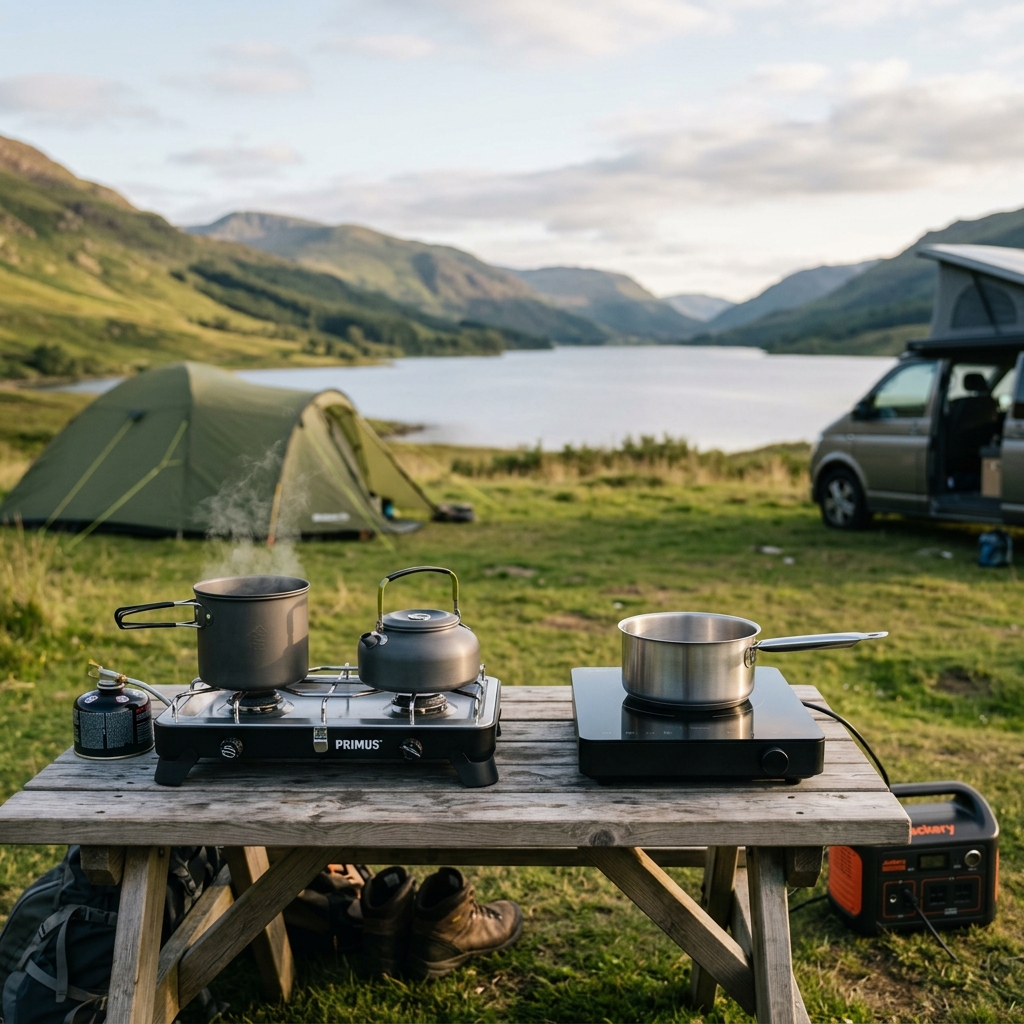
What is a Camping Stove?
A camping stove is a self-contained cooking appliance, typically designed for portability and use in outdoor environments. They offer flexibility and convenience, coming in several varieties:
- Canister Stoves: These use readily available screw-on gas canisters (isobutane/propane mix). They’re lightweight and easy to use. Example: Jetboil Flash Cooking System – £160
- Liquid Fuel Stoves: Burning petrol or kerosene, these are robust and perform well in cold weather, but require more maintenance and careful handling. Example: Brunton Vapor Stove – £140
- Multi-Fuel Stoves: A versatile option capable of running on various fuels, offering flexibility but often at a higher price point. Example: Vango Combi Pro Dual Fuel Stove – £110
- Wood-Burning Stoves: Environmentally friendly (using readily available wood), but can be affected by weather conditions and require gathering fuel.
Pros and Cons of Camping Stoves
| Type | Pros | Cons |
|---|---|---|
| Canister | Lightweight, easy to use, quick setup | Canisters can be expensive, performance drops in cold weather, canisters aren’t reusable. |
| Liquid Fuel | Reliable in cold weather, fuel readily available globally | Requires priming, maintenance, potential for spills, can be messy. |
| Multi-Fuel | Versatile fuel options, good performance | More expensive, complex to maintain |
| Wood-Burning | Eco-friendly, free fuel source | Can be affected by weather, requires fuel gathering, slower cooking. |
What is a Camping Hob?
A camping hob (or cooker) is generally a more substantial cooking unit than a stove. It usually consists of one or two burners and connects to a larger gas bottle, commonly propane, butane, or patio gas.
- Single-Burner Hobs: Compact and ideal for solo campers or couples. Example: Outwell Kobuk Portable Gas Stove – £75
- Double-Burner Hobs: Offer increased cooking capacity, perfect for families or groups. Example: Campingaz Bistro 3 Deluxe Hob – £85
Hobs provide a more stable cooking surface and are frequently favoured for more elaborate campsite cooking.
Pros and Cons of Camping Hobs
| Feature | Pros | Cons |
|---|---|---|
| Stability | Very stable cooking surface | Less portable than stoves |
| Capacity | Larger cooking capacity (especially double-burner) | Bulkier to transport |
| Ease of Use | Simple to operate | Requires a larger gas bottle |
Fuel Types: A Head-to-Head Comparison
The fuel you choose significantly impacts cost, convenience, and environmental effects.
| Fuel Type | Cost per Unit (2026 Estimate) | Availability (UK) | Environmental Impact |
|---|---|---|---|
| Canister Gas (Isobutane/Propane) | £3 – £8 per canister (depending on size) | Excellent – widely available in outdoor shops, supermarkets | Moderate – Greenhouse gas emissions |
| Liquid Fuel (Petrol/Kerosene) | £1.50 – £2.00 per litre | Good – Petrol stations readily available | High – Fossil fuel derived, potential for spills |
| Propane | £20 – £30 per 13kg bottle (refillable) | Good – Caravan/Camping shops, some petrol stations | Moderate – Greenhouse gas emissions |
| Butane | £15 – £25 per 4.5kg bottle (refillable) | Good – DIY stores, supermarkets | Moderate – Greenhouse gas emissions, less effective in cold weather |
| Wood | Free (if responsibly gathered) | Variable – Dependent on location | Low – Carbon neutral if sustainably sourced |
Performance: Cooking Speed & Efficiency
Camping hobs generally outperform stoves in terms of raw power, thanks to higher burner outputs. A typical double-burner hob can easily reach 4kW, while many canister stoves are around 2-3kW. This translates to faster boiling times. Expect a double-burner hob to boil 1 litre of water in approximately 3-5 minutes, compared to 4-6 minutes for a canister stove.
However, performance is also affected by wind resistance. Stoves with built-in wind shields (like the Jetboil Flash Cooking System – £160) can maintain efficiency in breezy conditions, while hobs may require a separate wind break.
Altitude also plays a role; liquid fuel stoves generally perform better at higher altitudes than canister stoves, as canister pressure decreases with altitude.
Portability & Weight: Packing for Your Adventure
This is where stoves have a clear advantage. Canister stoves, particularly smaller models like the SOTO Pocket Torch – £50, can weigh under 200g. Liquid fuel stoves are heavier, generally around 500-800g. Hobs, being larger and requiring a gas bottle, are significantly heavier – even a single-burner hob with a small propane bottle can easily weigh over 3kg.
For backpacking, a lightweight canister stove is almost essential. For car camping, weight is less of a concern, and a hob’s stability and cooking capacity become more valuable.
Cost Analysis: Initial Investment & Running Costs (2026 Prices)
Here’s a breakdown of expected costs:
| Item | Camping Stove (Avg) | Camping Hob (Avg) |
|---|---|---|
| Initial Purchase Price | £80 – £200 | £60 – £120 |
| Fuel Cost (Weekend Trip) | £5 – £15 (Canister) | £8 – £12 (Propane/Butane) |
| Gas Bottle Refill/Replacement | N/A | £20 – £30 (Propane/Butane) |
While hobs are generally cheaper to purchase initially, the ongoing cost of gas bottles can add up, especially with frequent use.
Safety Considerations: Using Stoves and Hobs Responsibly
Safety is paramount when cooking outdoors:
- Ventilation: Always use stoves and hobs in a well-ventilated area to prevent carbon monoxide poisoning.
- Carbon Monoxide Detection: Consider carrying a carbon monoxide detector, especially when using fuel-burning appliances inside tents or enclosed spaces.
- Fuel Storage: Store fuel safely, away from heat sources and direct sunlight.
- Fire Prevention: Clear a safe cooking area, free from flammable materials. Keep water or a fire extinguisher nearby.
- Stable Surface: Ensure the stove or hob is placed on a level, stable surface.
Resources:
Camping Stove vs Hob: Which Should You Choose?
Here’s a quick guide:
- Backpacking: Camping Stove (Canister or Lightweight Liquid Fuel)
- Car Camping (Solo/Couple): Either – preference dictates. A lightweight stove is fine, or a single-burner hob for stability.
- Family Camping/Glamping: Camping Hob (Double-Burner) for increased cooking capacity.
- Budget-Conscious: Camping Hob (initial cost is lower)
- Cold Weather Camping: Liquid Fuel Stove or Multi-Fuel Stove
Conclusion: Enjoying Delicious Meals in the Great Outdoors
The choice between a camping stove and a hob ultimately depends on your individual needs and preferences. Stoves offer portability and convenience, while hobs provide stability and cooking capacity. Carefully consider your camping style, budget, and fuel requirements to make the best decision. With the right cooking equipment, you can enjoy delicious meals and create memorable experiences in the beautiful British outdoors!