
Table of Contents
As an Amazon Associate, we earn from qualifying purchases. This means we may receive a small commission at no extra cost to you when you buy through links on this page.
Introduction: Why Tent Pegs Matter
A relaxing camping trip in the UK can quickly turn stressful if your tent isn’t securely pitched. We all know the feeling – a blustery night, the flapping of fabric, and the worry that your shelter might not hold up. The humble tent peg is often overlooked, but it’s absolutely crucial for a safe and enjoyable experience. Different ground conditions – from soft mud to solid rock – demand different peg types. Choosing the right pegs isn’t just about preventing your tent from blowing away; it’s about protecting yourself and your gear from the unpredictable British weather.
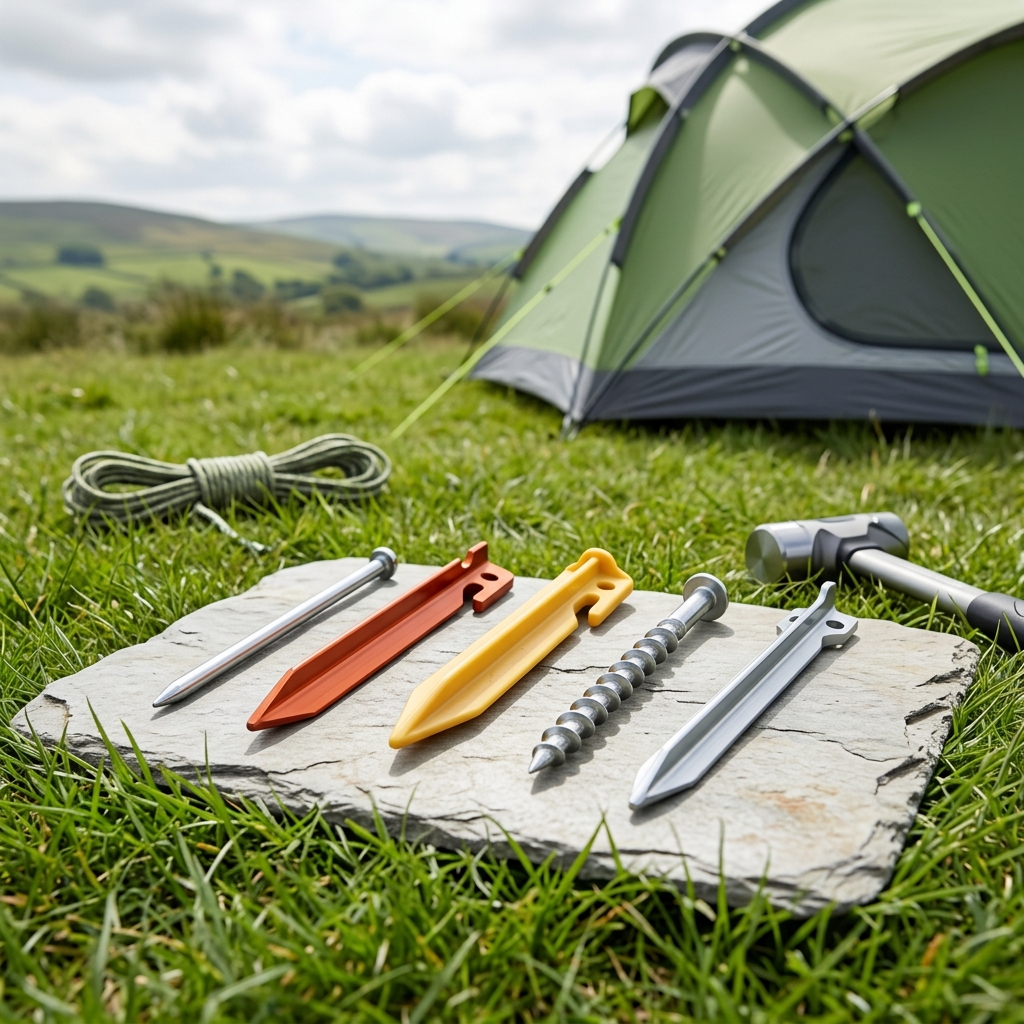
Understanding Ground Conditions in the UK
The UK boasts a diverse range of campsite terrains. Knowing what you’ll be pitching on is the first step to choosing the right pegs:
- Grass: The most common ground type. Generally provides good holding power, but can become soft and muddy after rain.
- Hardstanding: Often found on more established campsites. Requires robust pegs that can penetrate the surface.
- Sand: Common on coastal campsites. Offers very little holding power – requires specialist sand pegs.
- Muddy Ground: A frequent challenge in the UK, especially during autumn and winter. Needs pegs with a large surface area to distribute the load.
- Rocky Ground: Difficult to penetrate. Requires strong, solid pegs that can be hammered into cracks.
- Snow: Requires specialist snow pegs or deadman anchors, as standard pegs won’t hold in snow.
Steel Tent Pegs: The All-Rounder
Steel tent pegs are a popular choice for many campers due to their strength and affordability. They’re typically made from carbon steel and are suitable for a wide range of ground conditions, particularly grass and softer earth.
- Benefits: Strong, durable, relatively inexpensive.
- Drawbacks: Heavier than aluminium, prone to bending under extreme force, can rust if not properly cared for.
- Finishes: Galvanised steel offers some rust protection. Painted steel looks better but the paint can chip.
- Typical Use: General-purpose camping, family tents.
Example Product: Vango Steel Rock Pegs (Pack of 10) – £12.99
Aluminum Tent Pegs: Lightweight Champions
Aluminium pegs are favoured by hikers and backpackers who prioritise weight. They’re considerably lighter than steel, and corrosion-resistant, making them ideal for repeated use in damp conditions.
- Benefits: Lightweight, corrosion-resistant, easy to handle.
- Drawbacks: Less strong than steel, more expensive. Can bend more easily.
- Alloys: Different alloys offer varying levels of strength. 7001-T6 aluminium is a common, strong choice.
- Typical Use: Backpacking, lightweight tents, solo camping.
Example Product: Coleman Aluminium Y-Beam Pegs (Pack of 10) – £15.0
Plastic Tent Pegs: Budget-Friendly Options
Plastic pegs are the cheapest option, often included with budget tents. They’re very lightweight, but lack the strength required for anything other than calm conditions.
- Benefits: Very affordable, lightweight.
- Drawbacks: Easily bent or broken, not suitable for strong winds or hard ground.
- Best Use: Calm weather camping, children’s tents, emergency replacements.
Herring Pegs (Y-Beam Pegs): For Soft Ground
Herring pegs, also known as Y-beam pegs, are designed for soft ground like sand or mud. Their Y-shape provides a large surface area to distribute the load and prevent them from sinking.
- Shape: The Y-shape anchors horizontally beneath the surface.
- Materials: Available in plastic, steel, or aluminium. Steel and aluminium offer better holding power.
- Limitations: Not ideal for hard ground as they rely on surface resistance.
Example Product: Outwell Herring Tent Pegs (Pack of 20) – £18.5
Rock Pegs (Solid Pegs): Conquering Rocky Terrain
Rock pegs are solid, heavy-duty pegs designed to be hammered into cracks and crevices in rocky ground. They often have a pointed end and a robust head for hammering.
- Design: Solid construction, pointed end for penetration.
- Safety: Wear safety glasses when hammering rock pegs to protect your eyes.
- Essential Tool: A sturdy mallet is essential for driving rock pegs into the ground.
Example Product: Vango Steel Rock Pegs (Pack of 10) – £12.99 (also suitable for rock pegs).
Screw Pegs: The Versatile Solution
Screw pegs are a relatively recent innovation, offering excellent holding power in a variety of ground conditions. They screw into the ground like a large screw, providing a secure anchor.
- How They Work: Screwing action provides strong grip.
- Effectiveness: Good on grass, sand, and even some hard ground.
- Drawbacks: Can be damaged if forced, require a tool for insertion/removal (often integrated into the peg).
Example Product: Lifewit Screw Tent Pegs (Pack of 8) – £24.99
Sand Pegs: Specialized for Coastal Camping
Coastal camping in the UK requires specialized sand pegs. These pegs are longer and wider than standard pegs, with a large surface area to prevent them from sinking into the loose sand.
- Large Surface Area: Distributes weight to prevent sinking.
- Length: Longer length provides greater holding power.
- Essential for: Beach camping, dune camping.
Example Product: Eurohike Sand Tent Pegs (Pack of 6) – £9.99
Choosing the Right Peg for Your Tent
The best peg choice depends on your tent size, weight, and anticipated weather conditions:
- Small Tents (1-2 person): Lightweight aluminium or plastic pegs may suffice for calm conditions.
- Large Family Tents: Steel or screw pegs are recommended for increased strength and stability.
- Wind Resistance: In exposed locations, use a combination of strong steel pegs and multiple pegs per guylines.
Tent Peg Accessories: Mallets, Extractors & Repair Kits
Don’t forget these essential accessories:
- Rubber Mallet: Protects pegs from damage during hammering. – Geertop Tent Peg Hammer – Rubber Mallet – £22.0
- Steel Mallet: For driving rock pegs into hard ground.
- Peg Extractor Tool: Makes removing stubborn pegs much easier. – Tent-Logix Tent Peg Extractor Tool – £7.5
- Repair Kit: Includes replacement pegs and tools for straightening bent pegs.
Tent Peg Maintenance & Care
Proper maintenance extends the life of your pegs:
- Cleaning: Remove dirt and debris after each use.
- Storing: Store pegs in a dry place to prevent rust.
- Inspecting: Check for bent or damaged pegs before each trip.
- Straightening: Bent steel pegs can sometimes be straightened with a hammer and a solid surface.
Conclusion: Securing Your UK Camping Adventure
Choosing the right tent pegs is a simple but vital step towards a safe and enjoyable camping experience in the UK. Understanding the different types of pegs available, considering the ground conditions you’ll encounter, and investing in quality equipment will ensure your tent stays securely pitched, even in the face of unpredictable British weather. Don’t skimp on this crucial element of your camping kit!
FAQ
Q: Can I use any hammer to drive in tent pegs?
A: While you can, a rubber mallet is highly recommended. A steel hammer can easily damage pegs, especially aluminium ones. A rubber mallet provides a softer impact.
Q: What do I do if a peg bends?
A: Steel pegs can sometimes be straightened using a hammer and a solid surface. However, severely bent pegs should be replaced. Aluminium pegs are harder to straighten and are best replaced.
Q: How many tent pegs do I need?
A: Most tents come with a standard set of pegs. However, it’s a good idea to bring extra, especially if you’re camping in challenging conditions. A good rule of thumb is to have at least 20-30 pegs, depending on the size of your tent.
Q: Are screw pegs really worth the extra cost?
A: For campers who frequently encounter varying ground conditions, screw pegs offer excellent versatility and holding power, making them a worthwhile investment.
Q: What’s the best way to store tent pegs?
A: Store tent pegs in a dedicated bag or container to prevent them from getting lost or damaged. Ensure they are clean and dry before storing to avoid rust.