Table of Contents
As an Amazon Associate, we earn from qualifying purchases. This means we may receive a small commission at no extra cost to you when you buy through links on this page.
Why Layering is Crucial for Camping
Forget the days of one bulky coat hoping it’ll cover all eventualities. A well-planned layering system is the cornerstone of comfortable camping, particularly here in the UK. Our weather is notoriously unpredictable – sunshine one minute, a downpour the next. Layering allows you to adapt quickly to changing conditions, avoiding both overheating when you’re active and chilling when you’re stationary. It’s about creating a microclimate around your body, regulating temperature effectively and keeping you dry from both sweat *and* the elements. A layering system also offers much more flexibility than relying on a single, heavy garment. It’s a far more sophisticated and effective way to stay comfortable outdoors.
The Three-Layer System Explained
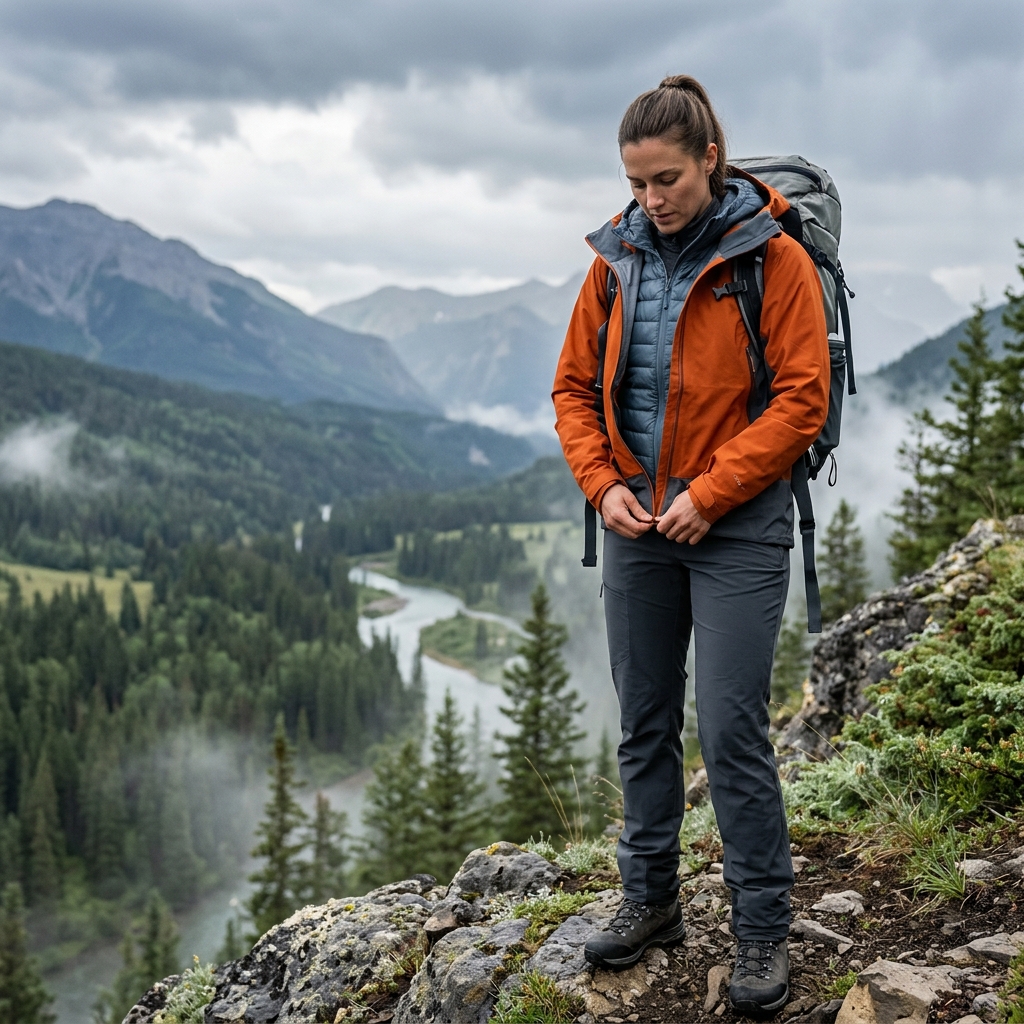
The fundamental principle of a camping clothing system revolves around three core layers: the Base Layer, the Mid Layer, and the Outer Layer. Each layer has a specific job, and working in harmony they create a protective and comfortable environment.
- Base Layer: This layer sits directly against your skin. Its primary function is to wick moisture away from your body, keeping you dry and comfortable.
- Mid Layer: The mid layer provides insulation, trapping air to keep you warm. This is where you adjust your warmth based on the temperature.
- Outer Layer: The outer layer protects you from wind, rain, and snow. It’s your shield against the elements.
[Imagine a simple diagram here showing the three layers stacked on a person. Could be a simple illustration of a silhouette with coloured blocks representing each layer.]
Base Layers: Moisture Management is Key
Your base layer is arguably the most important. If you get this wrong, you’ll be cold and uncomfortable regardless of what you wear on top. The key is moisture management – avoiding cotton at all costs! Cotton absorbs moisture and holds onto it, making you feel cold and clammy. You have two primary material choices: merino wool and synthetics.
Merino Wool
- Pros: Excellent warmth-to-weight ratio, naturally odour resistant (meaning you can wear it for multiple days without it smelling!), breathable, soft and comfortable.
- Cons: Can be expensive, takes longer to dry than synthetics, requires gentle washing.
- Example: Smartwool Merino 250 Base Layer Top – £90
Synthetics
- Pros: Quick-drying, durable, often more affordable than merino wool.
- Cons: Can retain odours more easily than merino wool, less comfortable against the skin for some people.
- Example: Helly Hansen Base Layer Pants – £75
Fit is crucial. The base layer should be snug but not constricting. It needs to be in contact with your skin to effectively wick away moisture.
Mid Layers: Insulation for Warmth
The mid layer is all about trapping air to keep you warm. You’ve got three main options: fleece, down, and synthetic fills.
Fleece
- Pros: Affordable, warm when dry, breathable, relatively quick-drying.
- Cons: Bulky, loses its insulating properties when wet, can pill with wear.
- Considerations: Fleece comes in different weights (100, 200, 300 etc.). Higher numbers indicate thicker, warmer fleece.
- Example: Patagonia R1 Fleece Pullover – £140
Down
- Pros: Exceptional warmth-to-weight ratio, highly compressible, excellent insulation.
- Cons: Expensive, loses its insulating properties when wet, requires careful washing and drying, ethical concerns regarding sourcing (look for RDS – Responsible Down Standard – certification).
- Considerations: ‘Fill power’ indicates the quality of the down. Higher fill power = warmer for the same weight.
- Example: Rab Neutrino Pro Down Jacket – £280
Synthetic Fills
- Pros: Warm even when wet, more affordable than down, easier to care for.
- Cons: Less compressible than down, heavier than down for the same warmth.
Outer Layers: Protection from the Elements
Your outer layer is your defence against the wind and rain. You’ll primarily be looking at waterproof and windproof jackets and trousers. There are two main types: hard shell and soft shell.
Hard Shell
- Pros: Completely waterproof, highly windproof, durable.
- Cons: Less breathable than soft shells, can be noisy, generally more expensive.
- Considerations: Look for waterproof ratings (measured in mm – higher is better, 10,000mm is good for general use, 20,000mm+ for heavy rain) and breathability ratings (measured in g/m²/24h – higher is better, 10,000g/m²/24h is good for moderate activity). Taped seams are essential.
- Example: Arc’teryx Beta AR Jacket – £450
Soft Shell
- Pros: More breathable than hard shells, more comfortable, good mobility.
- Cons: Less waterproof than hard shells, less windproof than hard shells.
Montane Paclite Waterproof Trousers – £160 are a good choice for reliable waterproof protection.
Layering for Different UK Camping Conditions
The beauty of layering is its adaptability. Here’s how to adjust your system for different UK conditions:
Spring/Autumn Camping (Mild, Wet)
- Base Layer: Merino wool or synthetic
- Mid Layer: Fleece or lightweight down jacket
- Outer Layer: Waterproof jacket and trousers
Summer Camping (Warm Days, Cool Nights)
- Base Layer: Lightweight synthetic or merino wool (optional)
- Mid Layer: Lightweight fleece or a gilet
- Outer Layer: Lightweight waterproof jacket (essential!)
Winter Camping (Cold, Potentially Snowy)
- Base Layer: Heavyweight merino wool or synthetic
- Mid Layer: Down jacket *and* a fleece
- Outer Layer: Heavy-duty waterproof and windproof jacket and trousers
Don’t forget wind chill! Even on a seemingly mild day, wind can significantly lower your body temperature.
Essential Camping Clothing Items (Beyond the Layers)
Layers are the foundation, but you’ll also need these:
- Hiking Socks: Merino wool is highly recommended for warmth, comfort, and blister prevention. Bridgedale Merino Trekker Socks – £25 (per pair)
- Hat: Essential for retaining heat.
- Gloves/Mittens: Protect your hands from the cold. SealSkinz Waterproof Gloves – £40
- Footwear: Sturdy, waterproof hiking boots are a must.
Remember that your clothing choices can impact your sleeping bag’s temperature rating. If you’re cold, you may need a warmer bag – Snugpak Softie Expansion 3 Sleeping Bag – £180 – or better layered clothing.
Caring for Your Camping Clothing
Proper care extends the life of your gear:
- Merino Wool: Wash on a gentle cycle with wool-specific detergent. Do not tumble dry.
- Down: Wash with a down-specific detergent. Tumble dry on low heat with tennis balls to fluff it up.
- Synthetics: Machine washable, follow garment instructions.
- Waterproofing: Regularly re-proof your waterproof jacket and trousers with a waterproofing treatment.
Future Trends in Camping Clothing (2026 & Beyond)
The world of outdoor clothing is constantly evolving. We’re seeing:
- Sustainable Materials: Increased use of recycled materials and more environmentally friendly manufacturing processes.
- Smart Textiles: Clothing with integrated sensors that can monitor body temperature and adjust insulation accordingly.
- Enhanced Waterproofing: New waterproof membranes offering even greater breathability and durability.
FAQ
Q: Can I use cotton base layers?
Absolutely not! Cotton absorbs moisture and stays wet, leading to rapid heat loss and discomfort. Opt for merino wool or synthetics.
Q: How many mid-layers should I pack?
At least two. A lightweight fleece and a warmer down or synthetic jacket will provide flexibility for different temperatures.
Q: What waterproof rating do I really need?
For general UK camping, 10,000mm waterproof rating is usually sufficient. If you’re camping in areas with consistently heavy rainfall, 20,000mm or higher is recommended.
Q: Is it better to have one very warm jacket or multiple lighter layers?
Multiple lighter layers are far more versatile. You can adjust your warmth precisely to match the conditions, avoiding overheating or chilling.
Q: How often should I wash my base layers?
Merino wool base layers don’t need to be washed after every use, thanks to their odour-resistant properties. Synthetics should be washed more frequently.