
Table of Contents
As an Amazon Associate, we earn from qualifying purchases. This means we may receive a small commission at no extra cost to you when you buy through links on this page.
Why Winter Storage Matters for Camping Gear
As the nights draw in and the temperature drops, it’s time to think about winterising your camping gear. Proper storage isn’t just about tidiness; it’s about protecting your investment and ensuring your kit is ready to go when spring arrives. Improper storage can lead to a host of problems, including mould and mildew growth (especially in tents and sleeping bags), fabric degradation from prolonged dampness, broken tent poles due to incorrect folding, battery corrosion in headlamps and lanterns, and general wear and tear that significantly shortens the lifespan of your equipment. Replacing gear is expensive – a decent four-person tent can easily cost £300-£600, a quality sleeping bag upwards of £200, and even smaller items add up. A little time and effort spent on correct winter storage can save you significant money in the long run, and guarantee your adventures aren’t interrupted by faulty kit.
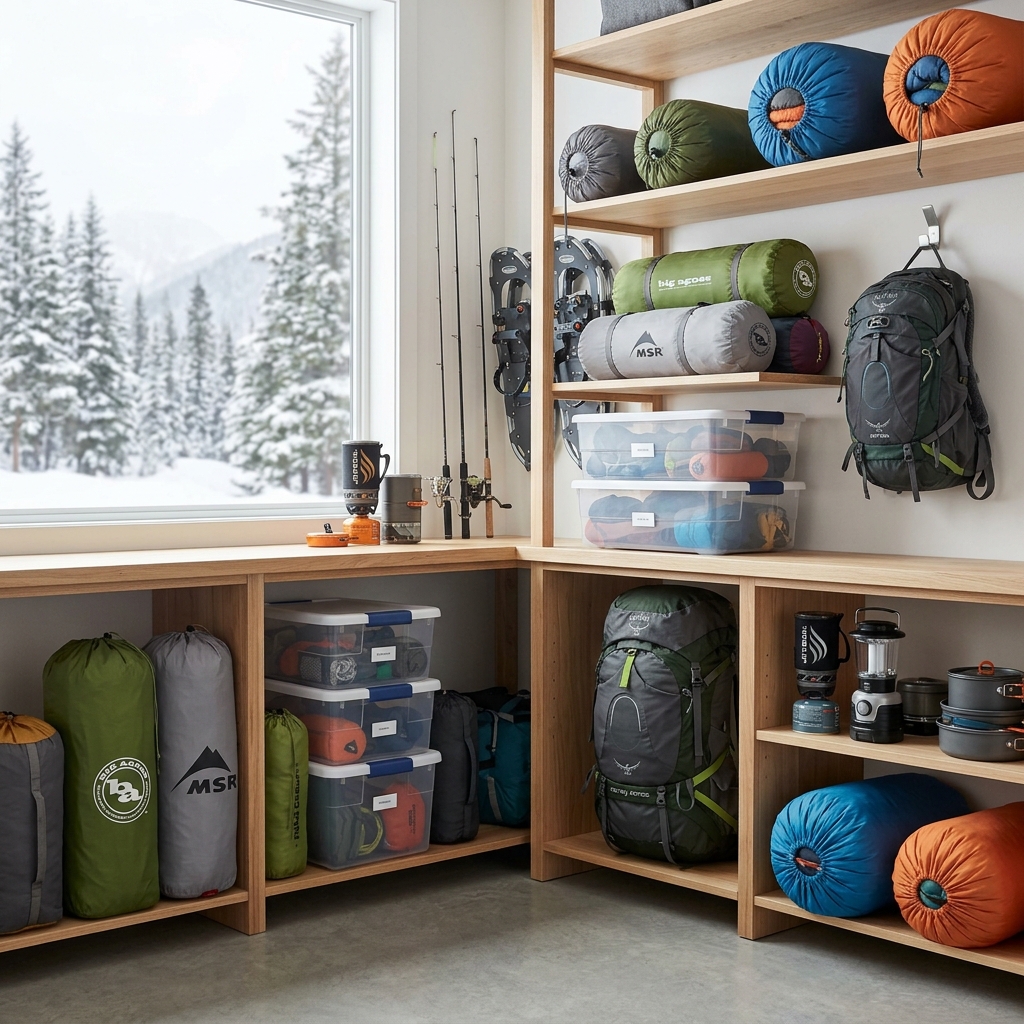
Cleaning Before Storage: A Gear-Specific Checklist
Before you even think about packing anything away, thorough cleaning is essential. Removing dirt, grime, and organic matter prevents mould growth and keeps your gear in top condition.
- Tents: Brush off loose dirt and debris. Wipe down the flysheet and groundsheet with a damp cloth and mild soap. Consider using a waterproofing treatment like Nikwax Tent & Gear SolarProof Waterproofing (£16.5) to replenish the DWR coating.
- Sleeping Bags: Follow the manufacturer’s instructions. Down bags require a specialist cleaner like Grangers Down Wash Kit (300ml) (£18.0). Synthetic bags can often be machine washed on a gentle cycle.
- Rucksacks: Empty all pockets and brush out any debris. Wipe down with a damp cloth. For heavier dirt, use a mild detergent.
- Cooking Equipment: Wash all pots, pans, and utensils with hot, soapy water. Ensure they are completely dry before storing.
- Stoves: Empty fuel canisters and clean the burner and any removable parts. Check regulator hoses for cracks or damage.
- Water Filters: Backflush your water filter according to the manufacturer’s instructions.
- Boots: Clean off mud and dirt. Allow to dry completely. Consider using a leather conditioner if applicable.
- Clothing: Wash all clothing items, even those that don’t appear dirty.
Drying Your Gear: Preventing Mould and Mildew
This is arguably the most crucial step. Mould and mildew thrive in damp environments, and can quickly ruin your camping gear. Ensure *everything* is completely dry before storing it.
- Tents: Pitch the tent in dry weather, or hang the flysheet and groundsheet indoors to air dry. Avoid direct sunlight, which can damage the fabric.
- Sleeping Bags: Air drying is best. If using a tumble dryer, use the lowest heat setting and add a few clean tennis balls to help maintain loft.
- Clothing: Air dry or use a low-heat tumble dryer setting.
If you encounter stubborn dampness, consider using a dehumidifier in the storage area.
Tent Storage: Protecting Your Shelter
Correct tent storage prevents damage and prolongs its lifespan.
- Folding: Never fold the tent the same way each time. Vary the fold lines to prevent creases from becoming permanent.
- Groundsheet: Store the tent loosely with a Vango Protex 300D Tent Footprint (£35.99) between the flysheet and inner tent to protect it from abrasion.
- Ventilation: Ensure adequate ventilation around the stored tent to prevent mildew. Don’t pack it away in a completely airtight bag.
- Material Considerations: Polyester tents generally dry quicker and are less prone to stretching than nylon tents.
Sleeping Bag & Pad Storage: Maintaining Loft and Comfort
Proper storage maintains the insulating properties of your sleeping bag and pad.
- Sleeping Bags: Avoid compressing down sleeping bags for extended periods. Store in a large storage sack like a Rab Storage Sack for Sleeping Bags (£25.0), allowing the down to loft. Synthetic bags are more resistant to compression.
- Sleeping Pads: Deflate your sleeping pad completely. Clean with a damp cloth and mild soap. Roll it up loosely and store it in a cool, dry place.
Rucksack & Clothing Storage: Keeping Things Fresh
Protect your carrying capacity and clothes from mustiness.
- Rucksacks: Ensure the rucksack is completely dry. Store in a cool, dry place.
- Clothing: Wash and thoroughly dry all clothing. Store in breathable storage containers, or hanging wardrobes. Use mothballs or cedar blocks to deter moths.
Cooking Equipment & Stove Storage: Safety First
Safe storage of cooking equipment and stoves is paramount.
- Cooking Equipment: Clean and dry all pots, pans, and utensils.
- Stoves: Empty and clean stoves thoroughly. Store fuel canisters separately in a well-ventilated area. Check regulator hoses for damage.
Battery & Electronic Gear Storage: Preventing Degradation
Protect your lights and devices from battery corrosion.
- Batteries: Remove batteries from headlamps like the Silva Headlamp with Rechargeable Batteries (£60.0), lanterns, and other devices. Store batteries in a cool, dry place.
- Solar Chargers: Clean solar panels with a damp cloth. Store in a protective case.
Storage Location: Choosing the Right Space
The ideal storage location is crucial.
- Ideal Conditions: Cool, dry, and well-ventilated.
- Avoid: Attics (prone to temperature extremes), basements (damp), and garages (often damp and subject to pests).
- Pest Control: Protect your gear from rodents and insects. Consider using pest control measures if necessary.
Regular Checks During Winter: Maintaining Your Gear
Don’t just store your gear and forget about it! Periodic checks can prevent problems.
- Monthly Checks: Inspect tents, sleeping bags, and rucksacks for signs of mould or mildew.
- Battery Check: Check battery terminals for corrosion.
- General Inspection: Look for any signs of damage or wear and tear.
Comparison Table: Storage Solutions
| Solution | Pros | Cons | Approximate Cost (£) |
|---|---|---|---|
| Large Storage Sack (Sleeping Bag) | Maintains loft, breathable | Takes up more space | 20-30 |
| Compression Sack (Sleeping Bag) | Compact storage | Can damage down over time | 15-25 |
| Breathable Storage Container (Clothing) | Protects from dust and moths, allows airflow | Can be bulky | 20-50 |
| Plastic Storage Box (Waterproof) | Waterproof, protects from pests | No airflow, can trap moisture | 10-30 |
| Tent Footprint | Protects tent base during storage | Adds another item to store | 30-40 |
FAQ
- Q: Can I store my tent damp?
A: Absolutely not. Storing a damp tent will almost certainly lead to mould and mildew, significantly reducing its lifespan. - Q: How often should I check my stored gear?
A: A monthly check is a good idea, especially during prolonged periods of storage. - Q: What’s the best way to store a down sleeping bag?
A: In a large, breathable storage sack to allow the down to loft. Avoid compression sacks for long-term storage. - Q: Is it safe to store fuel canisters indoors?
A: No. Fuel canisters should be stored in a well-ventilated area, away from heat sources and direct sunlight. - Q: What can I do about existing mildew on my tent?
A: Mildew can often be removed with a specialist tent cleaner. However, severe mildew damage may be irreversible.