Table of Contents
As an Amazon Associate, we earn from qualifying purchases. This means we may receive a small commission at no extra cost to you when you buy through links on this page.
Introduction: Why a Lightweight Camping Stove Matters
For any outdoor enthusiast, especially backpackers and hikers, the weight of your gear is paramount. Every gram counts when you’re carrying everything on your back for miles. A lightweight camping stove allows you to enjoy hot meals and drinks without adding unnecessary bulk. Efficiency is equally crucial; you want a stove that boils water quickly and uses fuel sparingly. Choosing the right stove also depends on the type of camping you’ll be doing and the conditions you’re likely to encounter. In 2026, the range of options continues to expand, offering more choice than ever before.
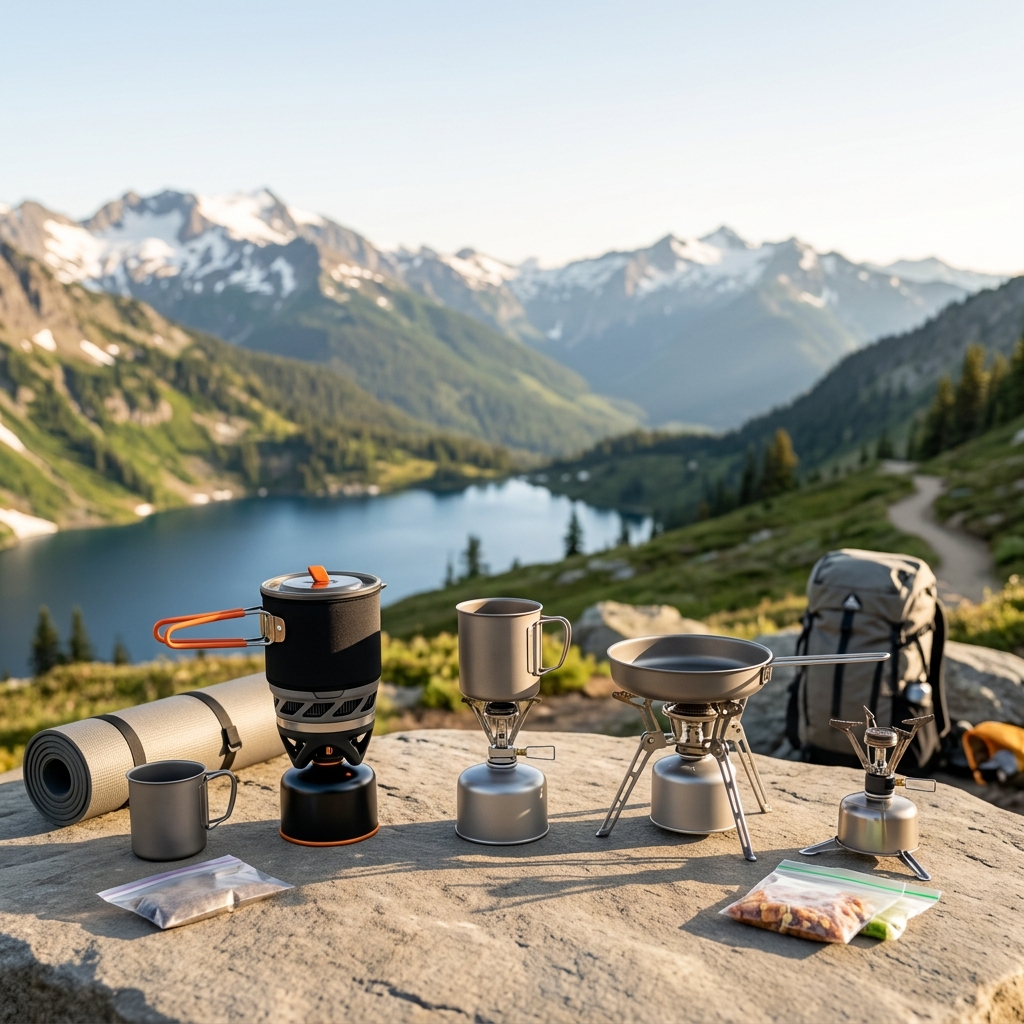
There are several fuel types to consider: Gas (canister stoves) offer convenience and ease of use. Liquid fuel stoves are ideal for colder temperatures and longer trips, offering greater fuel availability. Alcohol stoves are a budget-friendly and lightweight option, although slower, and Wood-burning stoves provide a sustainable option, but reliance on readily available fuel is a key consideration.
Types of Lightweight Camping Stoves
Canister Stoves
Canister stoves are the most popular type for backpacking due to their simplicity and ease of use. They screw directly onto a gas canister (typically butane/propane mix). They’re lightweight, quick to set up, and offer good heat control. However, canisters can be expensive, and their performance diminishes in cold weather. Refilling canisters isn’t generally possible in the UK, meaning you need to carry enough for your trip.
Liquid Fuel Stoves
Liquid fuel stoves (using petrol or kerosene) are more complex than canister stoves but offer superior performance in cold conditions. They’re also a good choice for longer trips where fuel availability is a concern, as petrol can be sourced more easily than gas canisters. They require priming and regular maintenance, and can be heavier than canister stoves.
Alcohol Stoves
Alcohol stoves are incredibly simple and lightweight. They burn denatured alcohol (methylated spirit), which is readily available in most hardware stores. They are very reliable, and there’s minimal risk of explosion. However, they have a slow boil time and are less efficient in windy conditions. They are best suited for shorter trips and milder weather.
Wood-Burning Stoves
Wood-burning stoves offer a sustainable and convenient way to cook while camping, utilising readily available fuel (twigs and branches). They reduce your reliance on purchased fuel, but require a source of dry wood. They can produce smoke, and cooking times can be less predictable. Models with integrated fans, like the BioLite, improve efficiency and reduce smoke.
Top 5 Canister Stoves Compared (2026)
| Product Name | Weight (g) | Boil Time (1L Water) | Fuel Efficiency (L/hr) | Stability | Price (GBP) |
|---|---|---|---|---|---|
| MSR PocketRocket 3 | 83 | 3.5 mins | 0.9 L/hr | Good | 55.0 |
| Jetboil Flash Cooking System | 340 | 2 mins | 1.2 L/hr | Excellent (integrated stand) | 150.0 |
| Primus Litech Stove II | 72 | 4 mins | 1.0 L/hr | Average | 70.0 |
| Soto OD-1A Pocket Torch | 75 | 3.2 mins | 0.8 L/hr | Good (micro regulator) | 90.0 |
| Brunton Apex Stove | 65 | 3.8 mins | 0.7 L/hr | Average | 60.0 |
Top 3 Liquid Fuel Stoves Compared (2026)
| Product Name | Weight (g) | Fuel Type | Boil Time (1L Water) | Performance in Cold Weather | Price (GBP) |
|---|---|---|---|---|---|
| Primus OmniFuel II | 480 | Petrol, Kerosene, Diesel | 2.5 mins | Excellent | 180.0 |
| Soto MSR Whisperlite International | 350 | Petrol, Kerosene | 3 mins | Very Good | 140.0 |
| Optimus Polaris | 420 | Petrol, Kerosene | 2.8 mins | Good | 160.0 |
Alcohol Stoves: A Budget-Friendly Option?
Alcohol stoves remain a great entry point for campers on a budget. They are incredibly simple – often just a metal container – and very lightweight. Models like the Trangia Spirit Burner (£20-30) are incredibly popular, and many DIY enthusiasts craft their own. While boil times are slower (typically 7-10 minutes for 1 litre of water), they are reliable and the fuel (denatured alcohol – readily purchased at DIY stores for around £10-15 per 5 litres) is inexpensive. Their main disadvantage is susceptibility to wind; a wind shield is essential.
Wood-Burning Stoves: Sustainable and Convenient?
Wood-burning stoves, like the BioLite CampStove 3 (£250.0), offer an eco-friendly alternative to traditional stoves. The BioLite converts wood into electricity, which can be used to charge your devices. They are convenient because you don’t need to carry fuel, but you do need to find dry wood. These stoves can require more attention to maintain a consistent burn, and smoke can be an issue. The 2026 models are showing increasing efficiency with improved airflow designs.
Key Features to Consider When Buying
- Weight: Crucial for backpacking.
- Boil Time: How quickly can it boil water?
- Fuel Type: Consider availability and cost.
- Stability: Important for preventing spills.
- Wind Resistance: A key factor in exposed locations.
- Ease of Use: How simple is it to set up and operate?
- Price: Set a budget and stick to it.
- Integrated Ignition: Convenient, but not essential.
- Pressure Regulator: Provides consistent heat output, especially with canister stoves.
Camping Stove Safety Advice
- Ventilation: Always use your stove in a well-ventilated area to avoid carbon monoxide poisoning.
- Fuel Storage: Store fuel safely away from heat sources and direct sunlight.
- Stable Surface: Place your stove on a level, stable surface.
- Burn Prevention: Be careful when handling hot stoves and pots. Use pot grippers or oven gloves.
- Check for Leaks: Before use, check for any fuel leaks.
Conclusion: Which Stove is Right For You?
The best lightweight camping stove for you depends on your individual needs and preferences.
- For ultralight backpacking: The MSR PocketRocket 3 offers an excellent balance of weight, performance, and price.
- For convenience and fast boiling: The Jetboil Flash Cooking System is a great choice, despite the higher cost.
- For cold weather and longer trips: A liquid fuel stove like the Primus OmniFuel II will provide the most reliable performance.
- For budget campers: An alcohol stove like the Trangia Spirit Burner is an affordable and simple option.
- For environmentally conscious campers: The BioLite CampStove 3 offers a sustainable cooking solution.
FAQ
Q: What is the best fuel for a camping stove in the UK?
For canister stoves, a butane/propane mix is common. Liquid fuel stoves can use petrol or kerosene, which are widely available. Alcohol stoves use denatured alcohol/methylated spirit, easily found in hardware stores.
Q: How do I clean a canister stove?
Generally, canister stoves require minimal cleaning. Ensure the burner head is free from debris. Occasionally, gently brushing with a soft brush can remove any build-up.
Q: Can I use a windscreen with my camping stove?
Yes, a windscreen is highly recommended, especially for alcohol stoves and in windy conditions. It significantly improves fuel efficiency and boil times.
Q: Are wood-burning stoves legal to use in all campsites?
Some campsites may have restrictions on wood-burning stoves due to fire hazards or environmental concerns. Check with the campsite beforehand.
Q: How much fuel should I take on a 3-day camping trip?
This depends on your fuel type and cooking habits. As a general guide, take at least 2-3 canisters for a canister stove, 2-3 litres of fuel for a liquid fuel stove, or enough alcohol to last. Always overestimate rather than underestimate.