Table of Contents
As an Amazon Associate, we earn from qualifying purchases. This means we may receive a small commission at no extra cost to you when you buy through links on this page.
Introduction: Expanding Your Campsite Options
Camping in the UK is a beloved pastime, and as families and couples seek more comfort and space on their adventures, the desire to expand living areas becomes paramount. Whether you’re planning a long summer holiday or a weekend getaway in 2026, having extra room for relaxing, cooking, and storing gear can significantly enhance your experience. Two popular solutions to this problem are caravan awnings and pop-up tents. This article provides a detailed comparison, helping you decide which option best suits your needs.
What is a Caravan Awning?
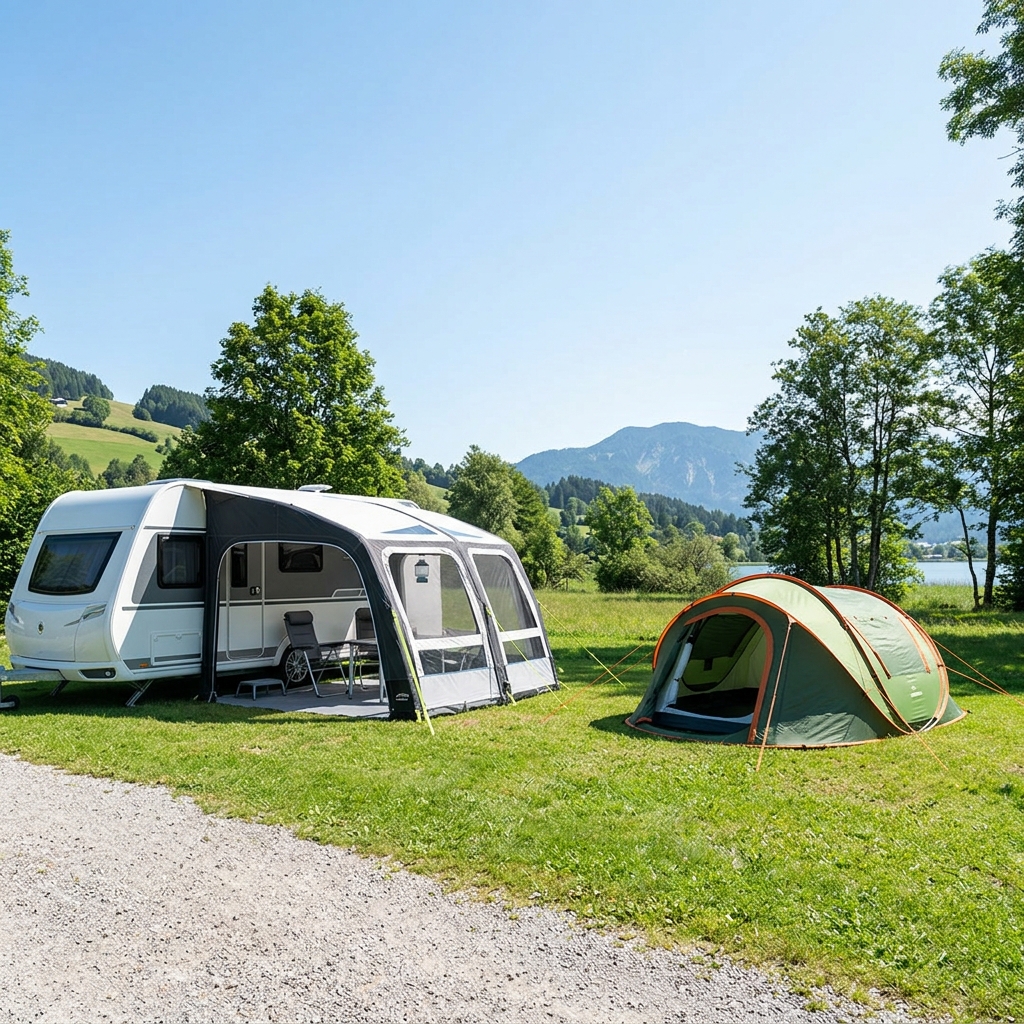
A caravan awning is an enclosed extension that attaches to the side of your caravan, creating an additional living space. They typically connect using a combination of poles, rails (fitted to the caravan), and securing straps. Awnings are crafted from durable, weather-resistant materials like polyester or acrylic, and often feature windows and doors for ventilation and access. There are several types:
- Full Awnings: Cover the entire side of the caravan, offering maximum space and weather protection.
- Half Awnings: Cover approximately half the caravan side, providing a smaller, more lightweight option.
- Porch Awnings: Smaller still, offering a sheltered entrance area – ideal for quick stops or smaller campsites.
What is a Pop-Up Tent?
Pop-up tents, as the name suggests, are designed for incredibly quick and easy setup. They utilize pre-bent poles that spring into shape when released, often requiring just a few pegs to secure. While traditionally used for general camping and festivals, they’ve gained popularity amongst caravan owners looking for a fast, flexible extension to their camping setup. Build quality varies significantly, ranging from budget-friendly options to more robust models designed for repeated use. They are often made from polyester with a waterproof coating.
Setup & Ease of Use: Time is Precious on Holiday
This is where the two options diverge significantly. Setting up a caravan awning generally requires more time and effort. It often involves attaching the awning to the caravan’s awning rail, inserting poles, and tensioning the fabric. It’s often a two-person job, especially for larger awnings. Expect setup times of 20-45 minutes, depending on the size and your experience.
Pop-up tents, on the other hand, live up to their name. They can be pitched in under 5 minutes, sometimes even less. The main challenge lies in packing them back down, which can require a degree of technique and strength to compress the sprung frame. Practice is recommended!
Space & Living Area: Room to Breathe
Awnings generally provide a significantly larger and more enclosed living area compared to pop-up tents. They are designed to integrate seamlessly with your caravan, creating a continuous space for relaxing, dining, and storing equipment. Full awnings, in particular, can double your usable living space.
Pop-up tents offer flexible space, but typically smaller overall. While larger models exist, they rarely match the sheer volume offered by a full caravan awning. They’re ideal for creating a separate seating area or a dedicated space for children’s games, but don’t offer the same feeling of being linked to your caravan.
Portability & Storage: Packing Up and Moving On
Awnings are heavier and bulkier than pop-up tents. A full awning, including poles, pegs, and groundsheet, can easily weigh between 20-30kg and take up a considerable amount of storage space in your vehicle. Careful folding and a dedicated storage bag are essential.
Pop-up tents are lighter and more compact, making them easier to transport and store. Even larger models typically weigh under 15kg. However, the sprung frame can still result in a bulky packed size, so measure your storage space carefully.
Cost Comparison: Budget Breakdown for 2026
Prices vary significantly depending on size, quality, and features. Here’s a breakdown of estimated costs in 2026:
| Product Type | Entry-Level (Approx. Price) | Mid-Range (Approx. Price) | Premium (Approx. Price) |
|---|---|---|---|
| Caravan Awning | Bradcot Explorer 300 Awning – £379.99 | Sunncamp Platinum 390 Awning – £499.99 | Kampa Dometic Rally Pro 390 Awning – £699.99 |
| Pop-Up Tent | Quechua NH100 4 Person Pop-Up Tent – £99.99 | Coleman Sundome 4 Person Pop-Up Tent – £149.99 | Outwell Nevada XL Pop-Up Tent – £299.99 |
Additional Costs: Remember to factor in potential additional costs for both options:
- Awning Rails: If your caravan doesn’t have them fitted, awning rails can cost between £50-£200 to install.
- Groundsheets: Protecting the floor of your awning or tent with a groundsheet (£20-£50) is highly recommended.
- Pegs: A good set of pegs (£10-£30) is essential for securing your setup.
Durability & Weather Resistance: Standing Up to the Elements
Caravan awnings are generally built to be more durable and weather-resistant than pop-up tents. They often feature heavier-duty fabrics, robust frames, and reinforced seams. Look for awnings with a hydrostatic head (waterproof rating) of at least 3000mm. Acrylic awnings are more expensive but offer superior longevity and fade resistance.
Pop-up tents, particularly budget models, often use lighter materials and simpler construction. While many offer a waterproof coating, the rating may be lower (around 2000mm), and the fabric may be more susceptible to damage. Investing in a higher-quality pop-up tent will improve its durability and weather resistance.
Versatility: Beyond the Caravan
Pop-up tents offer greater versatility. They can be used independently for general camping, festivals, or as a temporary shelter during day trips. This makes them a good investment if you plan to camp without your caravan occasionally.
Awnings are primarily designed for use with a caravan. While adapters are available that allow some awnings to be used freestanding, they aren’t ideal for general camping and require additional purchase of support legs and potentially a frame.
Caravan Awning vs Pop-Up Tent: Which is Right for You?
Here’s a quick guide to help you decide:
- Choose a Caravan Awning if:
- You prioritize maximum space and a comfortable, enclosed living area.
- You frequently go on longer camping trips.
- You value durability and weather protection.
- You don’t mind the extra setup time and storage requirements.
- Choose a Pop-Up Tent if:
- You need a quick and easy solution for adding extra space.
- You want a versatile option that can be used independently of your caravan.
- You are on a tighter budget.
- You don’t mind a smaller living area.
Conclusion: Making the Smart Choice for Your 2026 Adventure
Both caravan awnings and pop-up tents offer valuable solutions for expanding your campsite in 2026. The best choice ultimately depends on your individual needs, camping style, and budget. Consider how often you plan to camp, the type of campsites you visit, and how much space you truly require. Carefully weighing the pros and cons outlined in this article will help you make a smart decision and ensure you enjoy a comfortable and memorable camping experience.
FAQ
Q: Can I use an awning in windy conditions?
Yes, but it’s crucial to ensure it’s properly secured with strong pegs and guy ropes. Investing in a wind-resistant awning and using a storm strap for additional stability is highly recommended, especially in exposed locations.
Q: Are pop-up tents waterproof enough for the UK climate?
Many pop-up tents have a waterproof coating, but quality varies. Check the hydrostatic head rating (mm) – a rating of 2000mm or higher is generally sufficient for light to moderate rain. For heavier rainfall, consider a higher-rated model or applying a waterproof spray.
Q: How do I pack down a pop-up tent?
Packing down a pop-up tent requires practice. Usually, you need to release the locking mechanism, then carefully fold the sprung frame down while simultaneously compressing the fabric. Watch online tutorials for specific instructions relating to your model.
Q: Do I need special tools to install a caravan awning?
Generally, no. Most awnings come with the necessary pegs and guy ropes. However, a rubber mallet can be helpful for driving pegs into the ground. If you’re fitting awning rails, you’ll need appropriate tools for drilling and securing them to your caravan.
Q: What is a hydrostatic head rating?
The hydrostatic head rating (measured in mm) indicates a fabric’s resistance to water penetration. The higher the number, the more waterproof the fabric. A rating of 1500mm is considered waterproof, but 3000mm or higher is recommended for reliable protection in the UK climate.