
Table of Contents
As an Amazon Associate, we earn from qualifying purchases. This means we may receive a small commission at no extra cost to you when you buy through links on this page.
Introduction: Why Cleaning Your Tent Matters
A camping tent is a significant investment, and like any outdoor gear, it requires regular maintenance to ensure its longevity and performance. Ignoring tent cleaning can lead to a build-up of dirt, mildew, and even damage from UV exposure. These factors degrade the fabric’s waterproofing, compromise its structural integrity, and can create an unhygienic environment. A clean tent isn’t just about aesthetics; it’s about extending the life of your gear, maintaining its water resistance, and ensuring a comfortable and healthy camping experience. Regular cleaning – even a quick brush down after each trip – will pay dividends in the long run, saving you money and the hassle of premature replacement.
Gathering Your Cleaning Supplies
Before you begin, gather the necessary supplies. Avoid harsh chemicals and abrasive cleaners, as these can damage the tent’s coating. Here’s a checklist:
- Mild Soap: Specifically formulated tent cleaner is best. Grangers Tent Wash (£12.50) is a popular choice.
- Soft Sponges/Cloths: Microfibre cloths are ideal.
- Bucket: For mixing your cleaning solution.
- Hose: With a gentle spray nozzle.
- Soft Brush: For removing loose debris. Avoid stiff-bristled brushes.
- Waterproofing Spray (Optional): For restoring water repellency. Nikwax Tent & Gear SolarProof Waterproofing Spray (£18.99) is highly rated.
- Tent Protector Spray (Optional): Provides additional UV protection.
Step 1: Initial Setup & Dry Brush Down
Start by setting up your tent as you would for camping. This allows for easier access to all surfaces. Once erected, use a soft brush to remove loose dirt, leaves, twigs, and other debris. Pay attention to seams, vents, and the tent floor. Brush downwards to avoid pushing dirt *into* the fabric. Do not use a stiff brush, as this can damage the coating. A simple dusting brush works effectively.
Step 2: Gentle Hand Washing – The Core Cleaning Process
This is the most important step. Fill your bucket with lukewarm water and add a small amount of your chosen tent cleaner, following the manufacturer’s instructions. Avoid using detergents or household cleaning products, as they can strip the waterproof coating.
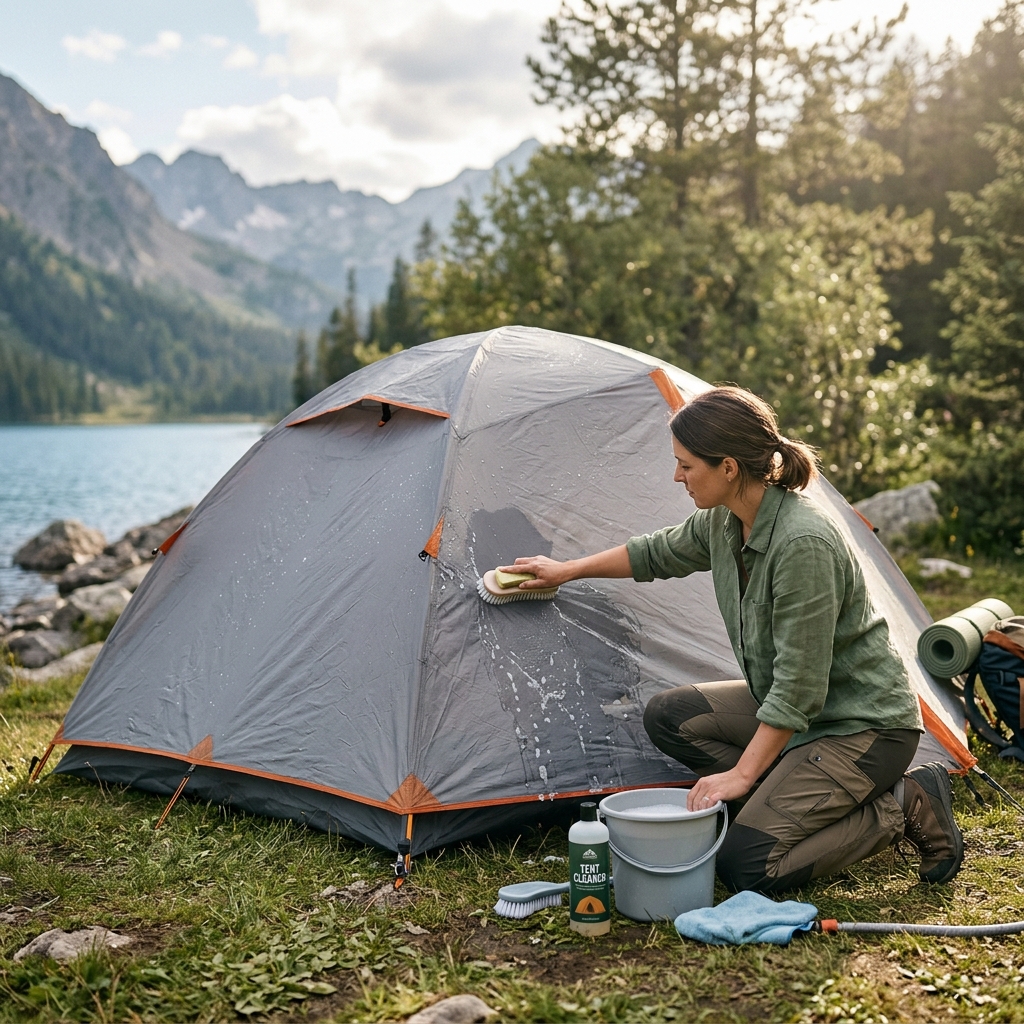
Using a soft sponge or cloth, gently wash the entire tent surface, working in sections. Pay particular attention to areas prone to dirt accumulation, such as the lower sections and around doorways. Avoid vigorous scrubbing; gentle circular motions are sufficient.
Material-Specific Considerations:
- Nylon: Relatively durable but can be susceptible to UV damage. Use a gentle cleaner and avoid prolonged sun exposure during cleaning and drying.
- Polyester: More resistant to UV damage than nylon but can still benefit from UV protection sprays.
- Canvas: Requires more thorough cleaning and drying. Avoid soaking the canvas for extended periods and ensure complete dryness to prevent mildew.
Step 3: Rinsing Thoroughly – Removing All Soap Residue
Thorough rinsing is crucial. Any remaining soap residue can attract dirt and reduce the tent’s water repellency. Use a hose with a gentle spray nozzle to rinse the entire tent, working from top to bottom. Pay close attention to seams and areas where soap may accumulate. Continue rinsing until the water runs clear, and you no longer see any soap bubbles. Inspect carefully to ensure all soap is removed.
Step 4: Drying Your Tent – Avoiding Mildew & Damage
Proper drying is essential to prevent mildew growth and damage to the tent fabric. Never tumble dry your tent. The heat can melt the coatings and damage the material.
The best method is to air dry the tent in a shaded, well-ventilated area. Avoid direct sunlight, as UV rays can degrade the fabric. If possible, pitch the tent again to allow for maximum airflow. If pitching isn’t possible, spread the tent out flat on a clean surface. Turn the tent inside out halfway through the drying process to ensure both sides are completely dry.
Crucially, ensure the tent is completely dry before packing it away. Even a small amount of moisture can lead to mildew growth during storage.
Step 5: Re-Waterproofing (If Necessary)
Over time, the waterproof coating on your tent can wear off, especially with frequent use and cleaning. To test if re-waterproofing is needed, spray the tent with water; if the water beads up and rolls off, the coating is still effective. If the water soaks into the fabric, it’s time to re-waterproof.
Apply waterproofing spray evenly to the exterior of the tent, following the manufacturer’s instructions. Gear Aid Revivex Durable Waterproofing (£22.0) is a popular choice. Focus on seams, zippers, and areas prone to wear and tear. Allow the spray to dry completely before packing the tent away.
Dealing with Stubborn Stains & Mildew
Stubborn Stains: For mud, tree sap, or bird droppings, try gently wiping the area with a damp cloth and a small amount of tent cleaner. Avoid abrasive scrubbing. For particularly stubborn stains, you might consider a dedicated stain remover specifically designed for outdoor fabrics, but always test it on an inconspicuous area first.
Mildew: Mildew is a common problem, especially in damp climates. To remove mildew, mix a solution of mild soap and water with a small amount of white vinegar. Gently scrub the affected area with a soft brush. Rinse thoroughly and dry completely. To prevent mildew, ensure your tent is always stored completely dry and in a well-ventilated area.
Caution: Avoid using bleach or harsh chemicals to remove mildew, as these can damage the tent fabric and void any warranty.
Cleaning the Tent Floor & Accessories
Tent Floor/Footprint: The tent floor (or footprint, like the Vango Tent Footprint – Universal (£35.0)) is particularly susceptible to dirt and abrasion. Clean it separately using mild soap and water, and scrub gently with a soft brush. Rinse thoroughly and dry completely.
Tent Poles: Wipe down tent poles with a damp cloth to remove dirt and debris. Avoid using abrasive cleaners, as they can damage the finish. Ensure the poles are completely dry before storing.
Pegs & Guy Lines: Wash tent pegs and guy lines with mild soap and water. Rinse thoroughly and dry completely to prevent rust.
Tent Storage: Keeping it Clean Long-Term
Proper storage is just as important as cleaning. Ensure your tent is completely dry before packing it away. Store it in a breathable storage bag (avoid plastic bags, which can trap moisture). Keep the bag in a cool, dry, and well-ventilated area, away from direct sunlight and extreme temperatures. Consider using desiccant packs to absorb any residual moisture. Stormsure Tent Seam Sealer (£10.0) can be applied to seams before storage to help maintain waterproofness.
FAQ
Q: How often should I clean my tent?
Ideally, you should clean your tent after every camping trip, even if it doesn’t appear particularly dirty. A quick brush down is sufficient for light use, but a thorough hand washing is recommended at least twice a year, or more frequently if you camp often in muddy or harsh conditions.
Q: Can I use a pressure washer to clean my tent?
No! A pressure washer can easily damage the tent fabric and waterproof coating. The high pressure can force water into seams and cause delamination.
Q: What’s the best way to dry a tent if I don’t have a lot of space?
If you lack outdoor space, you can carefully drape the tent over furniture indoors, ensuring good airflow. A dehumidifier can also help speed up the drying process. Just ensure it’s not in direct contact with heat sources.
Q: How can I prevent mildew growth in my tent?
The key to preventing mildew is to ensure your tent is completely dry before storing it. Store it in a breathable bag in a well-ventilated area. Consider using desiccant packs to absorb any residual moisture.
Q: Is it really necessary to re-waterproof my tent?
Yes, especially with regular use. The waterproof coating will gradually wear off over time. Re-waterproofing helps maintain the tent’s water resistance and extends its lifespan.