
Table of Contents
As an Amazon Associate, we earn from qualifying purchases. This means we may receive a small commission at no extra cost to you when you buy through links on this page.
Introduction: Powering Your Adventures with Coleman
Coleman stoves have been a mainstay of the UK camping scene for generations, renowned for their reliability and durability. Whether you’re embarking on a weekend getaway in the Peak District, a family holiday in Cornwall, or a challenging expedition in the Scottish Highlands, a Coleman stove is often at the heart of the cooking setup. Choosing the right fuel for your stove is crucial – it directly impacts performance, safety, and overall cost-effectiveness. This guide, updated for 2026, will break down the different fuel types available for Coleman stoves in the UK, considering recent shifts in fuel availability and pricing due to ongoing global supply chain dynamics. There have been minor increases in fuel production costs in late 2025, impacting retail prices slightly.
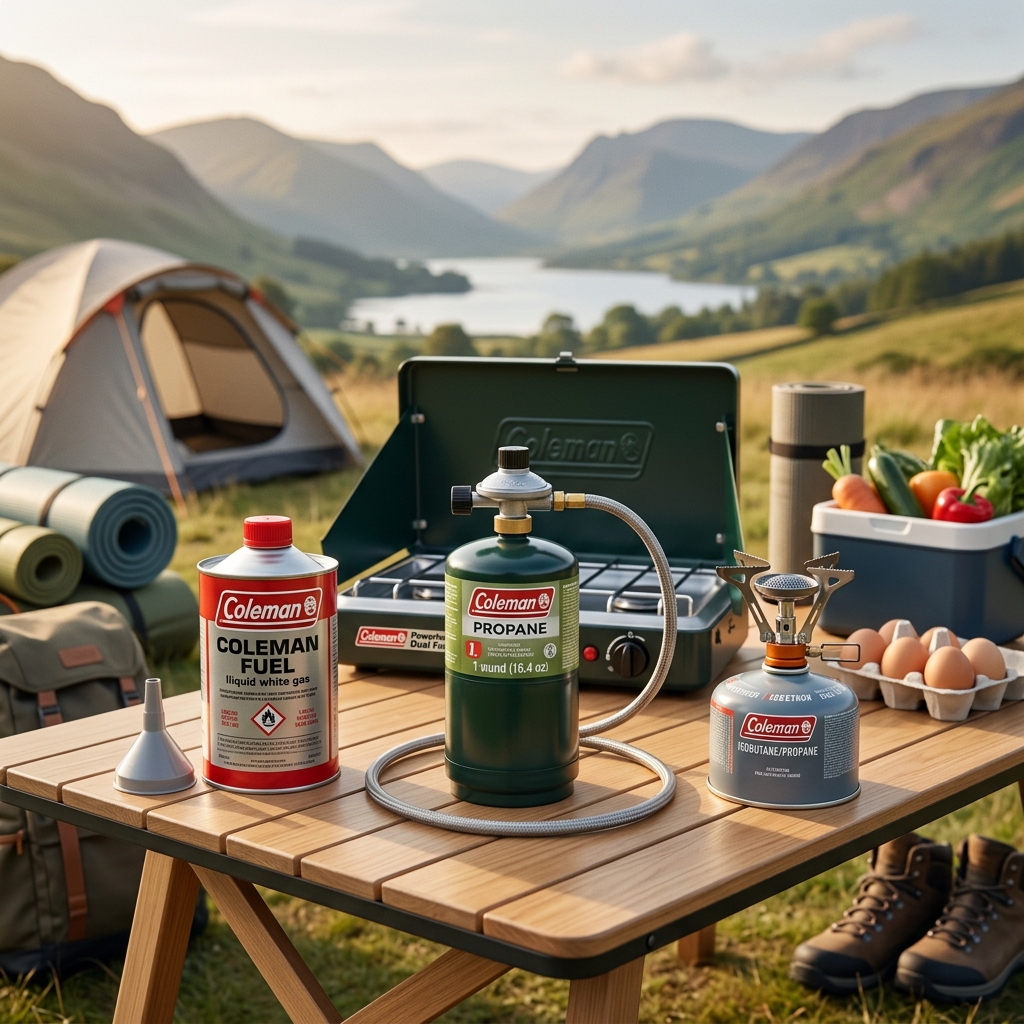
Understanding Coleman Fuel (White Gas)
Coleman Fuel, often referred to as white gas or naphtha, is the traditional fuel source for many classic Coleman stoves. It’s a highly refined liquid hydrocarbon, offering a powerful and consistent flame when vaporised.
Benefits of Coleman Fuel
- Cold Weather Performance: Coleman fuel excels in cold temperatures where propane and butane struggle. It vaporises effectively even in near-freezing conditions, making it ideal for winter camping or high-altitude adventures.
- Efficiency: It provides a high energy output per litre, meaning you get more cooking time from a single container.
- Reliability: Well-maintained Coleman fuel stoves are incredibly reliable and can last for years.
Drawbacks of Coleman Fuel
- Priming Required: Most Coleman fuel stoves require priming – pre-heating the generator to vaporise the fuel before ignition. This adds a step to the lighting process.
- Potential for Spills: Being a liquid, it presents a greater risk of spills during filling and transport.
- Stove-Specific: Coleman fuel is specifically designed for stoves that utilise this fuel type; it can’t be used in stoves designed for propane or butane.
Safety Considerations
Coleman fuel is flammable. Always use in a well-ventilated area, away from open flames and sparks. Store fuel in a tightly sealed container, away from direct sunlight and heat. Never refuel a stove while it is lit or still hot. A Coleman Fuel Stabilizer (£8.99) can help prevent fuel degradation during storage.
Propane Fuel for Coleman Stoves
Propane is a popular alternative to Coleman fuel, favoured for its convenience and ease of use. It’s a gas at room temperature and pressure, delivered in disposable canisters or refillable bottles.
Advantages of Propane
- Consistent Performance: Propane provides a consistent flame regardless of temperature fluctuations (within reasonable limits).
- Ease of Use: Propane stoves are generally easier to light and operate than Coleman fuel stoves – no priming is usually required.
- Wide Availability: Propane canisters are readily available at outdoor retailers, fuel stations, and even some supermarkets across the UK.
Disadvantages of Propane
- Bulkier Canisters: Propane canisters tend to be bulkier and heavier than butane canisters for the same energy content.
- Reduced Cold Weather Performance: While better than butane, propane’s performance does diminish in extremely cold temperatures.
Propane Canister Sizes
- 400g (Coleman Propane Gas Canister 400g – £7.50): Suitable for weekend trips and small groups.
- 1kg: A good option for longer camping trips or larger families.
- Refillable Bottles: A more economical and environmentally friendly option for frequent campers.
Butane Fuel: A Convenient Option
Butane is another gaseous fuel often used in smaller Coleman stoves, particularly those designed for indoor or sheltered use.
Benefits of Butane
- Compact Canisters: Butane canisters are smaller and lighter than propane canisters, making them ideal for backpacking or car camping where space is limited.
- Affordability: Butane is generally cheaper than propane or Coleman fuel. (Coleman Butane Gas Canister 220g – £5.00)
Limitations of Butane
- Poor Cold-Weather Performance: Butane’s performance drops dramatically in cold temperatures. It may not vaporise effectively below 5°C.
- Lower Pressure: Butane has a lower vapour pressure than propane, which can result in a weaker flame in windy conditions.
Butane Stove Compatibility
Ensure your Coleman stove is specifically designed for butane before using it. Many smaller, portable stoves are compatible, but larger models typically require propane or Coleman fuel.
Multi-Fuel Stoves: The Versatile Choice
Coleman offers a range of multi-fuel stoves designed to operate on Coleman fuel, propane, and sometimes even kerosene. (Coleman Multi-Fuel Stove – £120.00)
Advantages of Multi-Fuel Stoves
- Flexibility: You’re not limited to a single fuel type. Choose the fuel that’s most readily available or best suited to the conditions.
- Fuel Availability: In remote locations where one fuel type might be scarce, a multi-fuel stove increases your chances of being able to cook.
Disadvantages of Multi-Fuel Stoves
- Higher Cost: Multi-fuel stoves are generally more expensive than single-fuel models.
- Complex Maintenance: They require more frequent and thorough cleaning and maintenance due to the different fuel types they handle.
Fuel Comparison Table: Coleman Fuel vs. Propane vs. Butane
| Feature | Coleman Fuel | Propane | Butane |
|---|---|---|---|
| Cost (per unit energy) | Medium | Medium | Low |
| Availability | Good (specialty stores) | Excellent | Excellent |
| Cold Weather Performance | Excellent | Good | Poor |
| Ease of Use | Moderate (requires priming) | Easy | Easy |
| Safety | Moderate (liquid fuel) | Good | Good |
| Canister/Bottle Size | Liquid – Bottles (refillable/disposable) | Gas – Canisters/Bottles | Gas – Small Canisters |
| Best For | Winter camping, high-altitude expeditions | General camping, family holidays | Short trips, sheltered use |
Fuel Storage and Safety Guidelines (UK Regulations – 2026)
Storing and transporting Coleman stove fuels safely is paramount. UK regulations (updated in late 2025) stipulate the following:
- Liquid Fuel (Coleman Fuel): Store in a tightly sealed, approved fuel container (Coleman Fuel Empty Fuel Bottle 1 Litre – £9.99). Keep away from direct sunlight, heat sources, and ignition sources.
- Gas Canisters (Propane/Butane): Store in a cool, dry, well-ventilated area, away from direct sunlight and heat. Do not puncture or incinerate canisters.
- Transport: Securely transport fuel containers in a stable position within your vehicle, preventing movement during transit.
- Fire Safety: Always have a fire extinguisher or fire blanket readily available when using a Coleman stove.
- Ventilation: Never use a Coleman stove inside a tent, caravan, or other enclosed space without adequate ventilation. Carbon monoxide poisoning is a serious risk.
Where to Buy Coleman Stove Fuel in the UK (2026)
You can purchase Coleman stove fuel from a variety of retailers in the UK:
- Go Outdoors: https://www.gooutdoors.co.uk/ (Wide range of fuels and stoves)
- Millets: https://www.millets.co.uk/ (Similar to Go Outdoors)
- Amazon UK: https://www.amazon.co.uk/ (Convenient online ordering)
- Halfords: https://www.halfords.com/ (Often stocks propane canisters)
- Local Camping & Outdoor Stores: Support your local businesses!
Note (2026): Due to ongoing global logistical challenges, occasional stock shortages of Coleman fuel may occur. It’s advisable to check availability before your trip and consider a multi-fuel stove as a backup.
Conclusion: Choosing the Right Fuel for Your Next Camping Trip
The best fuel for your Coleman stove depends on your specific needs and camping style. For winter expeditions or high-altitude adventures, Coleman fuel remains the superior choice. For general camping and family holidays, propane offers a good balance of performance and convenience. Butane is a suitable option for short trips and sheltered use. And for ultimate flexibility, a multi-fuel stove allows you to adapt to any situation. Carefully consider these factors, prioritize safety, and enjoy your next outdoor adventure powered by Coleman!