
Table of Contents
As an Amazon Associate, we earn from qualifying purchases. This means we may receive a small commission at no extra cost to you when you buy through links on this page.
Introduction: Why Your Sleeping Pad Matters
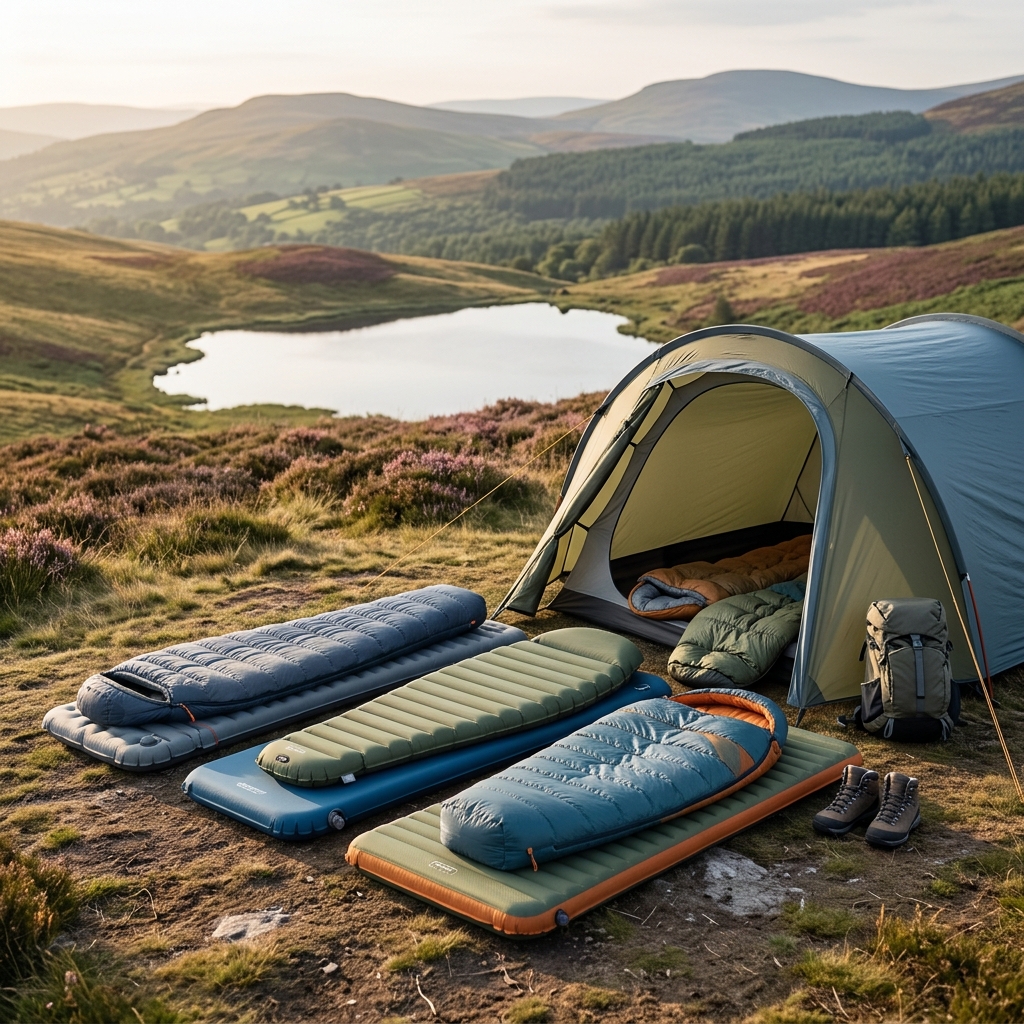
A successful camping trip isn’t just about a sturdy tent and a roaring campfire; it’s about a good night’s sleep. Often overlooked, your sleeping pad is arguably the most crucial piece of kit for comfort and warmth while camping. It acts as a barrier between you and the cold, hard ground, significantly impacting your overall experience. In recent years, sleeping pad technology has advanced leaps and bounds, moving beyond simple foam mats to include lightweight air pads, comfortable self-inflating options, and innovative hybrid designs. This buyer’s guide will help you navigate the options and find the perfect sleeping pad for your adventures in the UK.
Understanding Sleeping Pad Types
There are three main types of camping sleeping pads, each with its own strengths and weaknesses:
Closed-Cell Foam Pads
These are the simplest and most affordable option. They’re made from a dense foam that provides a basic level of insulation and cushioning.
- Pros: Extremely durable, lightweight, affordable, no risk of punctures, works in all conditions.
- Cons: Bulky to pack, least comfortable, provides minimal cushioning.
Self-Inflating Pads
These pads combine a layer of open-cell foam with an airtight outer shell. When the valve is opened, the foam expands, inflating the pad. You can then top it up with a few breaths for desired firmness.
- Pros: Good balance of comfort, insulation, and packability, relatively easy to inflate.
- Cons: Heavier than air pads, can be punctured, foam can degrade over time.
Air Pads
Air pads use an inflatable bladder to provide cushioning and insulation. They pack down incredibly small and can be adjusted to your preferred firmness.
- Pros: Lightweight, compact, highly adjustable, often very comfortable.
- Cons: Prone to punctures, require inflation (pump or breath), can be noisy.
Hybrid Designs
Newer pads often incorporate elements of multiple types. For example, some air pads include foam layers for added comfort and quietness, or self-inflating pads use thicker foam for better insulation. These aim to provide the best of both worlds.
Key Features to Consider
Choosing the right sleeping pad involves considering several key features:
R-Value (Insulation)
R-Value measures a pad’s resistance to heat flow. A higher R-Value indicates better insulation. This is crucial for staying warm in colder temperatures.
Pad Thickness
Thicker pads generally offer more comfort and insulation, but they are also heavier and bulkier.
Length & Width
Choose a pad that fits your body length and allows for comfortable movement. Wider pads offer more space for side sleepers.
Weight & Pack Size
Important for backpacking and hiking where every gram counts. Consider how much space the packed pad will take up in your rucksack.
Materials (Durability & Comfort)
The outer fabric and internal bladder material affect durability, comfort, and weight.
Valve Type
Different valve types offer varying levels of ease of inflation and deflation. Some valves allow for micro-adjustments to firmness.
R-Value Explained: Staying Warm Through the Night
The UK climate can be unpredictable, even in summer. R-Value is critical for maintaining a comfortable sleeping temperature. Here’s a general guide:
- R-Value 1-2: Suitable for warm weather camping (summer, above 10°C).
- R-Value 2-4: Three-season use (spring, summer, autumn, down to around 5°C).
- R-Value 4+: Winter camping or colder conditions (below 5°C).
Consider the typical temperatures you’ll be camping in and choose an R-Value accordingly. Don’t underestimate the cold ground, even on seemingly mild nights.
Sleeping Pad Materials: What’s Best for You?
The materials used in a sleeping pad significantly affect its performance and lifespan.
TPU (Thermoplastic Polyurethane): A durable, lightweight, and quiet material commonly used for the bladder in air pads. It’s more environmentally friendly than PVC.
Nylon: Often used for the outer shell of air and self-inflating pads. It’s strong, abrasion-resistant, and relatively lightweight.
Polyester: Another common outer shell material. It’s generally more affordable than nylon but slightly less durable.
Closed-Cell Foam: Typically polyethylene (PE) foam. Provides excellent insulation and durability but is heavier and bulkier.
Top Camping Sleeping Pads UK 2026: Our Picks
Here’s a selection of top-rated sleeping pads available in the UK, catering to different needs and budgets:
Budget Option: Decathlon Forclaz MT500 Sleeping Mat – £59.99
- Pros: Excellent value for money, good comfort for the price, self-inflating convenience.
- Cons: Relatively heavy, lower R-Value (suitable for warmer months only).
Mid-Range Backpacking: Klymit Static V Sleeping Pad – £85.0
- Pros: Lightweight, compact, affordable air pad, good for backpacking.
- Cons: May require a pump, can be noisy.
Mid-Range Comfort: Vango Latitude 200 Self-Inflating Mat – £95.0
- Pros: Good balance of comfort and packability, reliable brand, suitable for three-season camping.
- Cons: Heavier than air pads, can lose some inflation over time.
Premium Lightweight: Therm-a-Rest NeoAir XLite – £189.99
- Pros: Exceptionally lightweight, compact, comfortable, excellent R-Value for three-season use.
- Cons: Expensive, prone to punctures, requires inflation.
Premium Comfort: Sea to Summit Ether Light XT Insulated – £210.0
- Pros: Very comfortable, quiet, good insulation, durable construction.
- Cons: Expensive, heavier than some other air pads.
Luxury & Warmth: Exped Synmat UL Lite – £230.0
- Pros: Super comfortable, excellent warmth-to-weight ratio, quiet, durable.
- Cons: Highest price point, requires careful inflation/deflation.
Sleeping Pad Sizes: Finding the Right Fit
Choosing the right size pad is crucial for a comfortable night’s sleep.
- Length: Generally, you want a pad that’s at least as long as your body. Taller individuals (over 6ft) should look for extended length options.
- Width: Standard width is around 51cm. Wider pads (63cm+) provide more space for side sleepers or those who like to move around.
Consider your sleeping style. If you sleep on your side, a wider pad will prevent your arm from falling off the edge. If you’re a restless sleeper, a slightly longer pad provides more wiggle room.
Caring for Your Sleeping Pad: Maintenance & Repair
Proper care will extend the life of your sleeping pad:
- Cleaning: Wipe down with a damp cloth after each use. For more thorough cleaning, use mild soap and water.
- Storage: Store in a cool, dry place, loosely rolled up (don’t leave it compressed for long periods).
- Puncture Repair: Carry a puncture repair kit. Small punctures can be easily patched with adhesive patches.
Sleeping Pads vs. Stretchers: Which is Right for You?
Let’s compare sleeping pads and camping stretchers (cots):
| Feature | Sleeping Pad | Camping Stretcher/Cot |
|---|---|---|
| Comfort | Varies, can be very comfortable with good insulation. | Generally more comfortable, elevated off the ground. |
| Weight | Lightweight (especially air pads). | Heavy and bulky. |
| Pack Size | Compact (especially air pads). | Large and difficult to pack. |
| Portability | Highly portable. | Not ideal for backpacking. |
| Cost | Wide range of prices. | Generally more expensive. |
Stretchers are best for car camping where weight and pack size aren’t major concerns. Sleeping pads are the preferred choice for backpacking and hiking.
Frequently Asked Questions (FAQs)
How do I inflate an air pad without a pump?
Most air pads can be inflated using your breath, although it takes more effort. Some come with a small inflation bag to make the process easier.
Are air pads noisy?
Some air pads can create a crinkling noise when you move around. Newer models often use quieter materials and construction techniques to minimize this.
How do I deal with condensation under my sleeping pad?
Condensation can form between you and the pad in cold weather. Use a vapour barrier liner (like a bivvy bag) underneath your pad to reduce moisture build-up.
What R-Value do I need for spring camping in the UK?
An R-Value of 2-4 is generally sufficient for spring camping in the UK, but be prepared for colder nights and consider a higher R-Value if you’re camping at higher altitudes.
How often should I replace my sleeping pad?
The lifespan of a sleeping pad depends on usage and care. With proper maintenance, a good quality pad should last for several years. Look for signs of wear and tear, such as punctures, leaks, or foam degradation.