Table of Contents
As an Amazon Associate, we earn from qualifying purchases. This means we may receive a small commission at no extra cost to you when you buy through links on this page.
Introduction: Why a Camping First Aid Kit is Non-Negotiable
Camping offers a fantastic escape into nature, but it also comes with inherent risks. From minor cuts and blisters to more serious injuries, being prepared for medical emergencies is absolutely essential. A well-stocked camping first aid kit isn’t just a good idea; it’s a vital piece of equipment. The British countryside, while beautiful, can present hazards like uneven terrain, unpredictable weather, and encounters with wildlife. Even seemingly minor injuries can quickly become problematic when far from medical assistance. If you are leading a group camping trip, you have a duty of care to ensure the safety of those under your supervision, and a first aid kit is a crucial part of fulfilling that responsibility.
Understanding Common Camping Injuries
Camping trips often result in predictable types of injuries. Here’s a rundown of what you might encounter:
- Blisters: Caused by friction from ill-fitting footwear.
- Cuts & Scrapes: From navigating rough terrain, using tools, or cooking.
- Burns: From campfires, cooking stoves, or even the sun.
- Sprains & Strains: From uneven ground and physical exertion.
- Insect Bites & Stings: Midges, mosquitoes, wasps, and bees are common culprits.
- Allergic Reactions: To insect bites, plants (like nettles), or food.
- Minor Fractures: Though less common, slips and falls can occur.
Recognising Serious Conditions: Be aware of signs requiring professional medical attention. These include severe bleeding, difficulty breathing, signs of a head injury (confusion, nausea, vomiting), suspected fractures (deformity, inability to bear weight), and severe allergic reactions (difficulty breathing, swelling of the face/throat). Don’t hesitate to call 999 and request mountain rescue if necessary.
The Core Components of Your Camping First Aid Kit
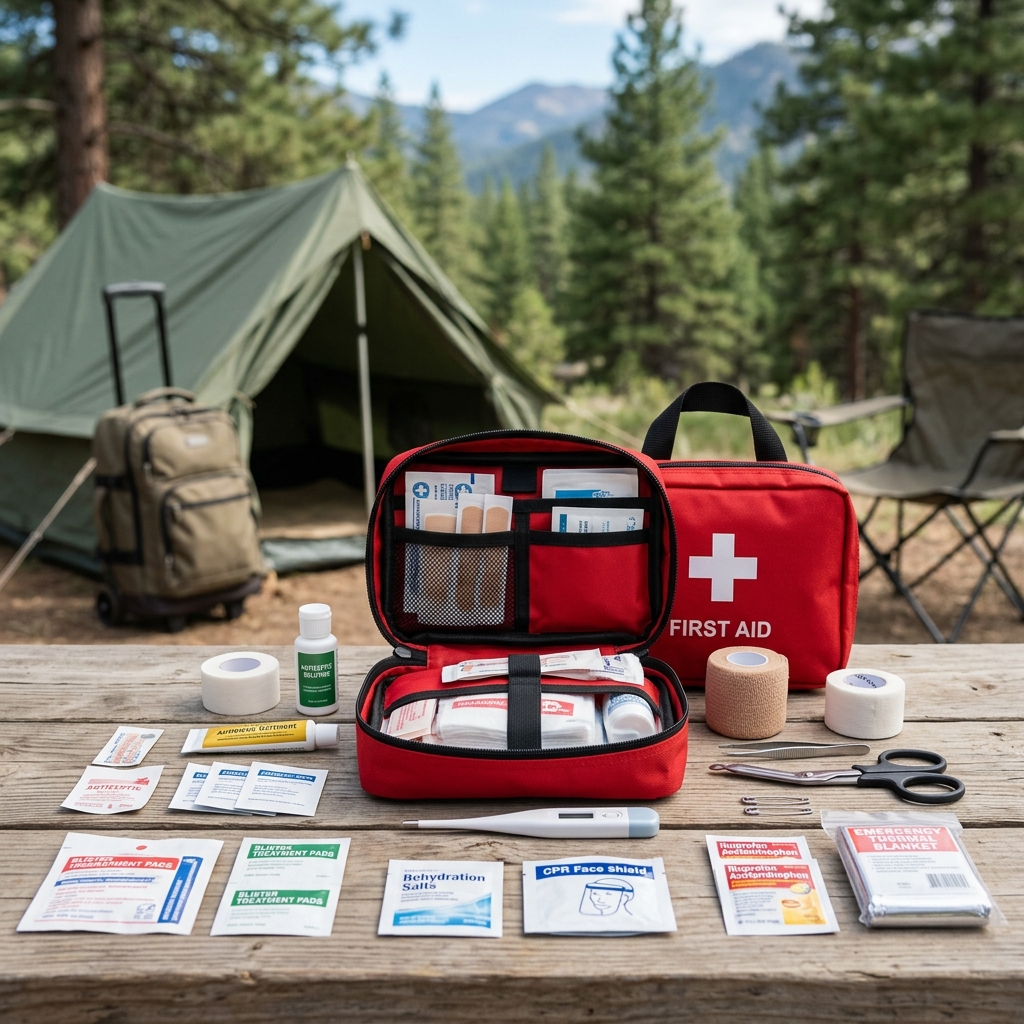
Building a comprehensive kit requires careful consideration. Here’s a breakdown of essential categories and quantities – these are guidelines, adjust based on trip length and group size:
Wound Care Essentials
- Adhesive Bandages: Assorted sizes (at least 20 total) – for minor cuts and scrapes. Steroplast Healthcare Waterproof Plasters (£5.00/box) are a good choice.
- Sterile Gauze Pads: Various sizes (10 x 10cm x 5, 5 x 5cm x 5) – for cleaning and covering wounds.
- Adhesive Tape: Fabric or waterproof tape (1 roll) – to secure gauze and dressings.
- Antiseptic Wipes: Individually wrapped (20 wipes) – for cleaning wounds.
- Wound Closure Strips: (Butterfly closures – 10 strips) – for closing small cuts.
- Blister Plasters: (Compeed style – Pack of 10, £8.50) – essential for preventing and treating blisters.
- Sterile Saline Solution: (100ml bottle) – for irrigating wounds.
- Gloves: Latex or Nitrile (Pair) – to protect yourself and the casualty.
Pain Relief & Medication
- Pain Relievers: Paracetamol (20 tablets) and Ibuprofen (20 tablets) – for pain and fever.
- Antihistamines: (Non-drowsy – 20 tablets) – for allergic reactions.
- Anti-Diarrheal Medication: (Loperamide – 6 tablets) – for managing diarrhoea.
- Rehydration Salts: (Sachets x 6) – to replenish electrolytes lost through dehydration.
- Personal Medications: (As required) – Ensure clearly labelled with dosage instructions and any allergies.
Injury Support & Immobilisation
- Triangular Bandage: (1) – for slings and immobilisation.
- Crepe Bandage: (7.5cm x 2.5m – 1) – for supporting sprains and strains.
- Safety Pins: (10) – for securing bandages.
- SAM Splint: (£22.00) or similar – for immobilising fractures and dislocations.
- Cold Compress: Instant cold pack or reusable gel pack – for reducing swelling.
Emergency & Miscellaneous Supplies
- Emergency Blanket: (1) – to prevent hypothermia.
- Whistle: (1) – for signalling for help.
- Headlamp/Torch: (With spare batteries) – for visibility in the dark.
- First Aid Manual: Pocket-sized guide.
- Hand Sanitiser: (50ml bottle) – for hygiene.
- Insect Repellent: (Deet-based or natural alternative) – to deter insects.
- Sunscreen: (High SPF) – to protect against sunburn.
- Scissors: Small, sharp scissors – for cutting bandages and tape.
- Tweezers: For removing splinters and ticks.
Building Your Kit vs. Buying Pre-Made Kits
You have two main options: building a kit yourself or purchasing a pre-assembled one. Here’s a comparison:
| Feature | Building Your Own Kit | Pre-Made Kit |
|---|---|---|
| Cost | Potentially lower, depending on items chosen. | Typically higher initial cost. |
| Customisation | Highly customisable – you choose exactly what you need. | Limited customisation; may contain unnecessary items. |
| Quality | Variable; depends on the brands and quality of items you purchase. | Generally good quality, especially with reputable brands. |
| Convenience | More time-consuming to assemble. | Ready to use straight away. |
Pros of Building Your Own Kit:
- Tailored to your specific needs.
- Can save money.
- Learn about each component.
Cons of Building Your Own Kit:
- Time-consuming.
- Requires knowledge of first aid essentials.
- Potential to miss important items.
Recommended Pre-Made Kits (2026):
- Adventure Medical Kits Ultralight/Watertight .7 Medical Kit: (£35.99) – Ideal for solo hikers or minimalist campers.
- Lifesystems Trek First Aid Kit: (£49.99) – A good all-rounder for small groups.
- St John Ambulance First Aid Kit (Large): (£65.00) – Comprehensive kit suitable for larger groups or extended trips.
Maintaining Your Camping First Aid Kit
A first aid kit is only effective if it’s well-maintained. Regularly:
- Check Expiry Dates: Medications and some sterile items have expiry dates. Replace expired items immediately.
- Replenish Used Items: After each trip, replenish any items used.
- Inspect for Damage: Check dressings, bandages, and splints for damage.
- Store Properly: Keep the kit in a waterproof, easily accessible bag. Store in a cool, dry place.
First Aid Training for Campers
While a first aid kit is essential, knowing how to use it is even more important. Consider taking a basic first aid course.
Reputable Training Providers in the UK:
Conclusion: Staying Safe on Your Camping Adventures
A well-prepared camping first aid kit is your first line of defence against minor injuries and emergencies in the great outdoors. Whether you choose to build your own or purchase a pre-made kit, remember that regular maintenance and first aid training are crucial. Prioritise safety, be prepared, and enjoy your camping adventures with peace of mind. Responsible camping means being ready for the unexpected, ensuring a fun and safe experience for everyone.