
Table of Contents
As an Amazon Associate, we earn from qualifying purchases. This means we may receive a small commission at no extra cost to you when you buy through links on this page.
Introduction: Illuminating Your Campsite in 2026
A reliable camping lantern is an essential piece of kit for any outdoor enthusiast. Whether you’re enjoying a weekend in the Peak District, a family holiday in the New Forest, or a more adventurous trek in the Scottish Highlands, having adequate lighting is crucial for safety, convenience, and enjoyment. In 2026, lantern technology continues to evolve, with advancements in both battery and gas-powered options. Consumer preferences are shifting towards convenience and sustainability, leading to increased demand for efficient LED lanterns and eco-friendly fuel sources. This article dives deep into the debate between battery and gas camping lanterns, helping you decide which is the best fit for your 2026 adventures.
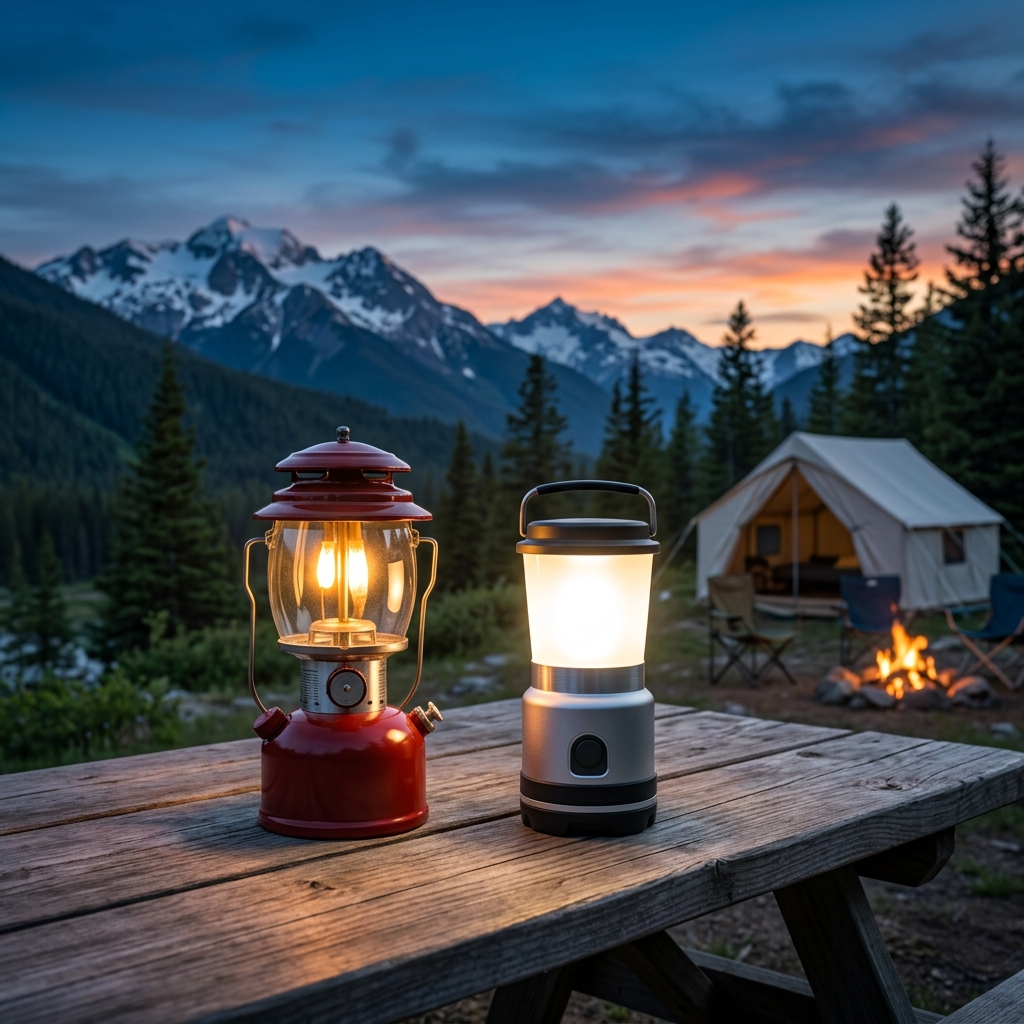
Understanding Gas Camping Lanterns
Gas camping lanterns have been a mainstay for decades. They operate by burning a fuel source – typically propane, butane, or isobutane – to create light. There are two main types: mantle lanterns which use a fragile mantle that glows when heated, and wick lanterns which utilise a wick similar to an oil lamp. Mantle lanterns generally produce a brighter, more intense light, while wick lanterns offer a softer, warmer glow.
Pros
- Brightness: Mantle gas lanterns can produce exceptionally bright light, often exceeding 500 lumens.
- Reliability in Cold Weather: Gas lanterns perform consistently well even in very cold temperatures, where batteries can lose capacity.
- Long Run Time: A single gas canister can provide several hours of illumination.
Cons
- Safety Concerns: Gas lanterns produce carbon monoxide, a potentially deadly gas. They also pose a fire hazard if not handled carefully.
- Fuel Costs: Gas canisters need to be purchased regularly, adding to the overall cost.
- Environmental Impact: Burning fossil fuels contributes to greenhouse gas emissions.
- Maintenance: Mantles are fragile and need replacing regularly.
The Rise of Battery-Powered Camping Lanterns
Battery-powered camping lanterns, particularly those using LED technology, have seen a surge in popularity. Modern LED lanterns offer impressive brightness, long run times, and increased safety. The batteries powering these lanterns have also evolved, moving beyond traditional AA and AAA cells to include rechargeable lithium-ion batteries offering greater energy density and longevity. By 2026, we’re seeing more widespread adoption of solid-state batteries offering even improved performance and safety.
Pros
- Convenience: Battery lanterns are easy to use – simply switch them on! No priming or fuel handling required.
- Safety: No risk of carbon monoxide poisoning or open flames.
- Reduced Maintenance: LEDs have a long lifespan and require minimal maintenance.
- Versatility: Many battery lanterns have multiple brightness settings and features like USB charging ports.
Cons
- Battery Life: While improving, battery life can be limited, especially on higher brightness settings or in cold weather.
- Initial Cost: High-quality LED lanterns with rechargeable batteries can be more expensive upfront.
- Battery Dependency: You need to ensure you have sufficient battery power or access to a charging source.
Battery vs Gas Lanterns: A Head-to-Head Comparison
| Feature | Gas Lantern | Battery Lantern |
|---|---|---|
| Initial Cost | £30 – £80 | £25 – £100+ |
| Running Cost | £5 – £15 per canister | £0 – £10 per recharge (electricity cost) |
| Brightness (Lumens) | 300 – 700+ | 100 – 800+ |
| Weight | 400g – 1kg | 200g – 800g |
| Durability | Generally robust, but mantles are fragile | Varies; some models are highly durable |
| Ease of Use | Requires priming and fuel handling | Simple on/off switch |
| Safety | Carbon monoxide risk, fire hazard | Low risk |
| Environmental Impact | High (fossil fuel consumption) | Moderate (battery production & disposal) |
| Best Use Cases | Long trips, cold weather, where intense brightness is needed | Backpacking, family camping, general use |
Cost Analysis: Which Lantern is More Economical?
Let’s consider a typical camping weekend (2 nights) per month for six months of the year.
- Gas Lantern: Assuming a gas canister costs £8 and lasts for 12 hours, and you use the lantern for 6 hours per weekend (total 36 hours per year), the fuel cost is approximately £24 per year. Initial cost of a Coleman Classic Propane Lantern: £49.99. Total cost over 3 years: £123.97.
- Battery Lantern: A Vango Attain 400 LED Lantern costs £35.99. Assuming an electricity cost of £0.30 per full charge and you recharge it twice per weekend (total 24 recharges per year), the electricity cost is £7.20 per year. Total cost over 3 years: £119.09.
While the initial cost of a gas lantern might be lower, the recurring fuel costs can quickly add up. Battery lanterns, especially those with rechargeable batteries, can be more economical in the long run.
Brightness & Performance: Lumens and Light Quality
Lumens measure the total amount of visible light emitted by a source. Higher lumens generally mean brighter light. However, light quality is also important. Gas lanterns typically produce a warm, yellowish light, while LED lanterns offer a wider range of colour temperatures. In 2026, advancements in LED technology are resulting in LEDs with improved colour rendering index (CRI), providing more natural and accurate colours. Expect to see LEDs delivering light closer to natural daylight, enhancing visibility and reducing eye strain.
Safety Considerations: Risks and Precautions
Gas lanterns pose a significant risk of carbon monoxide poisoning. Always use gas lanterns in well-ventilated areas, and never inside a tent or enclosed space. Ensure the lantern is stable and away from flammable materials. Battery lanterns are much safer, but it’s still important to follow manufacturer’s instructions for charging and use. By 2026, many lanterns will include integrated carbon monoxide detectors as a standard safety feature, even in gas models.
Environmental Impact: A Sustainable Choice?
Gas lanterns have a larger carbon footprint due to the burning of fossil fuels. Battery lanterns, while not emission-free (due to battery production and disposal), generally have a lower environmental impact. Consider using rechargeable batteries and properly disposing of used batteries at designated recycling points. Solar-powered lanterns, such as the Goal Zero Lighthouse 600 Lantern & Power Bank (£89.99), offer the most sustainable option, harnessing renewable energy.
Top Camping Lanterns for 2026 (UK Market)
- Best Budget Gas Lantern: Coleman Classic Propane Lantern – £49.99
- Best Premium Gas Lantern: Outwell Nevada XL Camping Lantern – £55.00
- Best Budget Battery Lantern: Vango Attain 400 LED Lantern – £35.99
- Best Versatile Battery Lantern: Black Diamond Apollo Lantern – £44.99
- Best Premium Battery Lantern: Goal Zero Lighthouse 600 Lantern & Power Bank – £89.99
- Best Headlamp/Lantern Hybrid: Petzl Actik Core Headlamp – £69.99 (can be used as a hands-free lantern)
Conclusion: Making the Right Choice for Your Camping Needs
Choosing between a battery and gas camping lantern depends on your individual needs and priorities. If you prioritise brightness, reliability in cold weather, and are comfortable with the safety precautions, a gas lantern might be the better choice. However, for most campers, the convenience, safety, and increasingly competitive running costs of battery-powered LED lanterns make them the more practical option. By 2026, advancements in battery technology, coupled with improved safety features and eco-friendly options, will further solidify the position of battery lanterns as the go-to choice for illuminating your campsite adventure.
FAQ
Q: Are LED lanterns as bright as gas lanterns?
A: Modern LED lanterns can produce comparable brightness to gas lanterns, with some models exceeding 800 lumens. The quality of light is also improving, with better colour rendering.
Q: How long do battery-powered lanterns last on a single charge?
A: Battery life varies depending on the lantern and brightness setting. Expect anywhere from 4 to 20 hours on a single charge, with some models offering even longer run times.
Q: Is it safe to use a gas lantern inside a tent?
A: Absolutely not! Gas lanterns produce carbon monoxide, a deadly gas. They should only be used in well-ventilated areas.
Q: What should I do with old batteries from my camping lantern?
A: Old batteries should be disposed of responsibly at designated recycling points. Do not throw them in the general waste bin.
Q: Are solid-state batteries becoming common in camping lanterns?
A: Yes, solid-state batteries are beginning to appear in higher-end camping lanterns in 2026. They offer improved safety, energy density and longer lifespans.