Hitting the trails is a fantastic way to enjoy the British countryside. But even the most scenic walk can be ruined by uncomfortable feet. Often overlooked, the right walking socks are crucial for a happy, blister-free experience.
As an Amazon Associate, we earn from qualifying purchases. This means we may receive a small commission at no extra cost to you when you buy through links on this page.
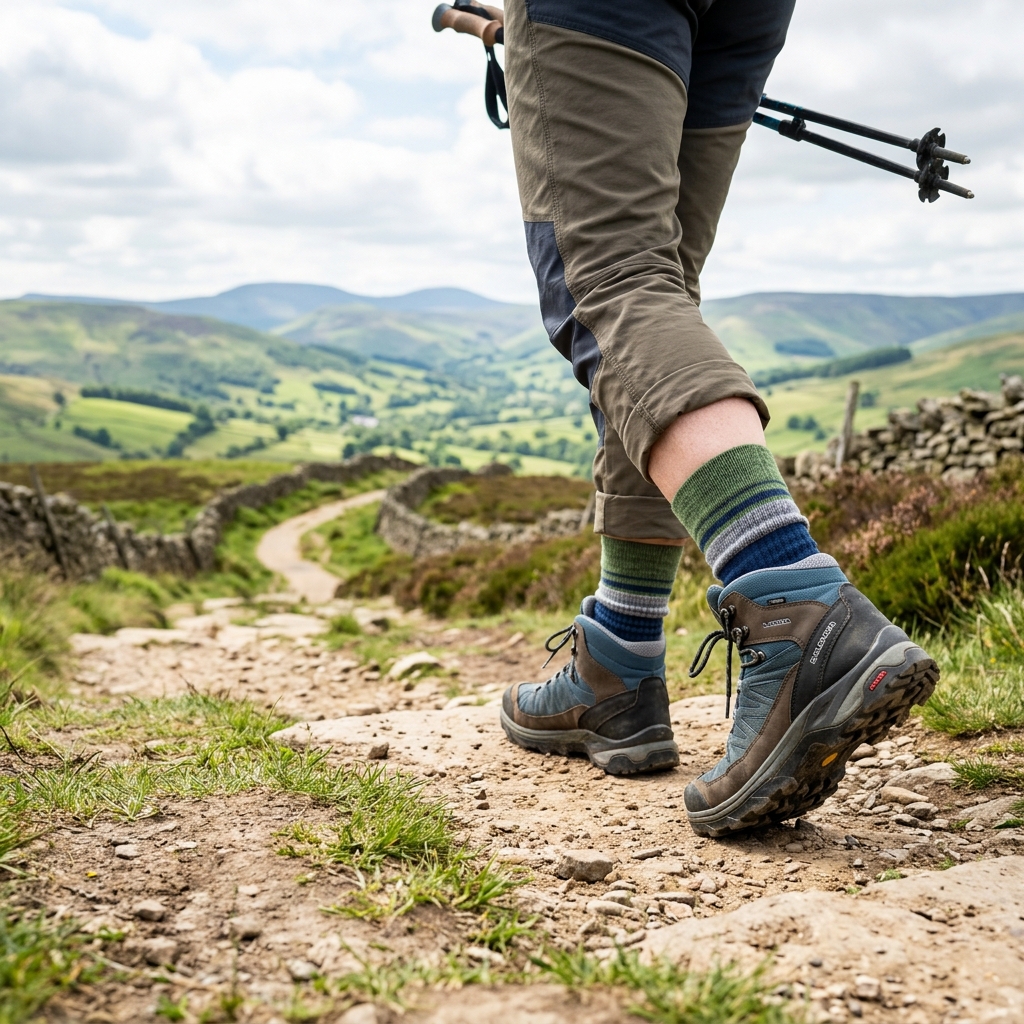
Table of Contents
Why Walking Socks Matter: Beyond Comfort
Good walking socks aren’t just about comfort, they’re about foot health and performance. Here’s why they’re so important:
- Blister Prevention: Friction is the enemy. Walking socks reduce friction between your foot and your boot, dramatically lowering the risk of blisters.
- Moisture Management: Sweat can lead to blisters and discomfort. Good socks wick moisture away from your skin, keeping your feet dry.
- Temperature Regulation: Keeping feet warm in winter and cool in summer is vital. Different materials offer varying levels of insulation and breathability.
- Cushioning: Absorbing impact reduces fatigue and protects your feet on long walks.
- Overall Foot Health: Proper support and a good fit contribute to long-term foot health.
Wearing the wrong socks – like standard cotton socks – can lead to blisters, overheating, and general misery on the trails. Cotton retains moisture, making it a blister-forming nightmare.
Materials Breakdown: What are Walking Socks Made Of?
The material of your walking sock is paramount. Here’s a rundown of the common options:
Merino Wool
A favourite among walkers, merino wool is naturally breathable, moisture-wicking, and odour-resistant. It provides excellent temperature regulation. Different grades (measured in microns) affect softness and warmth. Lower micron counts mean softer, finer wool.
- Pros: Excellent moisture management, odour resistance, warmth even when wet, comfortable.
- Cons: Can be more expensive than synthetic options, slower drying than synthetics, can be prone to wear if not cared for properly.
Synthetic Fibres (Polyester, Nylon, Acrylic)
Synthetic fibres are often blended with wool or used on their own. They are generally more durable and quicker drying than wool.
- Polyester: Good moisture-wicking properties, durable, relatively inexpensive.
- Nylon: Highly durable, often used in sock reinforcement.
- Acrylic: Provides warmth, but generally less breathable than other options.
- Pros: Durable, quick-drying, often more affordable.
- Cons: Can retain odour more than wool, less natural feel.
Blends
Combining materials is common practice. A merino wool/synthetic blend offers the benefits of both – the moisture-wicking and odour resistance of wool with the durability and quicker drying of synthetics.
Silk
For luxury and shorter walks, silk can be a good choice. It’s lightweight and comfortable, but lacks the durability and moisture-wicking capabilities of wool or synthetics.
Key Features to Consider When Buying Walking Socks
Beyond the material, consider these key features:
Cushioning
Cushioning provides impact absorption. Targeted cushioning in the heel and ball of the foot is common. Thickness varies – lighter cushioning for summer, thicker for winter or heavier loads.
Height
- Ankle Socks: Suitable for warmer weather and lighter walking.
- Crew Socks: The most versatile height, offering good protection and comfort.
- Knee-High Socks: Provide the most protection, often used with hiking boots and for colder conditions.
Fit
A snug fit is crucial to prevent rubbing and blisters. Too loose, and the sock will bunch up. Check sizing guides carefully, as sizes vary between brands.
Arch Support
Provides additional support and reduces foot fatigue, especially on long walks.
Toe Seams
- Flat Seams: Minimise rubbing and blisters. Preferred for most walking socks.
- Traditional Seams: Can cause irritation for some.
Durability
Look for reinforced heel and toe areas for increased longevity.
Top 5 Walking Socks Reviewed (2026)
Here are our top picks for walking socks available in the UK in 2026:
| Brand | Model | Material | Key Features | Pros | Cons | Price (GBP) | Score (out of 5) |
|---|---|---|---|---|---|---|---|
| Smartwool | Hike Light Crew Socks | 64% Merino Wool, 34% Nylon, 2% Elastane | Targeted cushioning, 4 Degree Elite Fit System, Flat toe seam | Excellent comfort, great moisture management, durable | Relatively expensive | £24.99 | 4.8/5 |
| Darn Tough | Hiker Micro Crew Cushion Socks | 61% Merino Wool, 37% Nylon, 2% Lycra Spandex | Full cushion, Fine gauge knitting, Unconditional Lifetime Guarantee | Exceptional durability, comfortable cushioning, lifetime guarantee | Can be a bit bulky for some boots | £28.99 | 4.9/5 |
| Bridgedale | Trekker Socks | 78% Merino Wool, 20% Nylon, 2% Lycra | Midweight cushioning, Heel and toe reinforcement, Y-heel construction | Good value for money, comfortable and supportive | Not as durable as some higher-end options | £22.50 | 4.5/5 |
| Falke | RU4 Walking Socks | 52% Merino Wool, 33% Polyamide, 15% Polypropylene | Patented RU4 construction for reduced pressure points, Moisture-wicking | Excellent fit, reduces blister risk, comfortable | Very expensive | £29.99 | 4.7/5 |
| Mountain Warehouse | Merino Blend Walking Socks (3 Pack) | 50% Merino Wool, 30% Polyester, 20% Nylon | Cushioned foot, Arch support, Ankle support | Affordable, good for casual walking | Not as durable or high-performing as premium options | £19.99 | 4.0/5 |
Budget-Friendly Options: Best Walking Socks Under £15
If you’re looking for good value, these socks deliver:
Decathlon Quechua MH500 Walking Socks
At just £9.99, these socks offer a surprisingly good level of comfort and moisture-wicking for the price. They’re a great option for beginners or casual walkers.
- Pros: Very affordable, decent moisture management.
- Cons: Not as durable as more expensive options.
Luxury Walking Socks: Premium Comfort & Performance
For those seeking the ultimate in comfort and performance, these high-end socks are worth the investment:
Falke RU4 Walking Socks
The RU4 construction is a game-changer, reducing pressure points and minimising blister risk. The blend of merino wool and synthetic fibres provides excellent moisture management and durability. The price reflects the superior technology and quality craftsmanship.
Darn Tough Hiker Micro Crew Cushion Socks
The lifetime guarantee alone speaks volumes about the durability of these socks. The full cushioning provides exceptional comfort, and the fine gauge knitting ensures a snug, supportive fit.
Caring for Your Walking Socks: Extending Their Lifespan
Proper care will dramatically extend the life of your walking socks:
- Wash inside out: This helps protect the fibres.
- Use a mild detergent: Avoid harsh chemicals.
- Avoid fabric softener: It can reduce moisture-wicking properties.
- Air dry or tumble dry on low: High heat can damage the fibres.
- Store properly: Fold or roll neatly to avoid stretching.
Frequently Asked Questions (FAQs)
How often should I change my socks?
Ideally, change your socks at least once a day, or more often if your feet sweat heavily. Bringing an extra pair on longer walks is always a good idea.
What socks are best for hot weather?
Lightweight merino wool or synthetic socks with good moisture-wicking properties are best for hot weather. Ankle or crew height is preferable.
What socks are best for cold weather?
Thicker merino wool or wool-blend socks provide the most warmth. Knee-high socks offer additional insulation.
How do I choose the right size?
Consult the manufacturer’s sizing guide. Measure your foot length and compare it to the chart. The sock should fit snugly without being too tight.
Can I wash my merino wool socks with my other laundry?
While possible, it’s best to wash merino wool socks separately or with similar delicate items. Avoid washing with abrasive fabrics like denim.