
Table of Contents
As an Amazon Associate, we earn from qualifying purchases. This means we may receive a small commission at no extra cost to you when you buy through links on this page.
Why You Need a Portable Power Bank for Camping
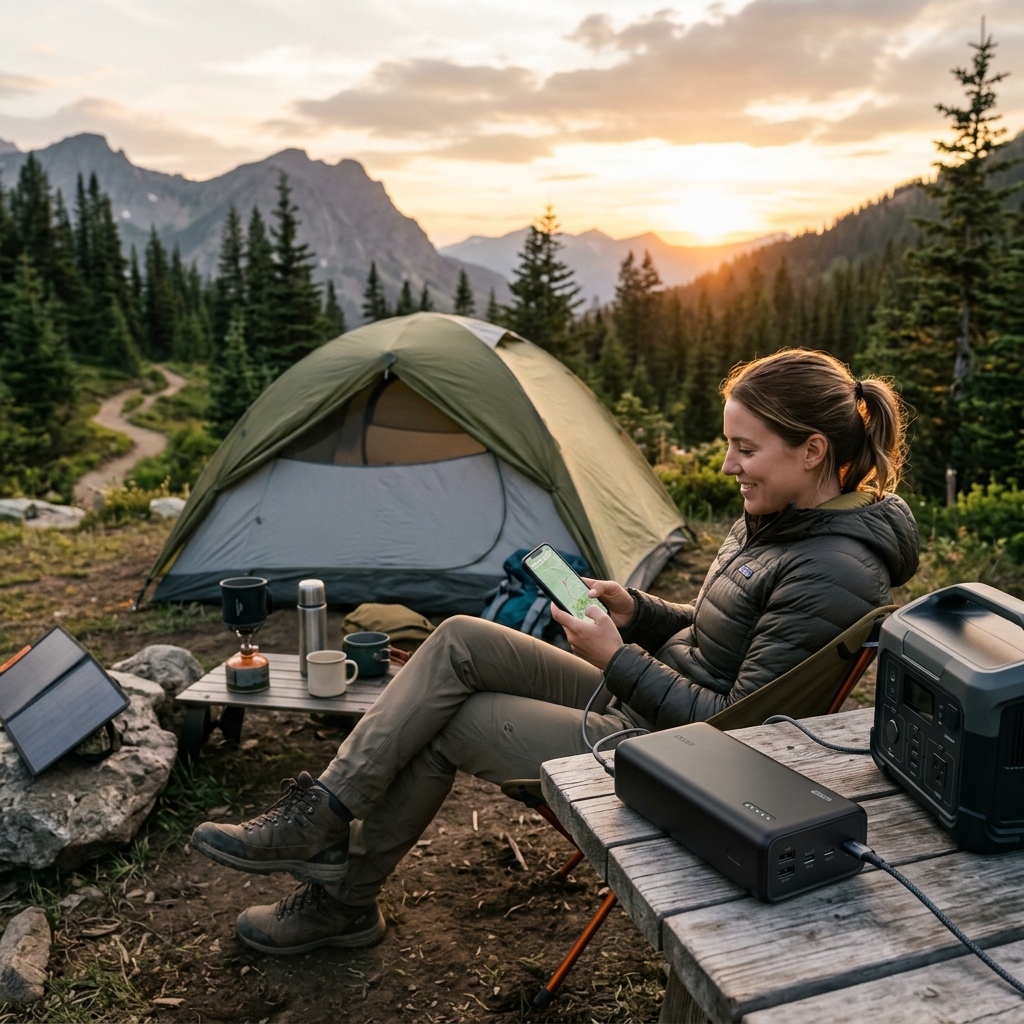
Camping in 2026 is a far cry from the days of purely disconnecting. While embracing nature remains central, we’re increasingly reliant on technology. Smartphones are essential for navigation with apps like OS Maps, ensuring safety with emergency contact features, capturing memories with cameras, and even providing entertainment during downtime. GPS devices are vital for hikers and explorers, headlamps illuminate the night, and some campers even utilise portable fans or mini-fridges. Without a reliable power source, these essential gadgets quickly become useless, leaving you disconnected and potentially vulnerable. A portable power bank ensures you stay connected, safe, and entertained throughout your camping adventure.
Key Features to Consider When Choosing a Camping Power Bank
Choosing the right power bank requires careful consideration. Here’s a breakdown of the crucial features:
- Capacity (mAh/Wh): Measured in milliampere-hours (mAh) or watt-hours (Wh), this determines how many times you can charge your devices.
- Number of Ports: Look for a power bank with multiple ports (USB-A, USB-C) to charge several devices simultaneously. USB-C is becoming increasingly important for quicker charging and compatibility with newer devices. Wireless charging is a bonus.
- Charging Speed (Power Delivery – PD): Power Delivery (PD) allows for significantly faster charging of compatible devices. It’s particularly useful for smartphones, tablets and even some laptops.
- Durability: Camping gear needs to be tough. Water resistance (IP rating) and shockproof construction are essential for protecting your power bank from the elements and accidental drops.
- Size & Weight: Backpackers will prioritise lightweight and compact options, while car campers can afford a slightly larger, heavier power bank with greater capacity.
- Built-in Features: Some power banks include features like a built-in flashlight, which can be incredibly useful in a camping situation.
Power Bank Capacity: How Much Power Do You Really Need?
Determining the right capacity depends on the devices you’ll be using and the duration of your trip. Here’s a guide:
| Device | Battery Capacity (Approx.) | Charges from 10,000mAh Power Bank | Charges from 20,000mAh Power Bank |
|---|---|---|---|
| Smartphone (Typical) | 4,000 – 5,000mAh | 2 – 2.5 | 4 – 5 |
| Tablet (iPad) | 7,500 – 8,800mAh | 1 – 1.2 | 2 – 2.5 |
| Action Camera (GoPro) | 1,200 – 1,800mAh | 5 – 8 | 10 – 16 |
| Headlamp | 500 – 1,000mAh | 10 – 20 | 20 – 40 |
| GPS Device | 1,500 – 3,000mAh | 3 – 7 | 6 – 14 |
Note: These are approximate values. Actual charges will vary depending on device usage and battery health.
Top 5 Portable Power Banks for Camping in 2026 – Reviews & Comparisons
1. Anker PowerCore III Elite 25600 60W
Pros: High capacity, fast charging with 60W Power Delivery, multiple ports (USB-C, USB-A), excellent build quality.
Cons: Relatively heavy and bulky, higher price point.
Specifications: Capacity: 25,600mAh / 94.7Wh, Ports: 1 x USB-C PD (60W), 2 x USB-A, Charging Time: ~3.5 hours (with 60W PD charger), Weight: 660g.
Suitability: Ideal for glamping, family camping, or extended trips where you need to power multiple devices or even a small laptop.
2. Goal Zero Sherpa 100PD
Pros: Rugged and durable design, wireless charging, Power Delivery, compact size for its capacity.
Cons: Lower capacity than some competitors, can be pricey.
Specifications: Capacity: 10,000mAh / 37Wh, Ports: 1 x USB-C PD (60W), 2 x USB-A, Wireless Charging, Weight: 465g.
Suitability: Best for backpacking and shorter trips where weight is a critical factor, and you need fast charging for your smartphone and other USB-C devices.
3. BigBlue 30000mAh Power Bank
Pros: Massive capacity, good value for money, multiple ports, built-in flashlight.
Cons: Heavy, slower charging speed compared to PD models.
Specifications: Capacity: 30,000mAh / 111Wh, Ports: 3 x USB-A, Input: Micro USB/USB-C, Weight: 780g.
Suitability: Excellent for extended camping trips with a group, where you need to keep multiple devices charged for several days.
4. INIU Portable Charger Power Bank, 20000mAh
Pros: Compact and lightweight for its capacity, affordable price, decent charging speed.
Cons: Lacks Power Delivery, build quality isn’t as premium as Anker or Goal Zero.
Specifications: Capacity: 20,000mAh / 74Wh, Ports: 2 x USB-A, Input: USB-C, Weight: 390g.
Suitability: A good all-rounder for casual camping, providing reliable power without breaking the bank.
5. Spigen ArcFlash Pro 27650 Power Bank
Pros: Fast charging with Power Delivery, sleek design, good build quality, digital display showing remaining power.
Cons: Capacity slightly lower than some alternatives in the same price range.
Specifications: Capacity: 27,650mAh / 102Wh, Ports: 1 x USB-C PD (65W), 1 x USB-A, Weight: 580g.
Suitability: Ideal for campers who want a balance of capacity, charging speed and portability.
| Power Bank | Capacity (mAh) | PD Charging | Weight (g) | Price (Approx.) |
|---|---|---|---|---|
| Anker PowerCore III Elite 25600 60W | 25,600 | Yes (60W) | 660 | £120 – £150 |
| Goal Zero Sherpa 100PD | 10,000 | Yes (60W) | 465 | £90 – £120 |
| BigBlue 30000mAh Power Bank | 30,000 | No | 780 | £50 – £70 |
| INIU Portable Charger Power Bank, 20000mAh | 20,000 | No | 390 | £30 – £40 |
| Spigen ArcFlash Pro 27650 Power Bank | 27,650 | Yes (65W) | 580 | £80 – £100 |
Budget-Friendly Power Banks: Best Options Under £50
If you’re on a tighter budget, these options provide good value:
- Miady 20000mAh Power Bank: A reliable and affordable option with a decent capacity. (~£25)
- Charmast Power Bank 10000mAh: Compact and lightweight, ideal for short trips. (~£20)
- Baseus 10000mAh Power Bank: Offers fast charging and a sleek design at a competitive price. (~£30)
High-Capacity Power Stations: For Extended Camping Trips
For extended off-grid adventures, consider a portable power station like the Jackery Portable Power Station Explorer 300. These units offer capacities over 20,000mAh and, crucially, include AC outlets, allowing you to power larger devices such as portable fridges, lights, and even small cooking appliances. However, they are significantly heavier and more expensive than traditional power banks. They also require longer recharging times.
Jackery Portable Power Station Explorer 300: Capacity: 298Wh, Ports: AC Outlet, USB-A, USB-C, DC Output. Price: £250 – £350
Charging Your Power Bank While Camping: Solar Chargers & Options
Recharging your power bank while camping can be achieved through several methods:
- Solar Chargers: A popular option for off-grid charging. Look for foldable solar panels with high efficiency.
- Car Chargers: If you’re camping near your vehicle, a car charger can provide a convenient power source.
- Hand-Crank Chargers: A last resort for emergency situations, offering a slow but reliable charging method.
Recommended Solar Charger: Anker 625 Solar Panel (Foldable, High Efficiency) – £80 – £100
Power Bank Safety Tips for Camping
- Storage: Store your power bank in a cool, dry place away from direct sunlight.
- Temperature: Avoid exposing your power bank to extreme temperatures (both hot and cold).
- Water Damage: Protect your power bank from water damage. Even water-resistant models should be kept dry.
- Disposal: Dispose of old or damaged power banks responsibly at a designated recycling facility.
Frequently Asked Questions (FAQs)
1. What’s the difference between lithium-ion and lithium polymer batteries in power banks?
Lithium polymer batteries are generally lighter and more flexible in shape than lithium-ion batteries. They’re also considered slightly safer. However, lithium-ion batteries typically offer a longer lifespan and higher energy density.
2. What warranty do power banks typically come with?
Most reputable brands offer a 12-24 month warranty on their power banks, covering manufacturing defects. Always check the warranty details before purchasing.
3. Are there any restrictions on taking power banks on flights?
Yes. Most airlines restrict power banks with a capacity over 100Wh in checked baggage. Power banks between 100Wh and 160Wh may require airline approval, and those over 160Wh are typically prohibited. Always check with your airline before travelling.
4. How do I extend the lifespan of my power bank?
Avoid completely draining the power bank. Charge it regularly, even if it’s not fully depleted. Store it in a cool, dry place. Use a high-quality charging cable.
5. What does IP rating mean regarding water resistance?
IP ratings indicate a device’s level of protection against solids and liquids. For example, IP67 means the device is dust-tight and can withstand immersion in water up to 1 meter for 30 minutes. Higher numbers indicate greater protection.